

How to Choose the Right Industrial Crushing Machine (and Blades) for Your Production Line

Choosing the right crusher blade starts with understanding the material, the machine structure, and the way the cutting load is created. A granulator, single-shaft shredder, double-shaft shredder, and hammer mill all apply different forces, so the blade cannot be selected by size alone.
For production lines handling plastics, rubber, wood, film, e-waste, packaging scrap, or other recyclable materials, industrial crusher blades directly affect output stability, downtime, particle size consistency, and operating cost. A well-matched blade can extend service life, reduce power load, and keep the crusher running consistently. A poor blade choice can lead to fast dulling, edge chipping, material jamming, and frequent shutdowns.
Step 1: Understand the Material Before Choosing the Blade
Most blade problems start before the blade is made. If the supplier only knows the machine model but not the feed material, the blade specification may not match the real working condition.
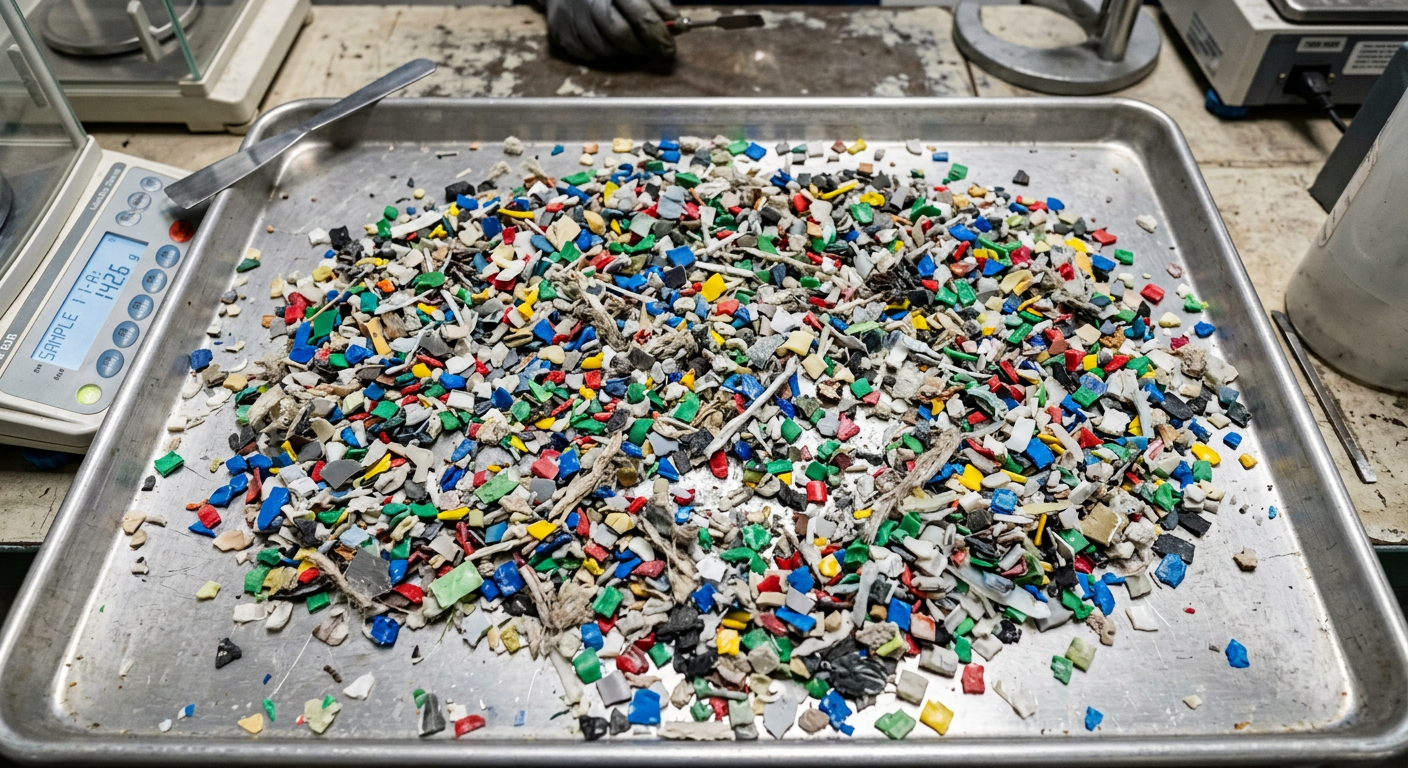
Before ordering crusher blades, confirm these material details:
- Bulk density — light film, PET flakes, thick lumps, and rubber blocks all feed differently.
- Hardness and contamination — glass fiber, sand, metal inserts, stones, and mixed waste can shorten blade life quickly.
- Wall thickness or piece size — thick purgings and thin bottle scrap require different cutting gaps and edge strength.
- Moisture content — wet material can smear, stick to the screen, and accelerate edge wear.
- Target output size — the required particle size affects screen selection, cutting gap, and blade geometry.
For example, a plastic recycler processing clean PP woven bags does not need the same blade design as a line handling glass-filled nylon or mixed hard plastic lumps. Even if the machine size looks similar, the blade steel, edge angle, and heat treatment should be different.
Step 2: Identify the Crusher Type Used in the Line
Industrial crusher blades must match the machine structure. The same material may require different blade designs depending on whether it is processed by a granulator, single-shaft shredder, double-shaft shredder, or hammer mill.
Granulator Blades
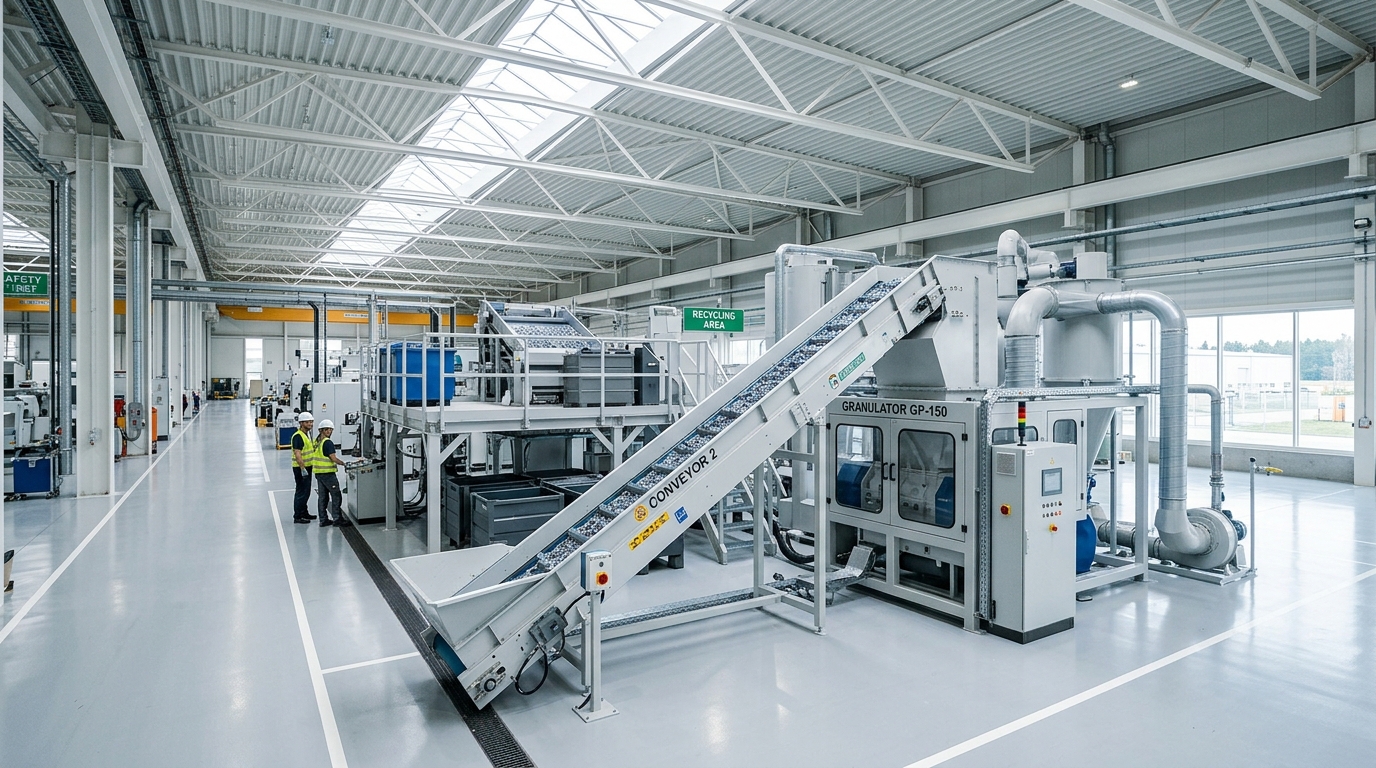
Granulators are commonly used for clean plastic runners, sprues, film, edge trim, bottle scrap, and regrind material. They use high-speed rotary knives working against fixed bed knives, with particle size controlled by the screen.
For granulator blades, key factors include edge sharpness, straightness, hardness uniformity, and tight dimensional tolerance. SKD-11, D2, or Cr12MoV are often used where wear resistance and repeated sharpening are important.
Single-Shaft Shredder Blades
Single-shaft shredders are used for purgings, hollow parts, plastic lumps, thick-walled scrap, and mixed production waste. They run at lower speed but higher torque, so the blade must resist impact and compression.
For this type of machine, toughness matters as much as hardness. H13, 42CrMo, or customized tool steel options may be selected depending on the material and contamination level.
Double-Shaft Shredder Blades
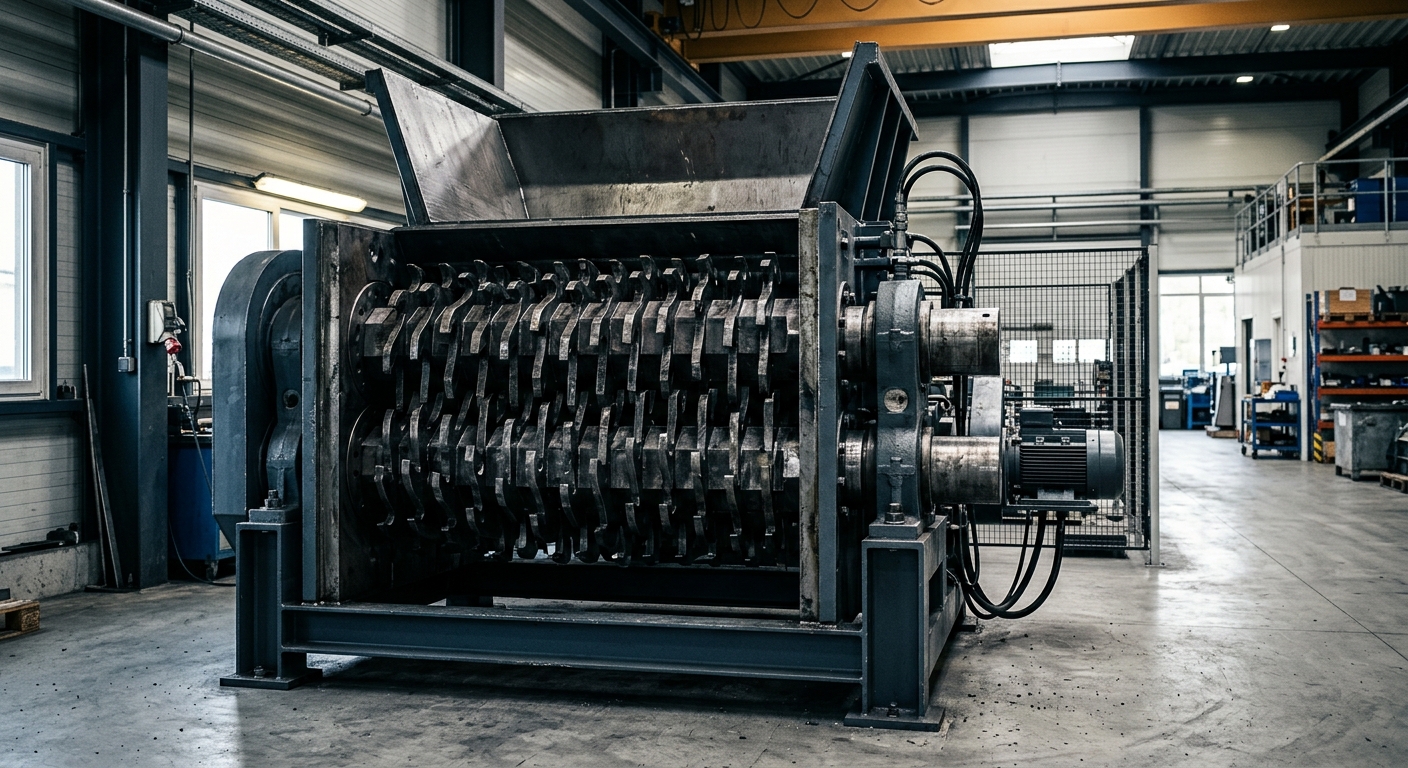
Double-shaft shredders process bulky, tough, or mixed materials such as tires, e-waste, wood, rubber, drums, and large plastic parts. The blades tear and shear material between two counter-rotating shafts.
These shredder blades often use a strong alloy steel body with wear-resistant cutting edges. The hook profile, tooth depth, spacer thickness, and shaft fit must be controlled carefully to avoid uneven load and premature wear.
Hammer Mill Wear Parts
Hammer mills are used more for brittle or impact-crushing applications such as dry biomass, bone, paper, light metal scrap, or brittle waste. The wear pattern is different from knife-based cutting machines.
For hammer mill parts, impact resistance, surface hardness, and wear-resistant treatment are usually more important than a razor-sharp cutting edge.
Step 3: Match Blade Design to Machine Load
Crusher blade selection should not rely only on machine model numbers. Two machines with the same motor power may run very different materials and require different blade designs.
Key machine-related details include:
- Rotor diameter — a larger rotor usually provides more inertia and requires blades with stronger impact resistance.
- Cutting chamber width — wider chambers increase blade length and place higher demand on straightness and balance.
- Screen size — smaller screens usually create more cutting cycles and faster blade wear.
- Knife quantity and arrangement — more knives can improve cutting frequency but may increase maintenance requirements.
- Operating load — a machine running near full capacity needs more stable blade hardness and better edge retention.
If a blade wears too quickly, the cause is not always poor material quality. It may also be related to wrong cutting angle, incorrect clearance, unsuitable hardness, or blade geometry that does not match the machine’s real load.
Step 4: Choose the Right Blade Steel
Blade steel has a major effect on service life and maintenance frequency. The best material is not always the hardest one. It should match the feed material, contamination level, impact load, and sharpening plan.
SKD-11 / D2 / Cr12MoV
These high-carbon, high-chromium tool steels are common choices for plastic crusher blades. After heat treatment, they usually provide strong wear resistance and good edge retention.
They are suitable for clean plastics, runners, sprues, film, bottle scrap, and general plastic regrind. They can usually be reground multiple times if the blade body remains stable and the cutting edge is not damaged.
H13
H13 provides better toughness than many high-hardness tool steels. It is often used where impact load is higher and occasional hard contamination may be present.
For single-shaft shredders or applications where chipping is a concern, H13 can be a practical option because it absorbs shock better than very hard but brittle materials.
42CrMo
42CrMo is often used for shredder knives, heavy-duty blade bodies, spacers, and structural cutting parts. It offers strength, toughness, and machinability for large knives or impact-loaded applications.
For double-shaft shredder knives, 42CrMo may be combined with heat treatment, surface hardening, or customized cutting profiles depending on the application.
Powder Metallurgy Steel
Powder metallurgy steel is suitable for highly abrasive materials such as glass-filled plastic, mineral-filled compounds, carbon fiber composites, or materials that quickly destroy standard tool steel blades.
Although the initial cost is higher, it can be economical when standard blades require frequent replacement or sharpening.
Carbide and Special Inserts
For extremely abrasive or high-volume applications, carbide-tipped or insert-style blades may be considered. These are not necessary for every line, but they can reduce downtime where edge wear is the main operating problem.
For a broader comparison of steel, carbide, and ceramic options, see our guide to choosing the right industrial blade material.
Step 5: Pay Attention to Blade Geometry
Steel grade is important, but geometry often decides how the blade actually performs. A well-designed blade cuts smoothly, reduces load on the motor, and improves output consistency.
Edge Angle
A sharper edge angle is better for soft, ductile materials such as film, fiber, and thin plastic. A wider edge angle is better for rigid, thick, or contaminated materials where impact resistance is more important.
If the angle is too sharp, the blade may chip. If it is too blunt, the machine may consume more power and create uneven output.
Hook Profile
For shredder knives, the hook shape determines how well the blade grabs and pulls material into the cutting zone. A deeper hook can improve feeding for bulky material, but it may also increase load and wear if the material is very hard.
Tooth Shape
Tooth shape should match the material. Aggressive teeth can help tear rubber, wood, and thick plastic, while smoother cutting profiles may be better for clean plastic recycling.
Cutting Gap
The clearance between the rotating knife and fixed knife is critical. If the gap is too tight, the blades may collide. If it is too wide, material may bend, stretch, or pass through without clean cutting.
For many granulator applications, the cutting gap must be checked after installation, sharpening, and every major maintenance cycle.
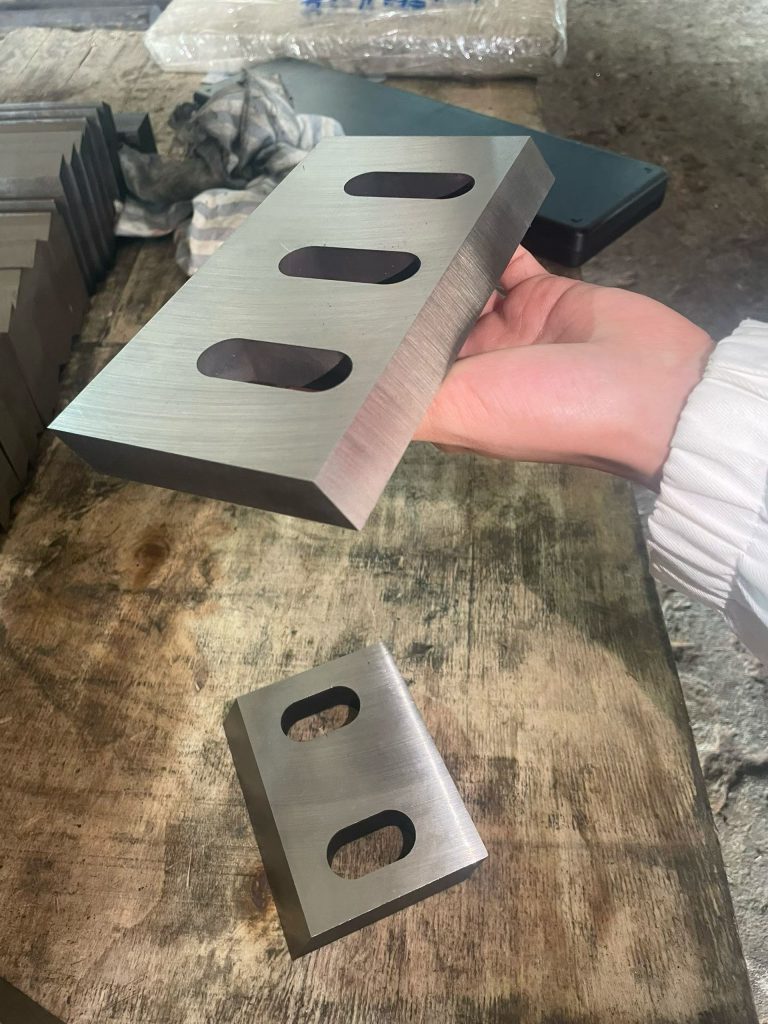
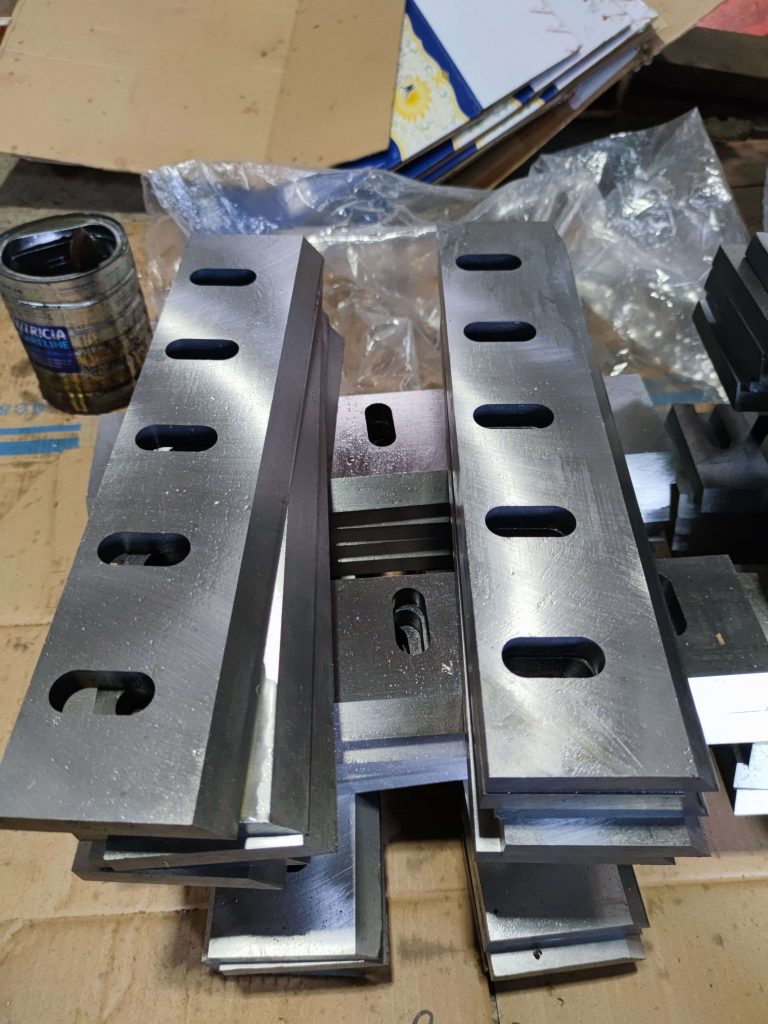
When the original blade shape is no longer available, custom grinding and special shaped blades can help match non-standard machine structures, hole patterns, or cutting profiles.
Step 6: Real Application Example
A film packaging factory needed replacement blades for an LDPE edge-trim recycling line. The material was light, clean, and soft, but the line required stable output for direct re-extrusion.
Instead of using a very thick heavy-duty blade, the better solution was a sharp, wear-resistant granulator knife set with controlled edge angle and accurate clearance.
The final blade specification included:
- SKD-11 tool steel
- HRC 58–62 hardness range
- Sharp cutting edge for soft film material
- Precision-ground fly knives and fixed knives
- Regrindable blade body for repeated maintenance cycles
After the blade specification was matched to the material, the line achieved smoother feeding, cleaner cutting, and longer intervals between sharpening. The key point is that blade selection should follow the real cutting condition, not just the machine model.
Step 7: Consider Total Blade Cost, Not Only Unit Price
The lowest blade price is not always the lowest operating cost. For industrial crushing lines, blade cost should be calculated together with service life, sharpening frequency, downtime, and output stability.
Important cost factors include:
- Blade replacement frequency — low-quality blades may require frequent replacement even if the unit price is cheaper.
- Sharpening cycles — a good blade should allow repeated regrinding without losing dimensional stability.
- Downtime — every blade change stops production and adds labor cost.
- Output quality — dull or poorly matched blades can create uneven particles, more dust, and higher screen load.
- Machine protection — correct blade hardness and geometry help reduce abnormal vibration and overload.
A reliable blade supply is especially important for production lines that run continuously. Keeping spare blade sets and arranging a regular sharpening plan can prevent emergency shutdowns. For maintenance planning, read our guide on how to extend industrial blade service life.
Step 8: Questions to Ask Before Ordering Crusher Blades
Before buying replacement crusher blades, ask the supplier these questions:
- What steel grade do you recommend for my material?
- What hardness range will the blades be heat treated to?
- Can you produce blades according to OEM drawings or worn samples?
- What tolerance can you control on the cutting edge and mounting holes?
- Can you customize the edge angle, hook shape, thickness, and tooth profile?
- Can you provide a trial batch before volume production?
- What is the lead time for repeat orders?
- Can the blades be reground, and how many sharpening cycles are expected?
A professional supplier of industrial machine knives should be able to explain the reason behind the material and geometry recommendation. If the answer is only based on price or standard stock size, the blade may not be optimized for your production line.
Putting It All Together
The right industrial crusher blade is the one matched to your material, machine type, cutting load, and maintenance plan. Granulator blades need sharpness and precision. Single-shaft shredder blades need toughness and impact resistance. Double-shaft shredder knives need strong structure, correct hook profile, and reliable wear resistance.
For plastic, rubber, paper, cable, and mixed waste processing lines, recycling blades should be selected based on wear mode, contamination level, cutting stage, and output requirement — not just the machine brand.
The goal is not simply to buy a blade that fits the machine. The goal is to reduce downtime, extend service life, keep particle size stable, and lower cost per ton.
If you are replacing worn crusher blades or trying to solve frequent blade failure, send us your machine model, blade drawing or sample, feed material, target output size, and working conditions. YISHI can help review the application and recommend a suitable blade material, heat treatment, edge geometry, and trial batch for validation before bulk production.


