

Zig Zag Knives and Anvils: Common Applications, Blade Profiles, and Replacement Signs

Zig zag knives — sometimes called serrated or castellated knives — are used wherever a converting line needs a clean, low-fray cut or perforation across a moving web, most often in nonwoven hygiene products, elastic laminates, textiles, and flexible packaging. The zig zag tooth pattern shears rather than tears the material, which matters a lot on stretchy or fibrous substrates that would otherwise pucker or fuzz under a straight edge. Getting the pairing right between knife pitch, tooth angle, and anvil hardness is what actually determines cut quality — pick the wrong combination and you'll fight fraying, dulling, or web distortion from day one.
Where Zig Zag Knives Actually Get Used
Most people picture zig zag knives on diaper and sanitary pad lines — and that's accurate, but it's only part of the story. Anywhere a stretchy or multi-ply web needs a clean cross-cut without dragging fibers, a zig zag profile tends to outperform a straight blade.
Common industry use cases
- Hygiene and nonwoven converting: cutting elastic waistbands, leg cuffs, and ear loops on diapers, pads, and masks.
- Textile and garment trims: cross-cutting elastic tape and webbing without unraveling the edge.
- Flexible packaging: perforated tear lines on multi-layer film pouches and sachets.
- Paper and tissue converting: perforation cutting for easy-tear sections in rolls and folded products.
For instance, a hygiene product manufacturer running a high-speed leg-elastic attachment station will typically spec a fine-pitch zig zag knife specifically because a straight blade at that speed causes the elastic to snap back and misalign before the cut finishes. The serration bites the material in stages instead of all at once, which keeps tension steady across the cut. If you're sourcing blades for related web-handling equipment, our paper, printing, and nonwoven web handling blades category covers adjacent profiles used on the same converting lines.
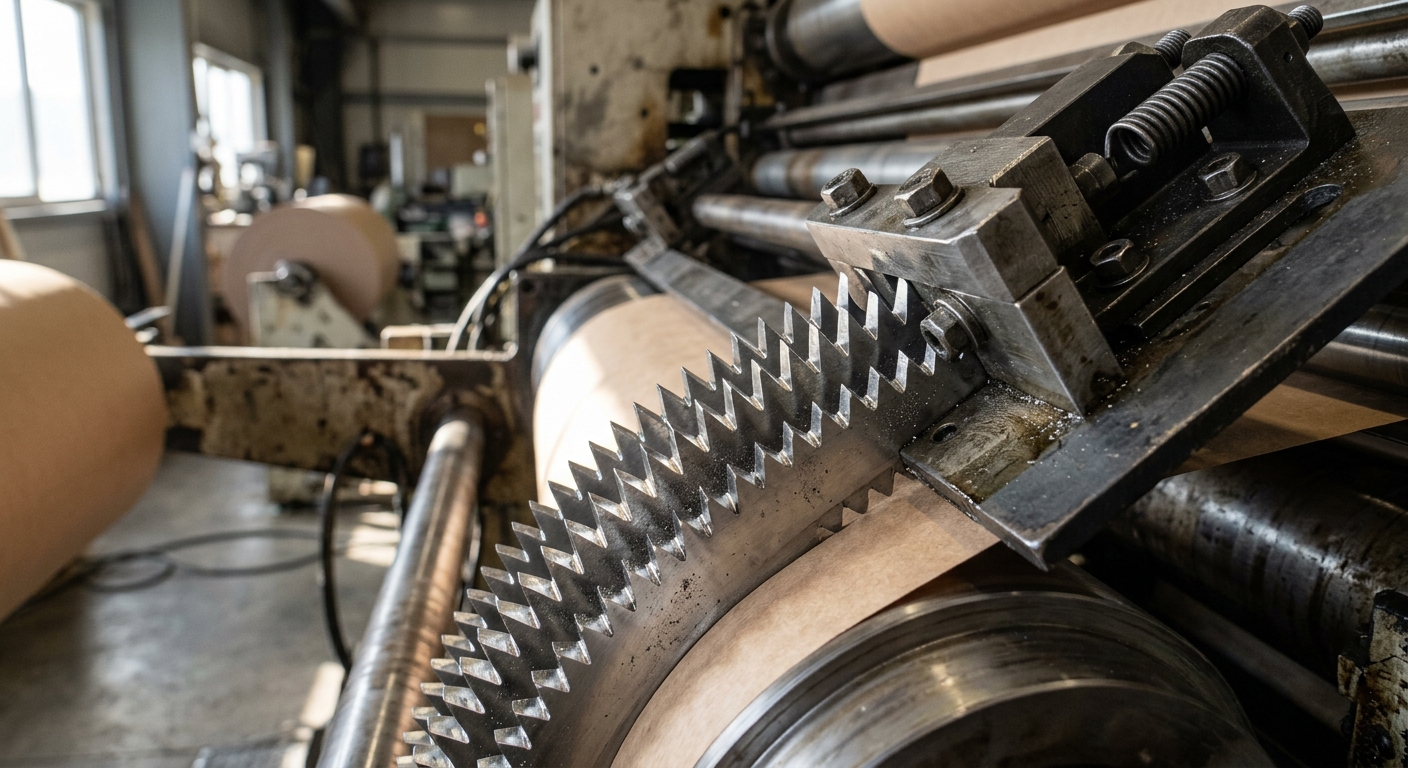
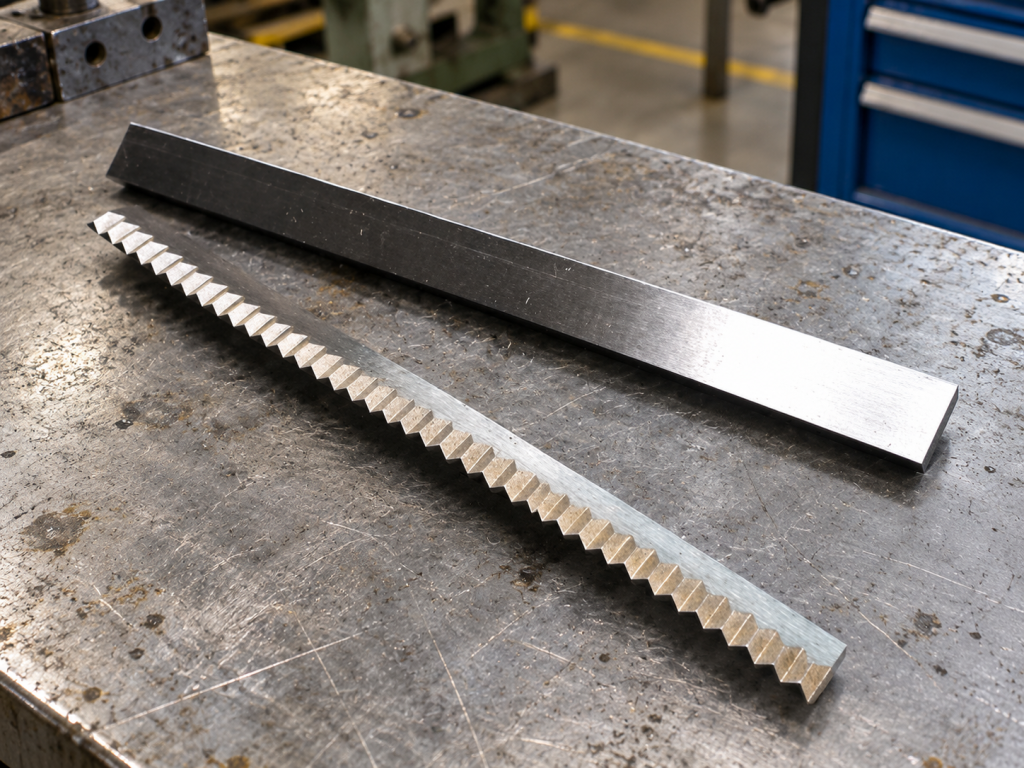
Reading a Zig Zag Blade Profile: Pitch, Depth, and Angle
Three numbers define a zig zag knife's performance: tooth pitch, tooth depth, and included angle. Get any one wrong and the cut quality drops even if the steel grade is perfect.
Tooth pitch
Pitch is the distance between tooth peaks, usually 1.5mm to 6mm depending on material thickness. Fine pitch (1.5-2.5mm) suits thin nonwoven and tissue — more teeth engaging per centimeter means a smoother, lower-fray edge. Coarse pitch (4-6mm) handles thicker, denser materials like heavy laminate or cardboard, where fewer but stronger teeth resist chipping.
Tooth depth and angle
Deeper teeth grip more aggressively but generate more resistance — fine for slow lines, a liability at high speed where they can drag the web off-register. Included angle (typically 40-70 degrees) affects how the tooth penetrates: narrower angles pierce faster but wear faster too, wider angles last longer but need more force to start the cut.
This is the same trade-off logic covered in our guide on choosing the right industrial blade material — geometry and material selection always move together, never independently.
The Anvil's Job — Why It's Not Just a Backing Plate
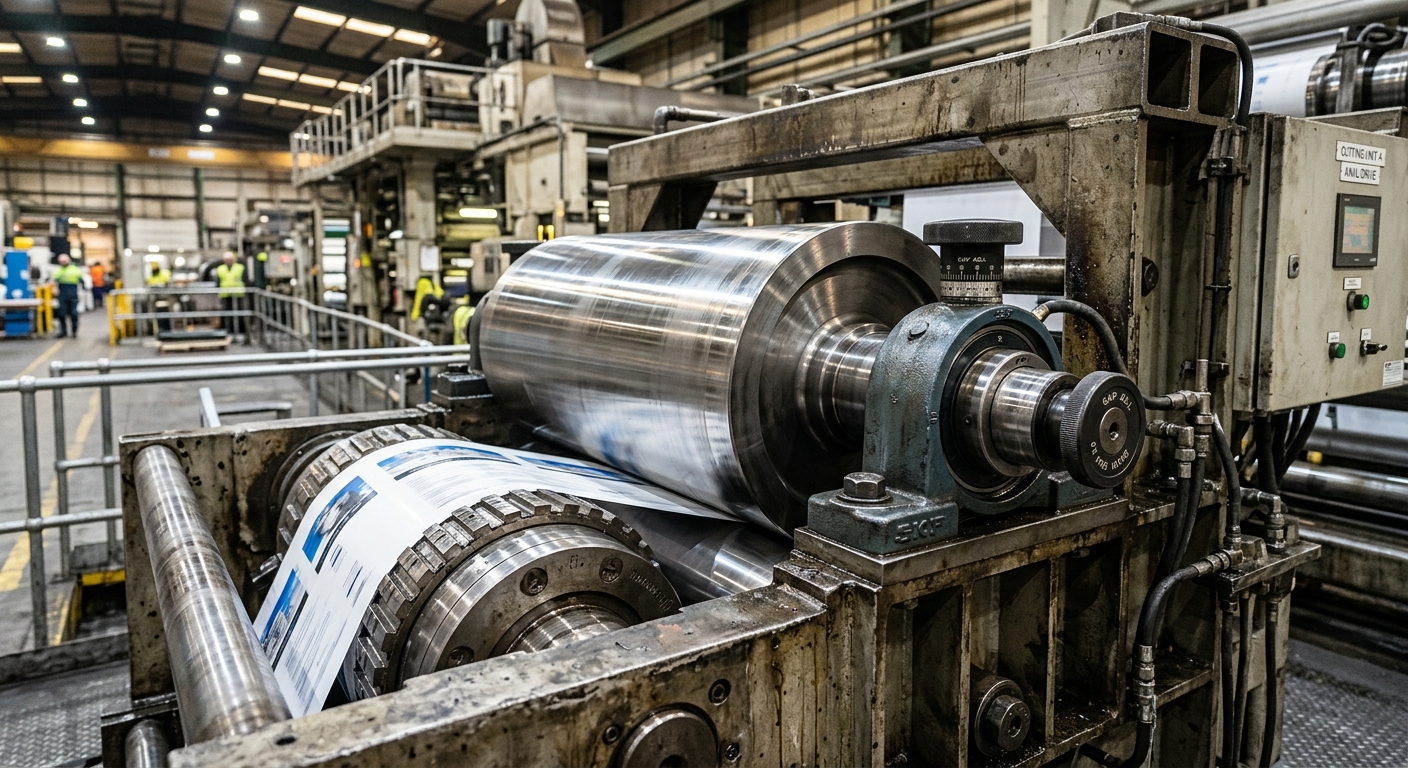
A zig zag knife is only half the cutting system. The anvil — the hardened roller or bar the blade presses against — determines how clean the shear actually is. A mismatched anvil hardness will dull a good knife in a fraction of its expected life.
Anvil hardness matching
Anvils typically run harder than the knife steel by design — often 58-62 HRC versus a knife at 55-58 HRC — so the anvil surface resists wear while the knife edge does the cutting work. If the anvil is too soft, it deforms under repeated impact and the knife starts hitting an uneven surface, which chips teeth prematurely.
Anvil surface finish
A polished anvil surface reduces friction heat build-up on high-speed lines. A rougher, ground finish can actually help grip thicker or slippery films during the cut. The right finish depends entirely on your substrate and line speed — something worth discussing with your blade supplier before ordering, not after a bad first run.
Straight-Cut vs. Perforation: Two Different Zig Zag Jobs
Not every zig zag knife is cutting all the way through the material. Perforating knives use the same serrated concept but leave uncut tie points ("ties") so the web stays intact until the end user tears it.
Full-cut zig zag
Used for cross-cutting elastic strips, trim pieces, and separating individual product units. The full tooth depth engages continuously across the web width.
Perforation zig zag
Uses alternating cut/uncut segments — tie length and tie count are specified per project (for example, 2mm tie every 8mm of cut). This is common on tear-off packaging seams and paper towel perforations. Getting the tie ratio wrong is a frequent complaint: too few ties and the material falls apart in shipping, too many and customers can't tear it by hand.
If you're speccing a new blade for a packaging line, our packaging knife and cutting methods guide breaks down how perforation and full-cut requirements should be communicated to your supplier.
Five Signs Your Zig Zag Knife or Anvil Needs Replacing
A dull zig zag knife doesn't announce itself with a loud failure — it degrades quietly until someone notices product defects piling up. Watch for these signs:
1. Fraying or fuzzing at the cut edge
The clearest sign of tooth wear. A sharp zig zag shears cleanly; a worn one drags fibers instead of severing them.
2. Increased motor load or vibration
Dull teeth need more force to penetrate the same material, which shows up as small but measurable increases in drive current or audible vibration at the cutting station.
3. Inconsistent tie length on perforated cuts
If tie segments start varying in length run to run, either the knife teeth are unevenly worn or the anvil surface has developed low spots.
4. Visible chipping on tooth tips
Even one or two chipped teeth create a repeating defect pattern across the web — easy to spot if you unroll and inspect a sample length.
5. Discoloration or heat marks on the anvil
Blue or brown streaking on the anvil surface usually means excess friction heat, often from a knife that's no longer aligned or sharp enough to cut cleanly on the first pass.
For a broader maintenance schedule across blade types, see our guide on extending industrial blade service life.
Sharpening vs. Replacing: Knowing the Break-Even Point
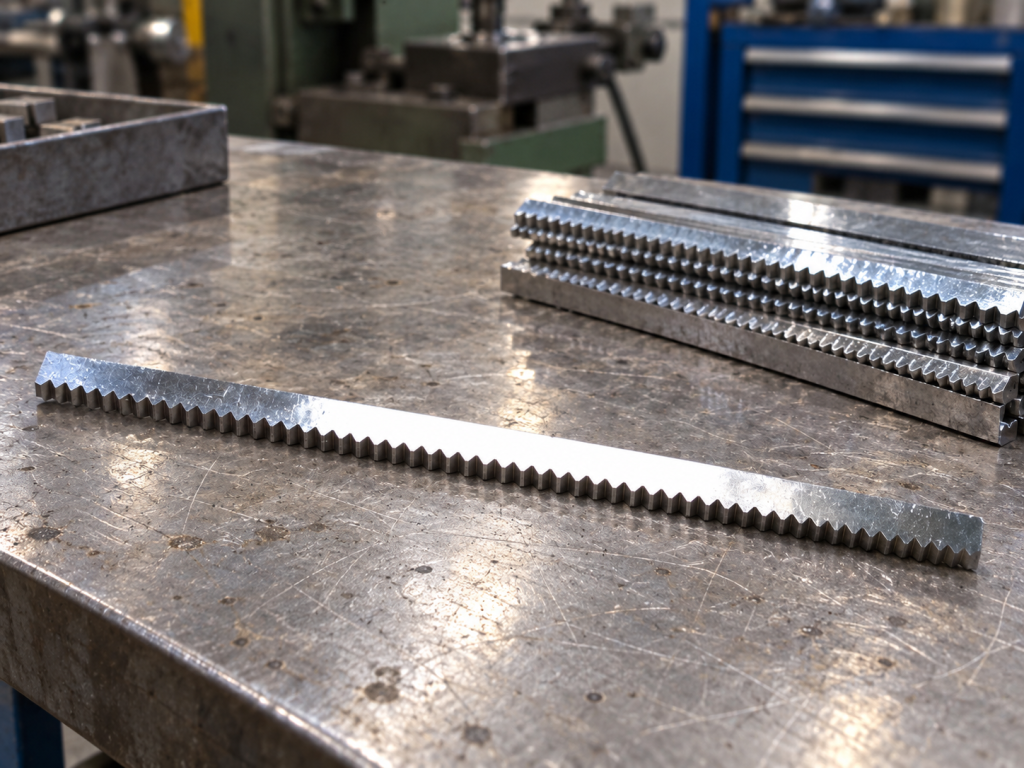
Zig zag knives can typically be resharpened 2-4 times before the tooth geometry degrades too much to hold spec — after that, regrinding starts changing the pitch and depth in ways that throw off cut consistency. Each resharpening removes a small amount of material from the tooth tips, and once total material loss exceeds roughly 0.3-0.5mm from the original profile, tie lengths and cut cleanliness start drifting even if the edge still feels sharp to the touch.
A practical rule of thumb
If a resharpened knife needs adjustment at the machine to compensate for the changed geometry — different pressure settings, different alignment — that's usually the signal it's cheaper to replace than keep chasing consistency through machine tweaks. Repeat-order consistency matters more than saving one more regrind cycle, especially on lines producing hygiene or food-contact products where cut quality is inspected closely.
Ordering Custom Zig Zag Knives: What Your Supplier Needs to Know
A generic zig zag knife rarely fits a specific machine perfectly — pitch, tie pattern, mounting hole spacing, and steel grade all need to match your exact application. Before requesting a quote, have these details ready:
- Machine make/model and current blade part number (if replacing an existing knife)
- Substrate type and thickness (elastic laminate, nonwoven GSM, film gauge, etc.)
- Line speed in meters per minute
- Full-cut or perforation, and if perforation, the tie length/spacing required
- Anvil hardness and surface condition, if known
Suppliers with strong engineering support — like teams working from 1,000+ invention patents and years of custom blade fabrication — can often shortcut this back-and-forth by reverse-engineering wear patterns from a sample of your old knife. That's usually faster and more accurate than starting a spec from scratch. Browse our full blade product range or reach out through our contact page with your machine details for a trial order recommendation.


