

Circular Slitting Blades: How to Choose the Right Material for Your Substrate

The right material for a circular slitting blade is determined by your substrate — full stop. Soft materials like paper and plastic film perform best with high-carbon or D2 tool steel blades, while metal coil slitting demands SKD-11, HSS, or tungsten carbide depending on coil thickness and hardness. Get this match wrong and you'll burn through blades, generate burrs, and spend more on downtime than you ever saved on cheaper tooling. This guide walks you through the decision matrix so you can spec blades that actually last on your line.
Why Blade Material Matters More Than Blade Price
Here's a number that surprises most procurement teams: blade material accounts for roughly 70% of a circular slitting blade's total service life, while geometry and sharpening quality split the remaining 30%. Yet many buyers default to the cheapest steel that “sort of works” and then wonder why they're changing blades every shift.
The real cost isn't the blade — it's the line stoppage. A single blade change on a coil slitting line can eat 15–30 minutes of production. Multiply that by extra changes from a mismatched material and you're looking at thousands of dollars in lost output per month. The goal isn't to buy the hardest blade possible; it's to buy the blade whose hardness, toughness, and wear profile are calibrated to your specific substrate, thickness, and line speed.
The Three Properties That Drive Selection
- Hardness — Resistance to deformation at the cutting edge. Higher hardness = longer edge retention, but also more brittleness.
- Toughness — Resistance to chipping and fracture under impact or vibration. Critical for thicker substrates and high-speed lines.
- Wear resistance — How well the blade surface holds up against abrasive substrates like filled plastics, coated papers, or galvanized steel.
These three properties are always in tension. No single material maximizes all three. That trade-off is exactly why material selection must start with the substrate, not the budget.
Matching Material to Substrate: The Decision Framework
Stop thinking about blade materials in isolation. Instead, start with four questions about your cutting application:
- What substrate are you slitting? — Paper, plastic film, nonwoven fabric, aluminum foil, steel coil, copper strip, laminate?
- What is the substrate thickness and tensile strength? — A 0.3 mm aluminum strip and a 3.0 mm stainless steel coil demand completely different approaches.
- What is your line speed? — Higher speeds generate more heat at the cutting edge, accelerating wear and softening lower-grade steels.
- What edge quality do you need? — Burr-free edges for food packaging foil require a sharper, harder blade than rough-cut recycling material.
Once you answer those four questions, the material practically chooses itself. Let's walk through the major substrate families.
Paper, Film, and Nonwoven: Where Tool Steel Excels
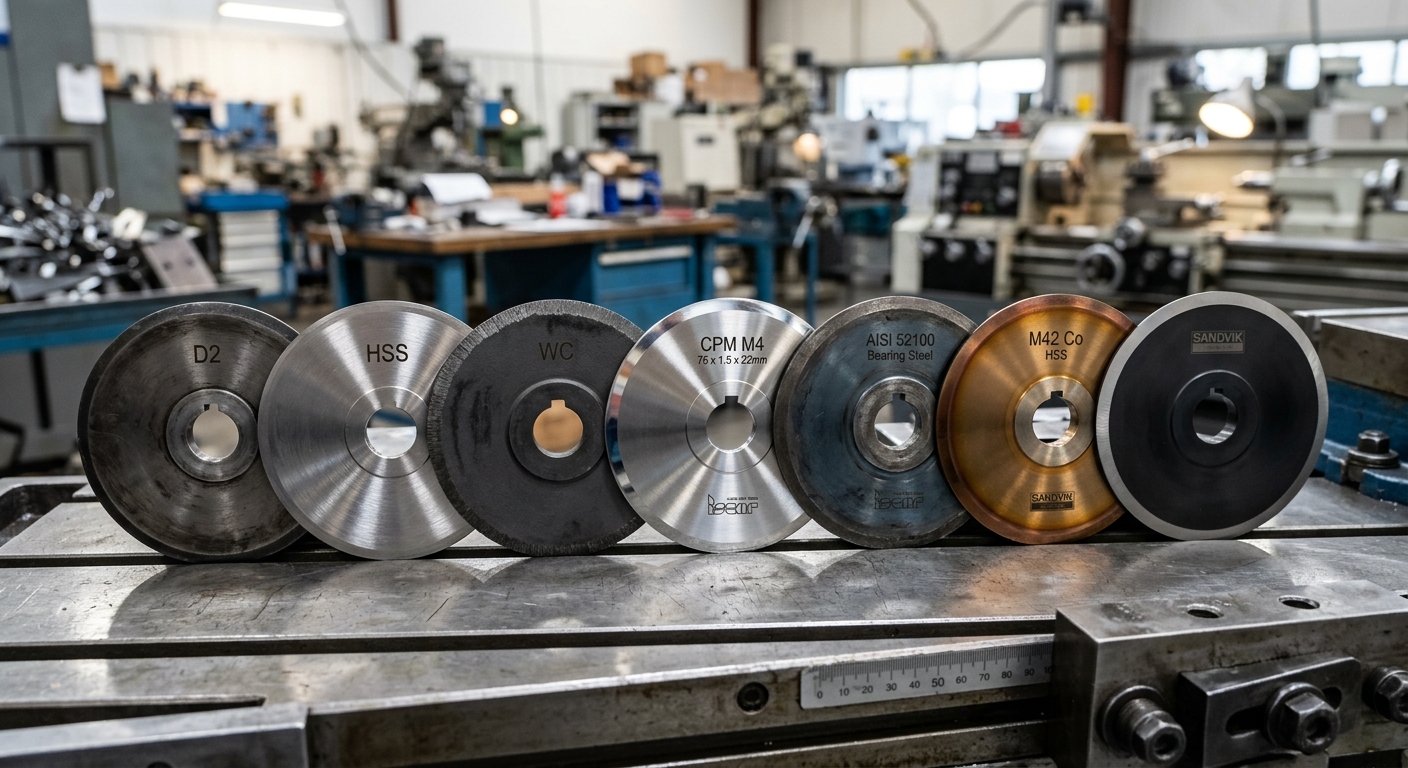
If you're slitting paper, plastic film, or nonwoven webs, you almost certainly don't need carbide — and paying for it would be wasteful. High-carbon tool steels like D2 (or the Chinese equivalent Cr12MoV/SKD-11) deliver the ideal balance of sharpness and toughness for these softer substrates.
D2 Tool Steel (HRC 58–62)
D2 is the workhorse of the converting industry. It takes a very keen edge, holds it well against non-abrasive substrates, and is easy to resharpen. For standard kraft paper, BOPP film, or spunbond nonwoven, D2 blades running at 200–400 m/min can last 8–12 hours between sharpenings. That's more than enough for most converting operations.
When to Step Up to SKD-11
SKD-11 (a refined version of D2 with better carbide distribution) makes sense when you're slitting coated papers, metallized films, or laminates. The coating layer is mildly abrasive and wears D2 edges faster. SKD-11's improved wear resistance can extend blade life by 50–80% in these applications without sacrificing toughness.
For instance, a flexible packaging converter slitting metallized PET film at 350 m/min switched from standard D2 to SKD-11 blades and went from changing blades every 6 hours to every 10 hours — a meaningful reduction in downtime across three shifts. That's the kind of practical gain that justifies the modest price increase.
Need blades specifically designed for printing, paper, and nonwoven web handling? Those applications have their own geometry considerations beyond material alone.
Metal Coil Slitting: Where Hardness and Toughness Collide
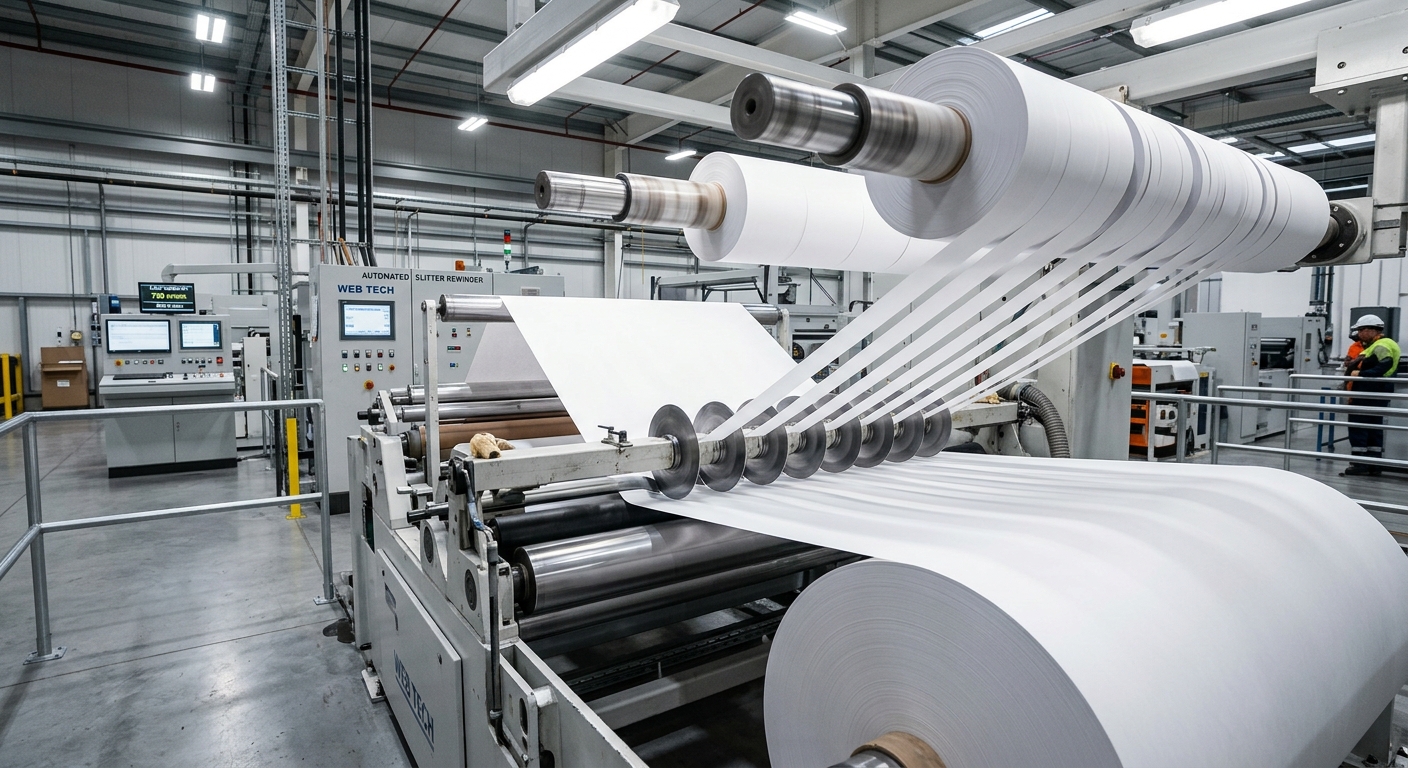
Metal coil slitting is where material selection gets genuinely difficult — because the substrate fights back. Steel, stainless steel, aluminum, and copper each present different challenges, and the wrong blade material doesn't just wear out; it chips, cracks, or produces unacceptable burr.
Mild Steel and Aluminum (up to 2.0 mm)
SKD-11 at HRC 60–62 handles mild steel and aluminum coil up to about 2.0 mm thickness very well. It offers enough hardness to maintain a clean shear edge while retaining the toughness to absorb the impact forces of rotary slitting. For aluminum, a slightly lower hardness (HRC 58–60) actually helps — softer aluminum tends to cold-weld onto overly hard blade surfaces, creating buildup that degrades cut quality.
Stainless Steel and Thick Gauge (2.0–6.0 mm)
Stainless steel is harder, more abrasive, and work-hardens during cutting. This is where M2 HSS (HRC 63–66) or tungsten carbide becomes necessary. HSS offers a good middle ground — harder than SKD-11, tougher than carbide. But for stainless coil above 3.0 mm or production volumes exceeding 500 tons/month, carbide blades pay for themselves quickly despite their higher upfront cost.
Explore our full range of industrial blades for coil slitting and sheet shearing lines to see what's available for your specific gauge and material.
Copper and Brass Strip
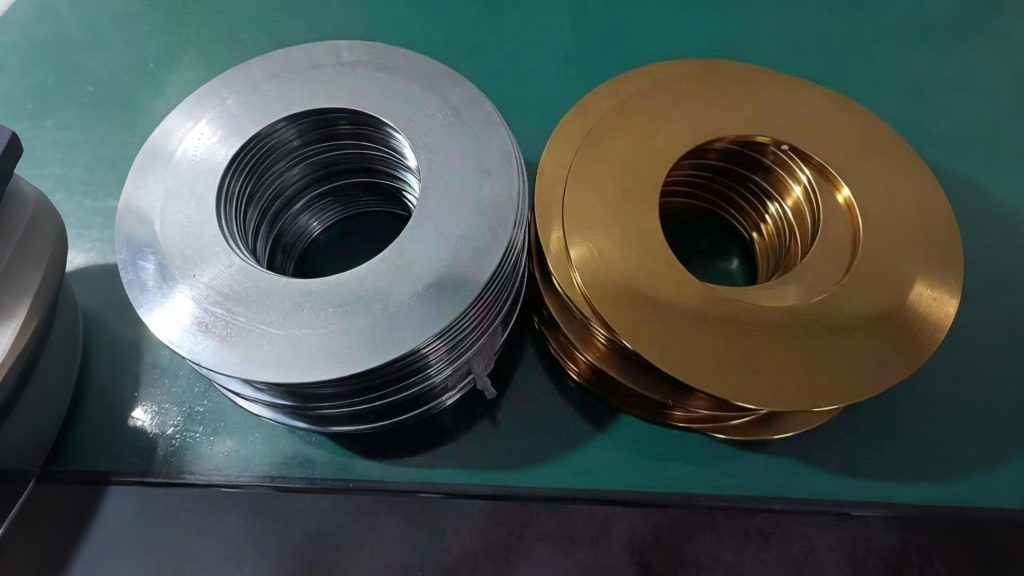
Copper is soft but sticky. It galls onto blade surfaces and creates drag marks. The solution isn't harder steel — it's surface treatment. A TiN or CrN-coated SKD-11 blade prevents copper adhesion far better than an uncoated carbide blade. This is one of those cases where the coating matters more than the base material.
Tungsten Carbide: When It's Worth the Investment (and When It Isn't)
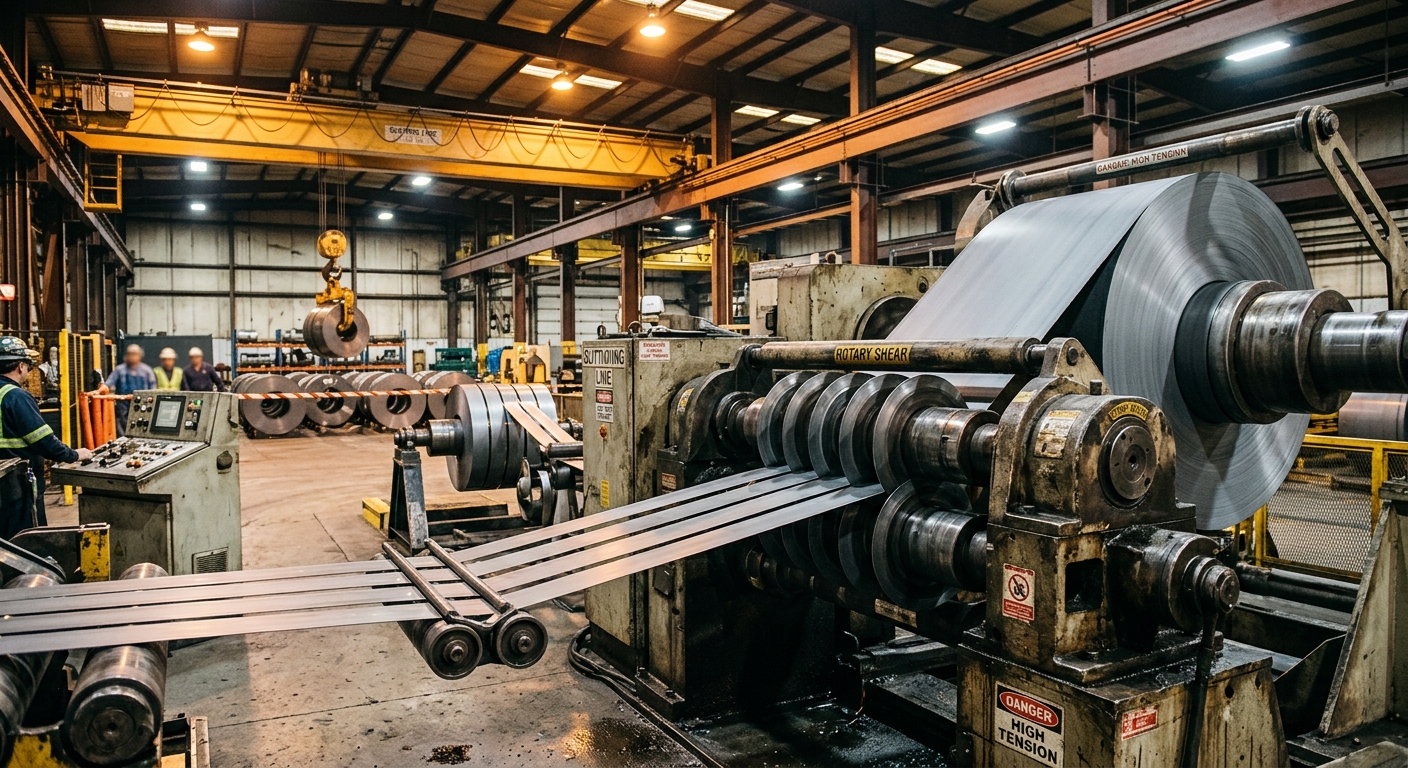
Carbide slitting blades cost 4–8× more than tool steel equivalents. That scares off a lot of buyers. But here's the thing: in the right application, carbide blades last 5–10× longer, which means your cost-per-meter-slit actually drops. The math only works, though, if your substrate genuinely demands carbide's extreme wear resistance.
Carbide Makes Sense When:
- You're slitting abrasive substrates — silicon steel, galvanized coil, fiberglass-reinforced film.
- Your production volume exceeds 300+ tons/month on the same line.
- Edge quality specifications are tight (e.g., burr height under 5% of material thickness).
- Blade change downtime is exceptionally expensive on your line.
Carbide Is Overkill When:
- You're slitting paper, standard plastic film, or thin aluminum foil.
- Your runs are short and you change blade setups frequently anyway.
- Your slitting machine can't maintain the tight tolerances carbide demands (carbide is less forgiving of misalignment).
A steel service center we work with was burning through SKD-11 blades every 3 days slitting 2.5 mm galvanized steel coil. After switching to tungsten carbide circular blades, they hit 25-day intervals between changes. The blades cost 6× more but lasted 8× longer — a net saving of roughly 30% on tooling costs alone, not counting the reduced downtime.
Surface Coatings: The Multiplier Most Buyers Overlook
A coating doesn't change the fundamental properties of your blade — it adds a thin, ultra-hard surface layer that reduces friction, prevents material adhesion, and extends edge life. Think of it as insurance on top of good material selection, not a substitute for it.
Common Coatings for Circular Slitting Blades
- TiN (Titanium Nitride) — Gold-colored, ~2,300 HV surface hardness. Reduces friction by 30–40%. Great for aluminum and copper slitting.
- TiAlN (Titanium Aluminum Nitride) — Higher heat resistance than TiN. Ideal for high-speed slitting of stainless steel or when line speeds exceed 100 m/min on metal.
- CrN (Chromium Nitride) — Excellent anti-adhesion properties. The go-to coating for sticky substrates like copper, brass, and certain adhesive-backed films.
- DLC (Diamond-Like Carbon) — Extremely low friction coefficient (~0.1). Used for ultra-thin foil slitting where any drag creates wrinkles.
Coatings typically add 15–25% to blade cost but can extend service life by 50–200% in the right application. The ROI is almost always positive for metal slitting. For paper and standard film, coatings are usually unnecessary unless you're dealing with abrasive fillers or coatings on the substrate itself.
Material Comparison Table: Quick Reference
Use this table as a starting point. It compares the four most common circular slitting blade materials across the criteria that matter most on the shop floor. Remember — the “best” material is always the one matched to your substrate, not the one with the highest hardness number.
For a deeper dive into the steel-vs-carbide-vs-ceramic decision across all industrial blade types, see our comprehensive guide on how to choose the right industrial blade material.
Heat Treatment: The Hidden Variable That Makes or Breaks Performance
Two blades made from the same SKD-11 steel can perform completely differently if one was heat-treated properly and the other wasn't. This is the dirty secret of the blade industry — cheap suppliers cut corners on heat treatment because it's invisible to the buyer at the point of purchase.
What Good Heat Treatment Looks Like
Proper heat treatment for slitting blades involves:
- Vacuum or controlled-atmosphere hardening — prevents surface decarburization that weakens the edge.
- Multi-stage tempering — typically 2–3 tempering cycles to relieve internal stress and stabilize the microstructure.
- Cryogenic treatment (optional) — sub-zero treatment converts retained austenite to martensite, improving dimensional stability and wear resistance by 10–15%.
How to Verify
Ask your supplier for hardness test reports — not just a single number, but readings from multiple points across the blade face. Hardness variation should be within ±1 HRC. If a supplier can't provide this, that's a red flag. At Yishi, every batch undergoes multi-point hardness testing and the reports ship with the blades.
Geometry and Clearance: Material Selection's Silent Partner
Even the perfect material will underperform if blade geometry and machine clearance aren't dialed in. Material and geometry are a package deal — you can't optimize one without the other.
Key Geometry Parameters
- Rake angle — Positive rake (5–15°) for soft substrates; neutral to slight negative rake for hard metals. More positive rake = less cutting force but weaker edge.
- Clearance angle — Typically 1–3° for rotary shear slitting. Too much clearance causes burr; too little causes drag and heat buildup.
- Edge radius — Sharper edges (smaller radius) for film and foil; slightly blunted edges for thick metal to prevent chipping.
The Clearance-Material Relationship
Carbide blades require tighter machine clearances than tool steel blades because they're less forgiving of misalignment. If your slitting head can't hold clearances within ±0.02 mm, carbide may actually perform worse than HSS because micro-chipping from slight misalignment will destroy the edge faster than abrasive wear would degrade a softer steel.
This is exactly why we recommend discussing your machine specifications with our engineers before finalizing material choice. The blade doesn't exist in isolation — it exists in your machine, on your line, cutting your substrate.
Spec Your Next Slitting Blade the Right Way
Here's the practical takeaway: start with your substrate, not your budget. Identify the substrate material, thickness, tensile strength, and any coatings or surface treatments. Factor in your line speed and required edge quality. Then use the framework in this guide to narrow down to one or two candidate materials.
If you're still unsure — and there's no shame in that, because some applications genuinely sit on the boundary between materials — send your specs to an engineering team that can advise. At Yishi Machinery, we handle exactly these conversations daily. With 8+ years of custom blade manufacturing and 1,000+ patents behind us, we can recommend the right material, geometry, and coating for your specific slitting application. We also support trial orders so you can validate performance before committing to volume.
Ready to get a recommendation? Reach out to our engineering team with your substrate details and line parameters. Or browse our full industrial blade catalog to see what's available off the shelf.


