

Why Your Crusher Blades Wear Out Too Fast — 5 Mistakes Recycling Plants Keep Making

Most crusher blades in recycling plants don't fail because they're “cheap.” They fail because the plant is making one — or several — of five specific, fixable mistakes: choosing the wrong steel for the feedstock, running incorrect blade clearances, letting contaminants slip into the infeed, ignoring heat-treatment specifications, and treating blade maintenance as a break-fix afterthought. Address these five issues and it's common to see blade life jump from 3–4 weeks to 10–12 weeks on the same machine, with the same material throughput. Below, we'll break down each mistake with enough technical detail to actually change how your plant operates.
Mistake #1: Using the Wrong Steel Grade for Your Feedstock
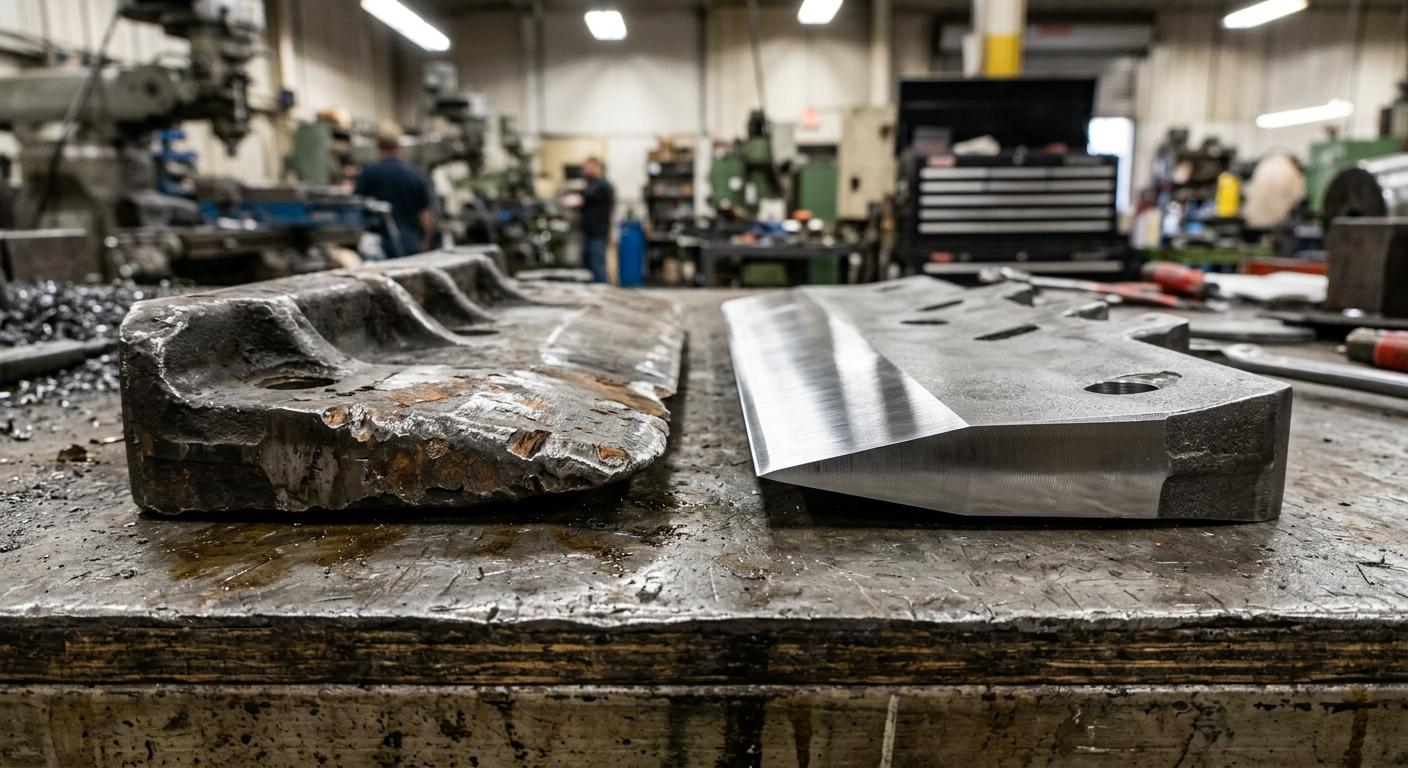
This is the single biggest reason crusher blades die early, and it's the easiest to get wrong because “harder = better” sounds logical. It isn't. Hardness without matching toughness for your specific material is a recipe for chipping, micro-fractures, and catastrophic edge failure.
The Steel-Feedstock Mismatch Problem
A plant crushing clean HDPE bottles doesn't need the same blade steel as a facility grinding glass-filled nylon automotive parts. The first application demands good wear resistance at moderate hardness — D2 or SKD-11 at HRC 58–60 works beautifully. The second application involves abrasive fillers that chew through conventional tool steels; here, tungsten carbide tips or a high-vanadium powder metallurgy steel become cost-effective despite the higher upfront price.
For instance, a PET bottle recycling plant in Southeast Asia came to us after burning through SKD-11 blades every 18 days. The problem? Their feedstock included roughly 8–12% contamination from thermoset plastics and aluminum caps. We switched them to a custom D2 variant with a slightly lower hardness (HRC 57) but significantly better impact toughness — a configuration also available across our plastic crusher blades range for high-contamination feedstocks. Blade life jumped to 7 weeks — nearly a 3× improvement — simply by matching the steel to the real-world feedstock, not the ideal one.
If you're unsure which steel grade fits your application, our guide on choosing the right industrial blade material covers the full decision framework.
When Carbide Actually Makes Sense
Carbide crusher blades cost 3–5× more than tool steel. But if your feedstock contains mineral fillers, fiberglass, or metal contamination above 5%, carbide often delivers the lowest cost-per-ton-processed. The math isn't complicated: if a $200 tool-steel blade lasts 3 weeks and a $700 carbide blade lasts 14 weeks, the carbide blade wins by a wide margin once you factor in changeover downtime.
Mistake #2: Running Incorrect Blade Clearances
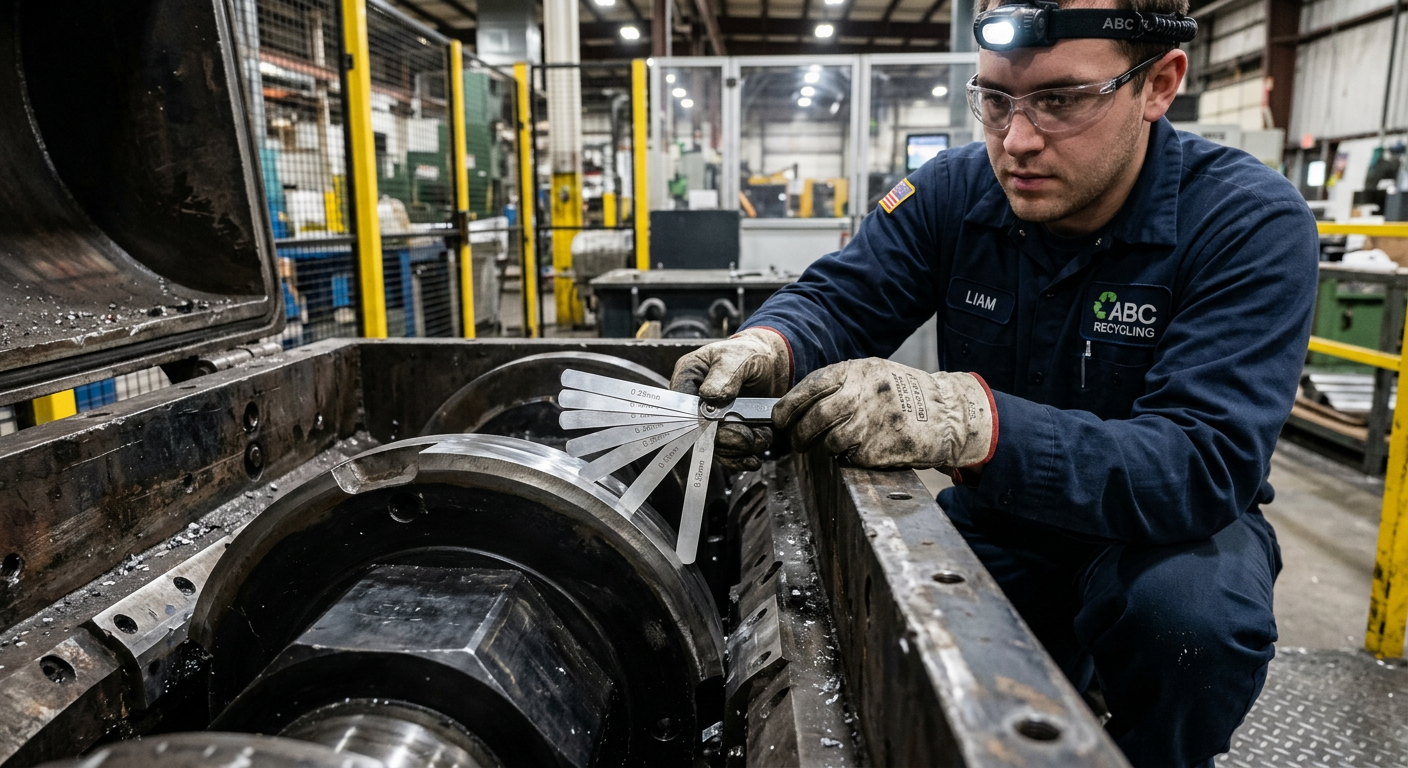
Here's a number that should worry you: a clearance error of just 0.5 mm on a plastic crusher can reduce blade life by 30–40%. Yet clearance is the setting most operators eyeball rather than measure.
What Happens When Clearance Is Too Tight
When the gap between rotor blades and bed knives is too small, the blades don't just cut the material — they slam into each other through it. The result is accelerated edge wear, heat buildup at the cutting edge (which softens the steel locally), and increased motor load. You'll hear it: the machine sounds strained, almost grinding instead of chopping.
What Happens When Clearance Is Too Loose
Too much clearance creates a different problem. Instead of clean shearing, the material folds and tears. This produces oversized particles (requiring re-grinding), generates more fines and dust, and puts uneven stress on the blade edges. The blades develop scalloped wear patterns instead of uniform recession.
The Right Clearance Window
For most plastic recycling crushers, the optimal clearance between rotor and stationary blades is 0.3–0.8 mm, depending on material type and desired output particle size. Harder, more brittle plastics (PS, acrylic) can run tighter. Flexible materials (PE film, rubber) need the wider end. Always use feeler gauges — not your eyes — and re-check clearance every time you change or resharpen blades.
A critical point most maintenance teams miss: when you resharpen a blade and remove 1–2 mm of material from the cutting face, the effective clearance changes. If you don't adjust the bed knife position to compensate, you've just introduced a clearance error that will eat your “freshly sharpened” edge in half the expected time.
Mistake #3: Letting Contaminants Into the Infeed
Your crusher blades are designed to cut plastic, rubber, wood, or whatever your target material is. They are not designed to cut bolts, stones, glass shards, or the occasional wrench someone dropped into a bale. Yet contamination is the norm in recycling, not the exception — and plants that don't manage it pay the price in blade life.
The Real Cost of Metal Contamination
A single steel bolt hitting a rotor blade spinning at 400–600 RPM can chip or crack the cutting edge badly enough to require immediate replacement. That's not just the cost of one blade — it's 30–90 minutes of unplanned downtime, plus the labor to swap it out. Multiply that by a few incidents per month and you have a significant hidden cost.
Practical Contamination Controls
The solutions aren't exotic:
- Overhead magnets or magnetic drum separators on the conveyor feeding the crusher. These catch ferrous metals before they reach the blades. A decent overhead magnet costs $2,000–$5,000 and pays for itself after preventing two or three blade replacements.
- Metal detectors with automatic belt-stop or diverter gates for non-ferrous contaminants (aluminum, stainless steel) that magnets won't catch.
- Manual pre-sort stations for high-contamination streams like post-consumer bales. Yes, it adds labor cost. But it's cheaper than replacing a full set of rotor blades every two weeks.
- Trommel screens or air classifiers upstream to remove stones, dirt, and glass from mixed waste streams before crushing.
One European e-waste recycler we work with installed a simple two-stage metal detection system (magnetic separator + eddy current separator) upstream of their crusher line. Their blade replacement frequency dropped from every 12 days to every 35 days. The system paid for itself in under four months.
Mistake #4: Ignoring Heat Treatment Specifications
Two crusher blades can be made from the exact same steel, machined to the exact same dimensions, and perform completely differently — because one was heat-treated correctly and the other wasn't. Heat treatment is invisible. You can't see it. You can't feel it. But it determines roughly 60–70% of a blade's real-world performance.
What Goes Wrong in Heat Treatment
The most common heat-treatment failures in crusher blades include:
- Insufficient hardening temperature or soak time: The blade doesn't reach full hardness. It feels hard on a surface test but the core is soft, leading to rapid edge deformation under load.
- Improper quenching: Quenching too fast causes internal stress cracks. Quenching too slow (or in the wrong medium) results in incomplete martensitic transformation — soft spots that wear unevenly.
- Skipping or shortening tempering: Untempered or under-tempered blades are brittle. They'll hold an edge for a few hours, then chip catastrophically. Proper double or triple tempering for D2 and SKD-11 steels is non-negotiable.
- Decarburization: If the blade surface loses carbon during heating (due to poor atmosphere control in the furnace), the outer layer becomes softer than the core. The edge wears fast while the blade body remains hard — a frustrating failure mode that looks like “bad steel” but is actually bad process.
How to Verify You're Getting Proper Heat Treatment
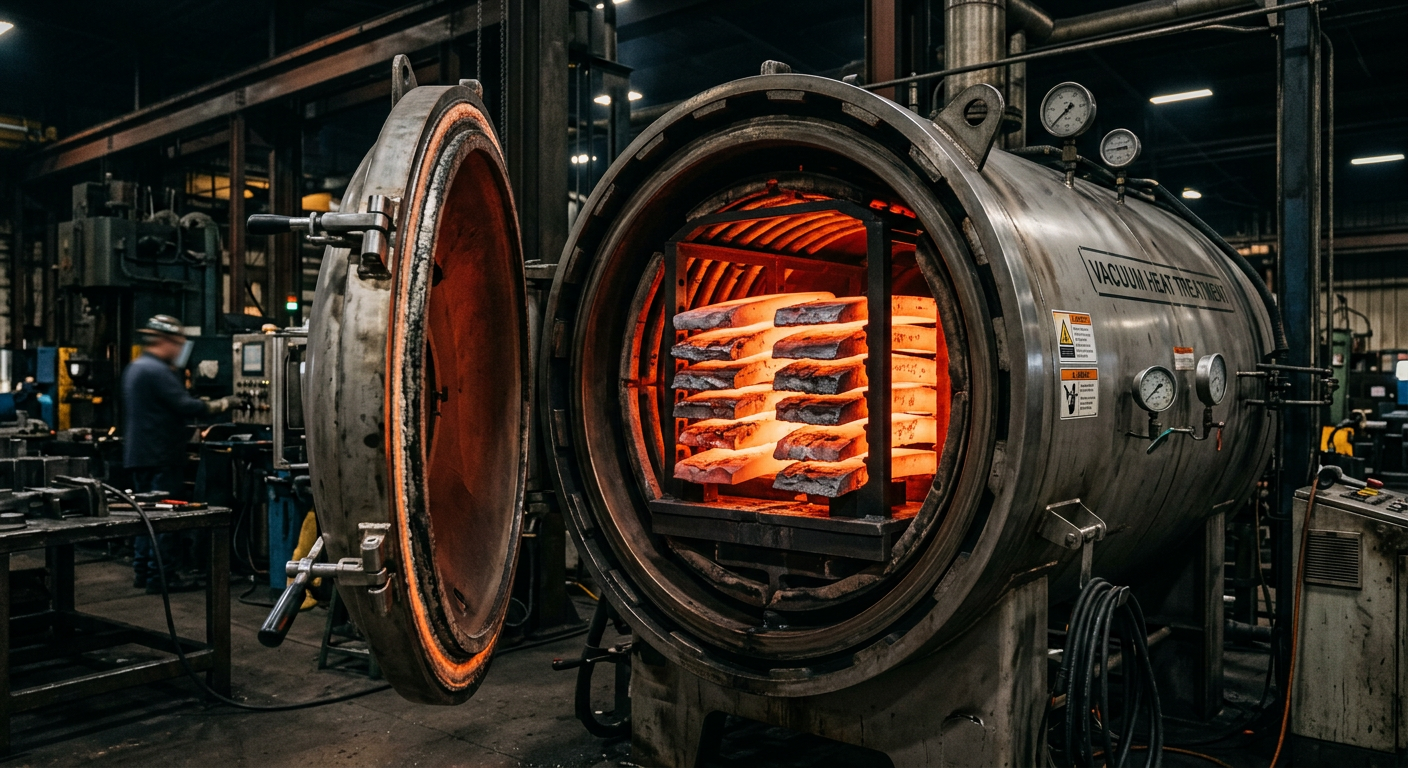
Ask your blade supplier for hardness test reports — not just a single Rockwell reading, but multiple readings across the blade face and cross-section. A well-treated D2 crusher blade should show HRC 58–62 with no more than ±1 HRC variation across the cutting surface. If your supplier can't provide this data, that's a red flag.
At yishimachinery, every batch of crusher blades goes through vacuum or controlled-atmosphere heat treatment with documented temperature curves, and we test hardness at multiple points before shipping. It's not a premium add-on — it's standard, because blades without verified heat treatment are a gamble.
Mistake #5: Reactive Maintenance Instead of Scheduled Blade Management
The final mistake is the most common and arguably the most expensive: running blades until they fail, then scrambling to replace them. This “run to failure” approach feels like it's maximizing blade life. In reality, it's destroying it — along with your machine and your throughput.
Why Running to Failure Costs More
A crusher blade doesn't go from sharp to dull in a straight line. It follows a wear curve: slow initial wear, then a period of stable performance, then accelerating degradation. Once the edge is past its useful life, three bad things happen simultaneously:
- Motor amperage spikes: The machine draws 20–40% more power to compensate for dull blades. This increases energy costs and stresses the motor, gearbox, and drive belts.
- Output quality drops: Particle size becomes inconsistent. You get more fines (wasted material) and more oversized pieces (that need re-grinding, consuming more energy and blade life).
- Secondary damage: Dull blades transfer impact forces to the rotor shaft, bearings, and screen. Over time, this causes bearing failure and screen damage that costs far more than a set of blades.
Building a Blade Rotation Schedule
The better approach is scheduled rotation based on operating hours or tons processed — whichever comes first. Here's a practical framework:
- Track motor amperage as a leading indicator. When amperage rises 15–20% above the baseline for fresh blades at the same feed rate, it's time to change.
- Keep a spare set of pre-sharpened blades ready at all times. Changeover should be planned, not panicked.
- Rotate blades (flip reversible blades to the unused edge) at the halfway point of their expected life. This doubles the interval between full replacements.
- Log every change: date, operating hours, tons processed, and a visual note on the wear pattern. After 3–4 cycles, you'll have reliable data to predict optimal change intervals for your specific operation.
For deeper guidance on sharpening intervals and wear pattern analysis, see our article on extending industrial blade service life.
Steel Grade Comparison for Crusher Blades
Choosing the right material is so critical that it deserves a direct comparison. The table below summarizes the four most common crusher blade materials and where each one excels. Note that “best for” assumes proper heat treatment — a poorly treated premium steel will underperform a well-treated standard one every time.
The key takeaway: there's no universal “best” steel. There's only the best steel for your feedstock and operating conditions. If your supplier offers only one grade and claims it works for everything, be skeptical.
The Hidden Sixth Factor: Blade Geometry and Cutting Angle
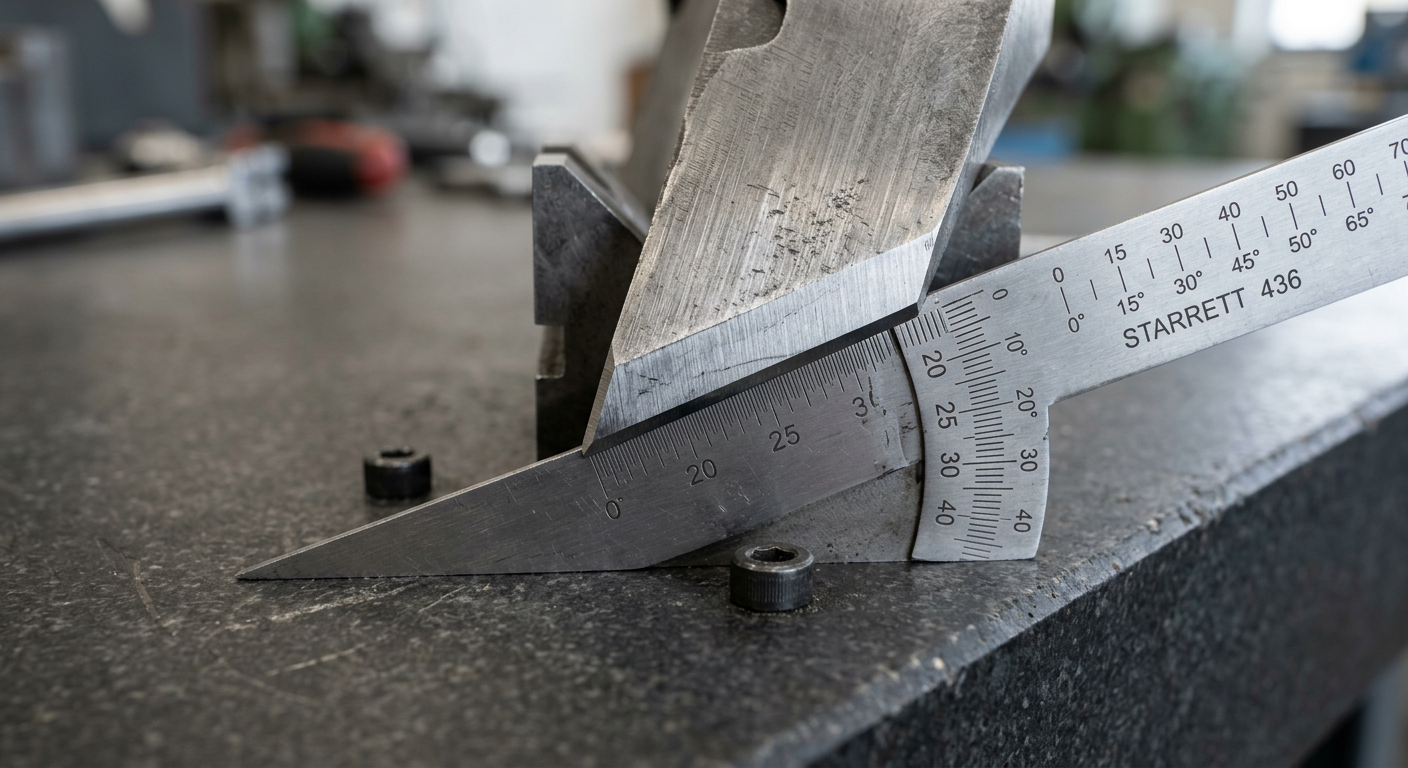
We promised five mistakes, but here's a bonus that ties several of them together. Blade geometry — the rake angle, relief angle, and edge profile — interacts with every other variable. A blade with the right steel, perfect heat treatment, and correct clearance will still underperform if its cutting geometry doesn't match the application.
Rake Angle Matters More Than You Think
A positive rake angle (typically 10–20° for plastic crushers) pulls material into the cut and requires less force. This means lower motor load, less heat generation at the edge, and slower wear. A neutral or negative rake angle is more robust against impact but generates more heat and requires more power. For clean, single-stream plastic recycling, a positive rake is almost always the better choice. For mixed waste with hard contaminants, a slight negative rake provides insurance against chipping.
Edge Profile: Sharp vs. Micro-Beveled
A razor-sharp edge cuts beautifully for the first few hours, then degrades quickly. A micro-beveled edge (a tiny secondary bevel of 0.1–0.3 mm at 45°) sacrifices a small amount of initial cutting efficiency for dramatically longer edge retention. For most recycling applications, the micro-bevel wins. The exception is thin-film cutting, where initial sharpness is everything.
This is exactly the kind of detail that custom blade engineering addresses. If you're buying generic off-the-shelf crusher blades and wondering why they don't last, geometry mismatch is likely part of the answer. Our team designs blades for plastic recycling and shredding with application-specific geometry as standard practice.
Stop Replacing Blades — Start Solving the Root Cause
If you're changing crusher blades more often than once every 6–8 weeks under normal operating conditions, something upstream is wrong. It might be one of these five mistakes. More likely, it's a combination — wrong steel compounded by loose clearances and no contamination control creates a failure cascade where each factor accelerates the others.
The fix doesn't require a massive capital investment. Start with the cheapest interventions first:
- Measure your clearances with feeler gauges today. Adjust if needed. Cost: $0 plus 30 minutes.
- Audit your infeed for contamination over one week. Count the metal pieces, stones, and foreign objects. Decide if a magnet or metal detector is justified.
- Request hardness test reports from your current blade supplier. If they can't provide them, that tells you something important.
- Review your blade steel grade against your actual feedstock — not what you wish your feedstock was.
- Implement a simple blade-change log and track hours or tons between changes.
If you want a second opinion on your current blade setup — or you're ready to trial blades engineered specifically for your crusher and feedstock — reach out to our engineering team. We routinely help recycling plants cut their blade costs by 30–50% without changing their machines. All it takes is getting the blade right.


