

Why Your Slitting Line Produces Burrs: 6 Blade-Related Problems and How to Fix Them

If your slitting line is throwing burrs, nine times out of ten the blade is the culprit — not the web tension, not the operator, not the weather. The six most common blade-related causes are dull edges, wrong overlap settings, excess side clearance, mismatched blade material, blade deflection under load, and contaminated mounting surfaces. Fix the blade issue and the burr problem usually disappears within the next roll.
1. The Edge Is Duller Than You Think
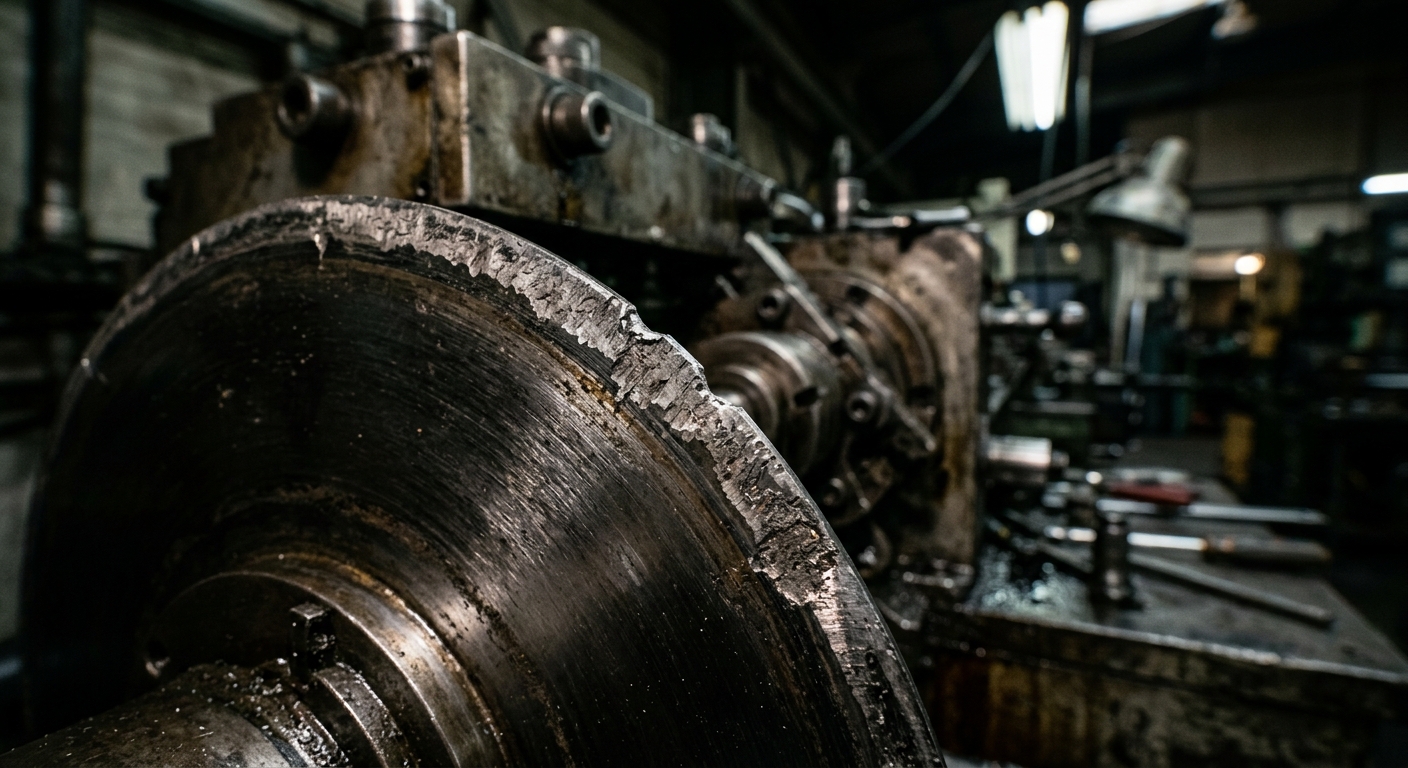
Here's a mistake we see constantly: operators judge blade sharpness by eye. A blade can look fine and still be 20 microns past its useful edge radius — and that's enough to start tearing fibers instead of shearing them.
Burrs from a dull edge show up on both sides of the cut and tend to get progressively worse across a shift, not suddenly. If you're tracking burr complaints by time-of-day and noticing they climb toward the end of a run, that's your answer. Set a hard resharpening interval based on linear meters cut, not visual inspection. For most film and paper substrates, that's every 8-12 hours of continuous run time on standard steel blades.
Not sure how often your blades should actually come off the line? Our guide on sharpening intervals, wear patterns, and proper storage breaks this down by material type.
2. Overlap Is Set for the Wrong Material
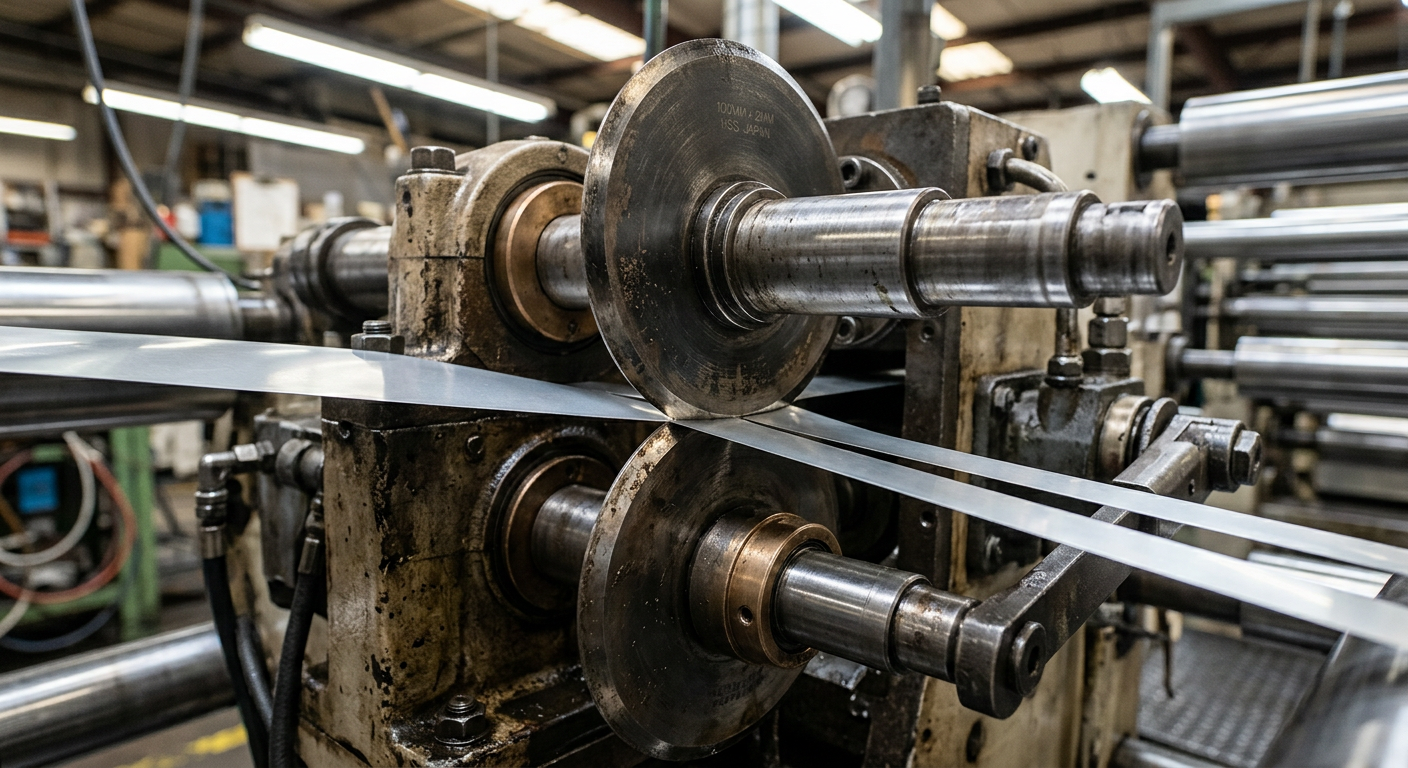
One-sided burrs are almost always an overlap problem, not a sharpness problem. Too much overlap between top and bottom blades pushes material rather than shearing it clean; too little leaves a gap that tears fibers as they separate.
For nonwoven and tissue substrates, overlap in the 0.05-0.08mm range usually works. Move to a heavier packaging film and you might need 0.10-0.15mm to get a clean shear without excessive drag. There's no universal number — it depends on substrate thickness, hardness, and line speed.
A converter running BOPP film at 300m/min once chased a one-sided burr for two weeks, replacing blades three times before realizing the overlap gauge had drifted 0.03mm out of spec during a machine rebuild. New blades, same problem — because the blade wasn't the actual issue.
3. Side Clearance Has Crept Open
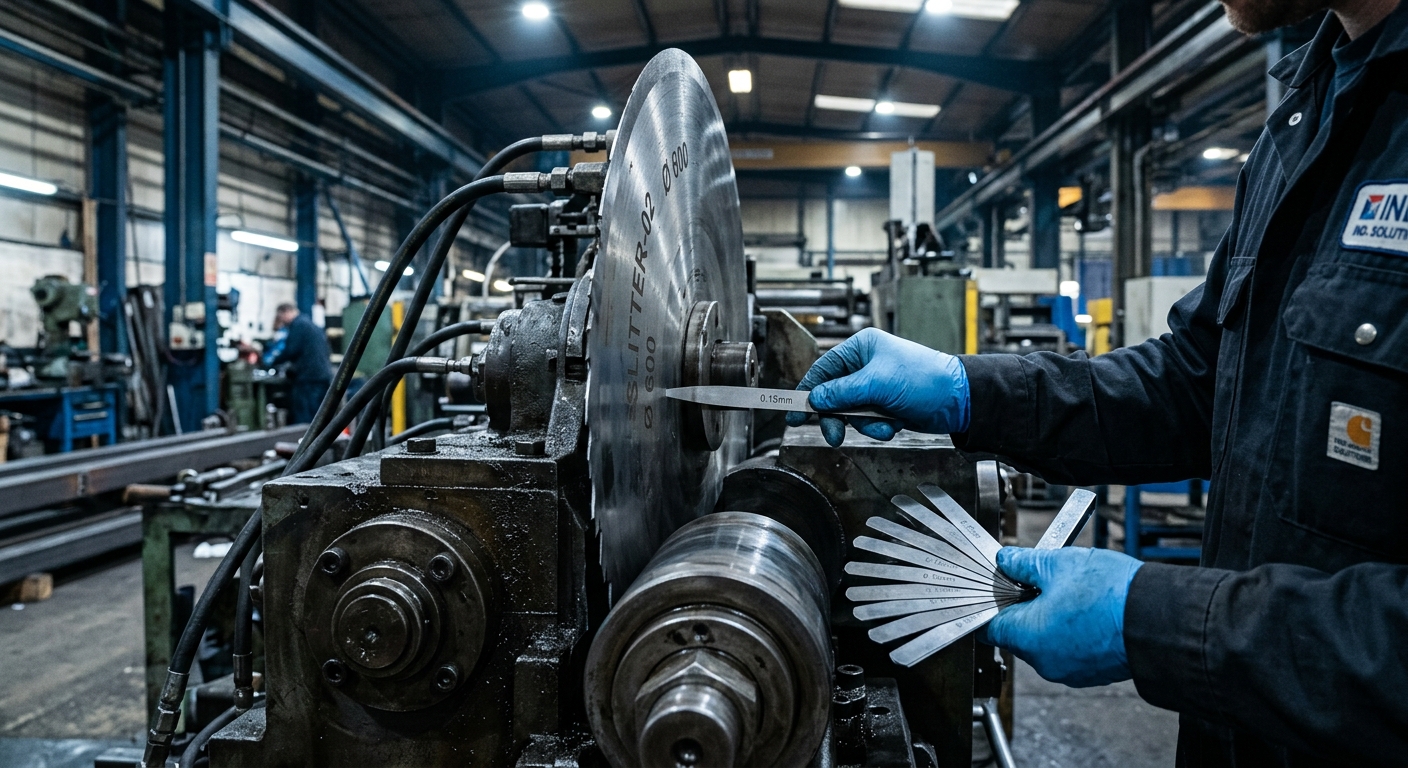
Side clearance — the gap between the blade face and the mating surface — is the setting nobody remembers to check until burrs get bad. As bearings wear and blade shafts pick up runout, that clearance opens up gradually, and burrs get worse with speed rather than staying constant.
If your burr complaints correlate with faster line speeds rather than time-in-run, clearance is the more likely cause than a dull edge. Check it with feeler gauges monthly, not annually. On high-speed film slitting lines running above 400m/min, even 0.02mm of extra clearance can be the difference between a clean edge and a wire burr.
4. The Blade Material Doesn't Match the Substrate
A carbide blade running on abrasive filled film will hold its edge longer than a standard steel blade — but drop that same carbide blade onto a sticky adhesive-backed substrate and it can chip instead of wearing evenly, leaving micro-burrs that look random.
This is the burr cause people overlook because it doesn't show up as obvious wear — it shows up as inconsistency. One roll is clean, the next has burrs, and nothing on the machine changed. That's a signature of a blade material fighting the substrate rather than cutting it efficiently.
We cover this trade-off in more depth in Circular Slitting Blades: How to Choose the Right Material for Your Substrate, and our broader comparison on steel vs carbide vs ceramic is worth reading before your next blade order.
5. The Blade Is Flexing Under Load — And You Can't See It
Thin blades running wide webs at high tension deflect. It's a tiny amount — often under half a millimeter — but that's enough to change the shear angle across the width of the roll, and that's exactly why burrs on wide lines are often worse at the edges of the web than in the center.
If your burr pattern maps to blade position rather than time or speed, deflection is the likely suspect. The fix is usually thicker blade stock or added support bushings near the outer stations, not a full re-tooling.
A packaging OEM running a 2.2-meter-wide slitter noticed burrs only on the outermost two stations. Swapping to 0.05mm thicker blades on just those positions solved it — no changes needed on the center stations.
6. Mounting Surfaces Are Dirty or Out of Torque Spec
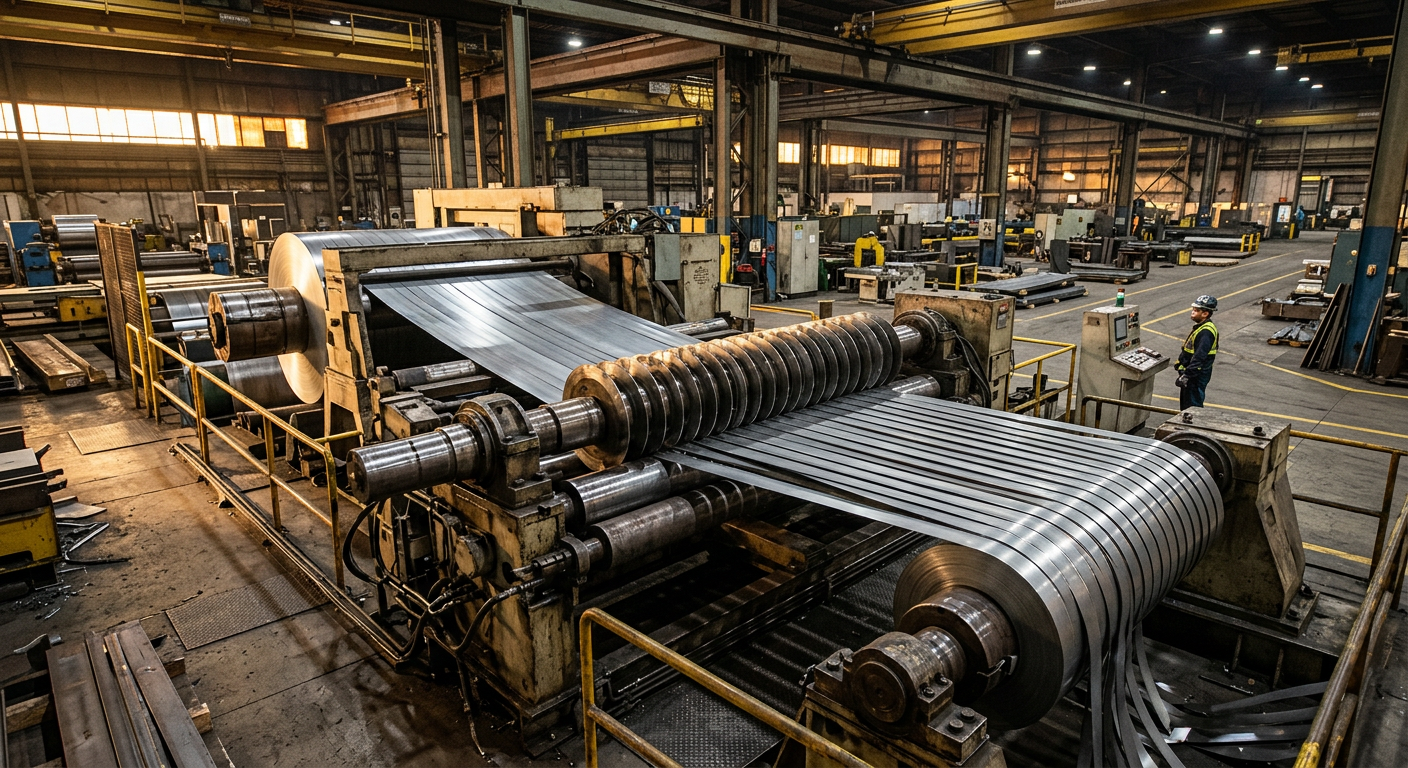
This one's embarrassingly simple and gets missed constantly. A film of adhesive residue, dust, or old lubricant between the blade and its mounting collar creates micro-runout — and micro-runout produces burrs that seem to appear from nowhere, on random rolls, with no pattern tied to wear or speed.
Before you blame the blade itself, clean the shaft and collar surfaces and re-torque to manufacturer spec. It takes ten minutes and eliminates a surprising share of intermittent burr complaints, especially on lines that get frequent blade swaps for different jobs.
How to Diagnose Which One You've Got
Don't guess — pattern-match. Burrs on both sides that build over a shift point to a dull edge. One-sided burrs point to overlap. Burrs that worsen with speed point to clearance. Random, inconsistent burrs point to material mismatch or contamination. Burrs concentrated at specific stations point to deflection.
Run this checklist before your next call with your blade supplier — it'll cut your troubleshooting time from days to an afternoon. If you're working across multiple substrate types, this is also a good moment to review whether your current blade specs match your product mix; our web handling and slitter blade resources cover substrate-specific setups in more detail.


