
Tungsten Carbide Slitter Blades: Handling and Storage Tips

Tungsten carbide slitter blades need to be stored individually sleeved, in a low-humidity environment, laid flat or edge-protected rather than stacked loose, and kept away from impact and corrosive air. Carbide’s extreme hardness makes it brittle: it chips on contact long before it dulls, and its edge can corrode faster than most buyers expect if left unprotected. Everything below walks through why that’s true and exactly how to put it into practice on a shop floor.
Key takeaways
- Store tungsten carbide slitter blades individually sleeved, in a low-humidity environment, because carbide’s hardness-brittleness tradeoff means it chips on impact rather than dulling gradually.
- Carbide can still corrode or pit in humid or salty air despite its reputation for being rust-resistant; corrosion resistance depends on the binder and any surface coating.
- Racking with spaced slots protects edges better than stacking blades loose, and if stacking is unavoidable, interleave with foam or felt as minimum protection.
- There’s no fixed shelf-life for carbide blades in storage; environmental exposure matters more than calendar time, so inspect edge condition before mounting rather than relying on a date.
- Most avoidable blade damage happens in the handoff between storage and the knife holder, so carry blades by the body in their sleeve, never loose or by the edge.
Why Tungsten Carbide Blades Are Stored Differently Than HSS
Grab a carbide blade and a high-speed steel blade and knock each one lightly against a metal bench edge. The HSS blade might dent. The carbide blade is more likely to chip, and that chip is permanent. That one difference explains almost every storage rule in this article.
Carbide gets its hardness from being a sintered composite, tungsten carbide particles bonded in a metal binder, not a solid homogenous metal like HSS. That structure gives it outstanding wear resistance against abrasive cutting, which is exactly why plants choose it for high-volume slitting. But it behaves more like a ceramic than a steel tool under impact stress. Hardness and brittleness come as a package deal; you don’t get one without the other.
There’s also a persistent myth that carbide “doesn’t rust.” It resists corrosion better than plain carbon steel in many cases, but corrosion resistance depends heavily on the binder metal and any surface coating applied. Leave an unprotected carbide edge in humid or salty air and it can oxidize or pit, sometimes faster than buyers expect given how tough the material feels in hand.
Every rule that follows, individual sleeving, flat storage, no loose stacking, traces straight back to this tradeoff. If you understand the material science, the protocol stops feeling arbitrary. For a broader comparison of blade materials and when each makes sense, see how to choose the right industrial blade material.
What Happens When Carbide Blades Are Stored Wrong
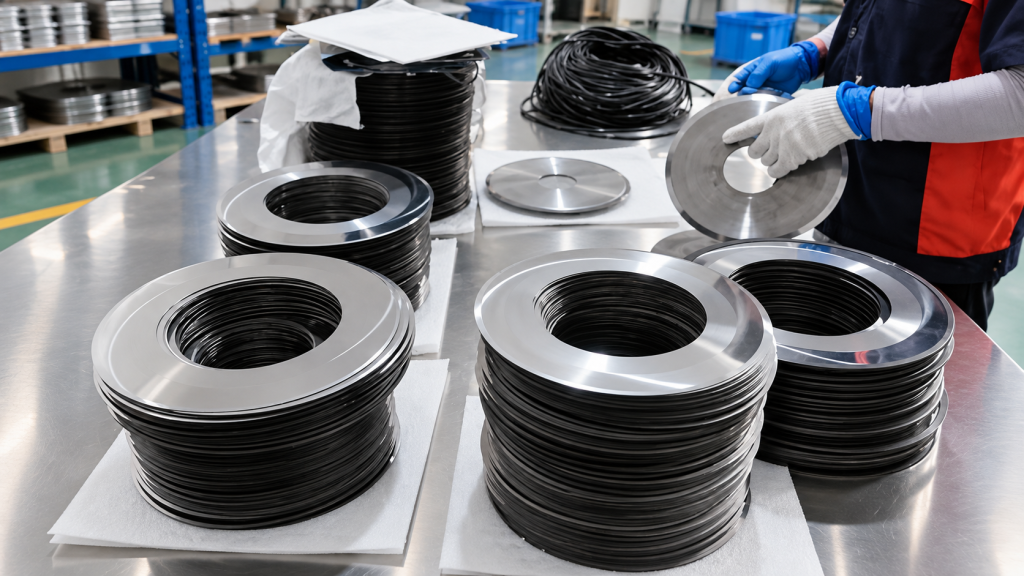
A blade that looks perfect on the shelf can still be ruined before it’s ever mounted. That’s the uncomfortable part of carbide: damage from bad storage often isn’t visible until the blade is running and producing bad cuts.
Chipped micro-edges are the most common silent failure. Blades knocking together in a bin or drawer create tiny nicks along the cutting edge that are easy to miss on a visual check but show up immediately as burrs or inconsistent cuts once the blade is in the machine. If you’ve dealt with unexplained burring, it’s worth reading why your slitting line produces burrs, since storage damage is one of the root causes rarely discussed.
Humidity exposure causes a different kind of damage. Surface oxidation changes the edge geometry at a microscopic level, which means a blade can look “new” but cut like it’s already worn. This is corrosion-driven dulling, not use-driven dulling, and it’s entirely preventable.
Warping is rare in solid carbide but more common in thin carbide-tipped blades with an HSS or steel backing, especially if they’re stored under uneven weight for extended periods.
A hypothetical scenario
Imagine a converter who pulls a box of carbide slitter blades off the shelf after sitting for a few months. They mount one, run the first roll, and get inconsistent slit width right from the start. No manufacturing defect is to blame. The issue traces back to an edge nick picked up from loose storage, not anything wrong with the blade when it left the factory.
How Should Tungsten Carbide Slitter Blades Be Stored Between Uses?
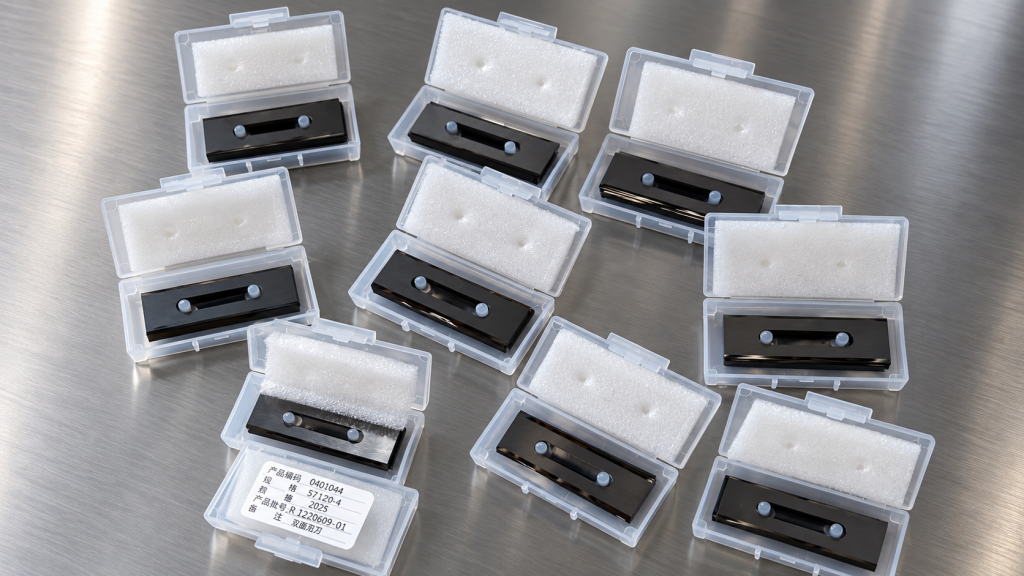
Forget the vague advice to “store carefully.” The actual protocol looks like this.
- Individual protective sleeves or cases. Every blade gets its own sleeve or rigid case. Never loose in a drawer or bin with other blades.
- Controlled humidity environment. Keep storage below the point where condensation or surface moisture can form. Desiccant packs inside the storage cabinet are cheap insurance.
- Light anti-rust oil or coating on the cutting edge if blades will sit for extended periods before use, particularly in humid climates or coastal facilities.
- Store flat or in dedicated racks with edge separation. Never stack blades flat against each other with no barrier between edges.
- Keep blades away from vibration sources. Storing blades near heavy running machinery lets edges knock together over time even without anyone touching them.
None of this is complicated. It’s just rarely written down anywhere, which is part of why so many plants lose blades to avoidable damage before they even get used.
Stacking vs. Racking: Which Storage Method Actually Protects the Edge?
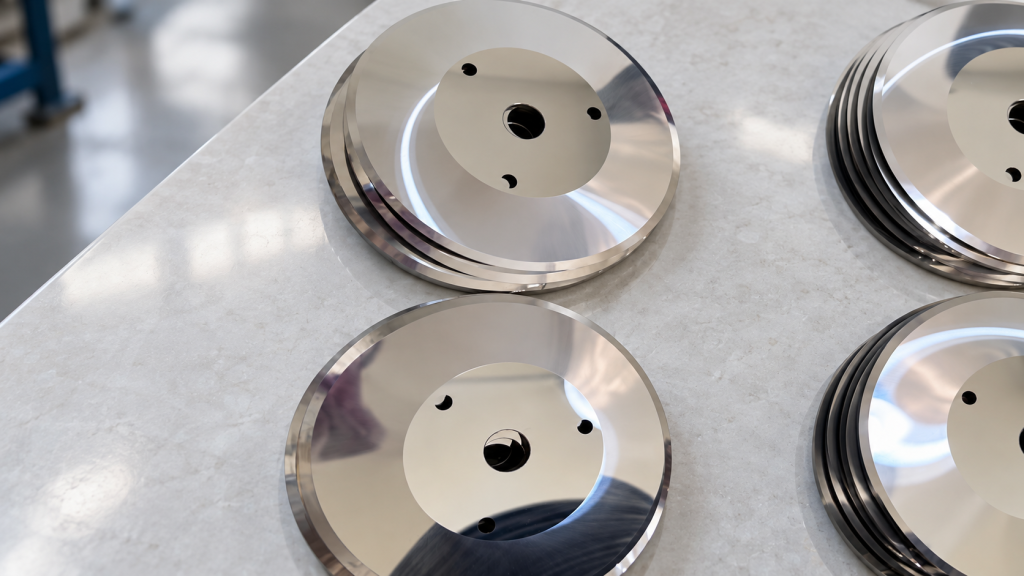
This is the practical decision most maintenance teams face once they run out of individual sleeves or shelf space. The honest answer: racking wins, but stacking can work if you’re careful.
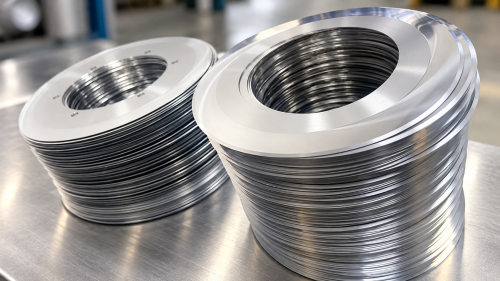
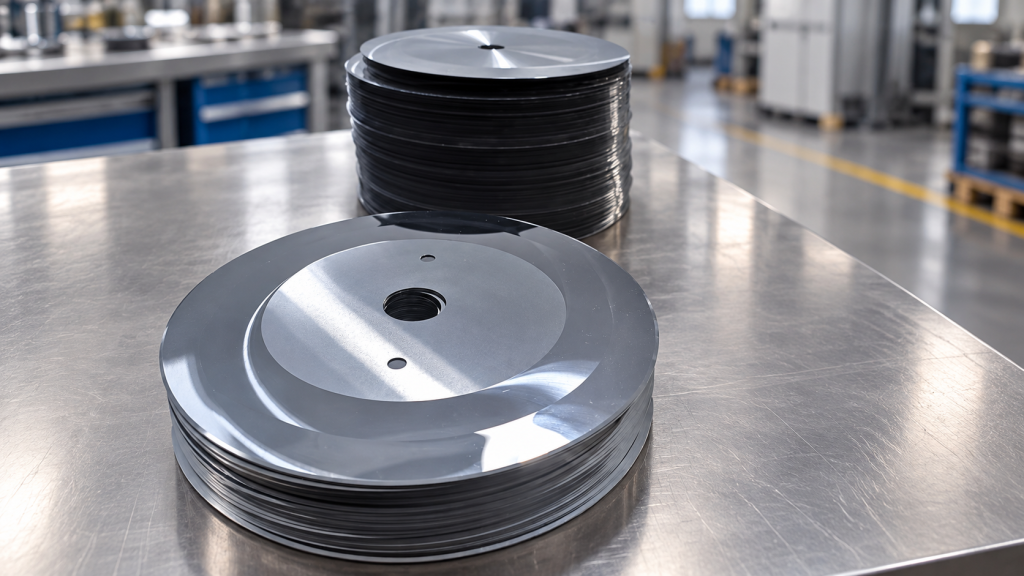
- Stacking loose blades flat lets edges contact adjacent blades directly. This is especially risky for circular slitter blades, where the entire outer circumference is the cutting surface and every point of contact is a chip risk.
- Vertical racking with spaced slots keeps edges from touching altogether, but the slots need enough depth. Shallow slots let larger blades sag and contact each other anyway, defeating the purpose.
- If stacking is genuinely the only option due to space constraints, interleaving with foam, felt, or the original factory sleeve is the bare minimum protection. Skipping this step is where most chip damage originates.
- Labeling each slot or sleeve with the blade spec and order reference isn’t just tidiness, it matters for repeat-order consistency. Mixing up blade specs during a changeover causes problems that have nothing to do with the blade itself.
If your facility handles multiple blade types across paper and nonwoven web handling or packaging cutting operations, racking with clear labeling pays for itself the first time it prevents a mismatched blade going into the wrong machine.
How Long Can a Tungsten Carbide Blade Sit Before It Needs Reconditioning?
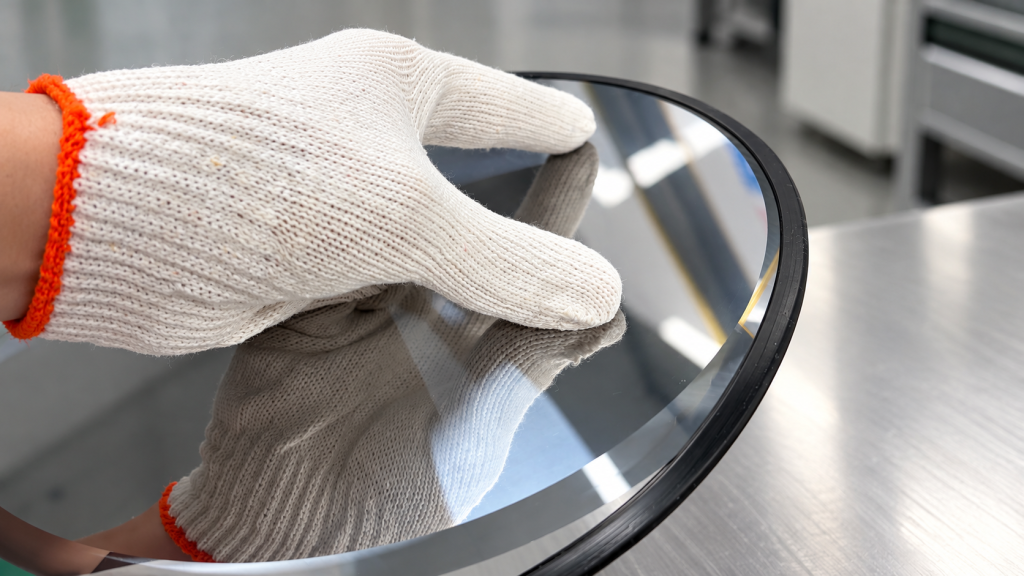
There’s no universal shelf-life number for carbide blades in storage, and anyone who gives you a specific figure without knowing your storage environment is guessing. What actually determines condition is environmental exposure, not time on a calendar.
A blade that’s sleeved, kept dry, and left untouched can sit far longer in usable condition than one left exposed to humidity or handled frequently even for a few weeks. Time isn’t the variable that matters here: exposure is.
The practical signal to act on isn’t a date, it’s visible edge condition. Before mounting any blade that’s been in storage for a while, inspect it for oxidation spots, edge nicks, or coating wear. A quick check under magnification takes seconds and prevents a bad run.
Binder composition affects how a specific carbide grade responds to storage conditions, so it’s worth checking with the blade supplier’s engineering team on coating type and recommended handling windows for the exact grade in your inventory rather than assuming all carbide blades behave identically.
Troubleshooting: Blade Shows Oxidation or Edge Damage After Storage
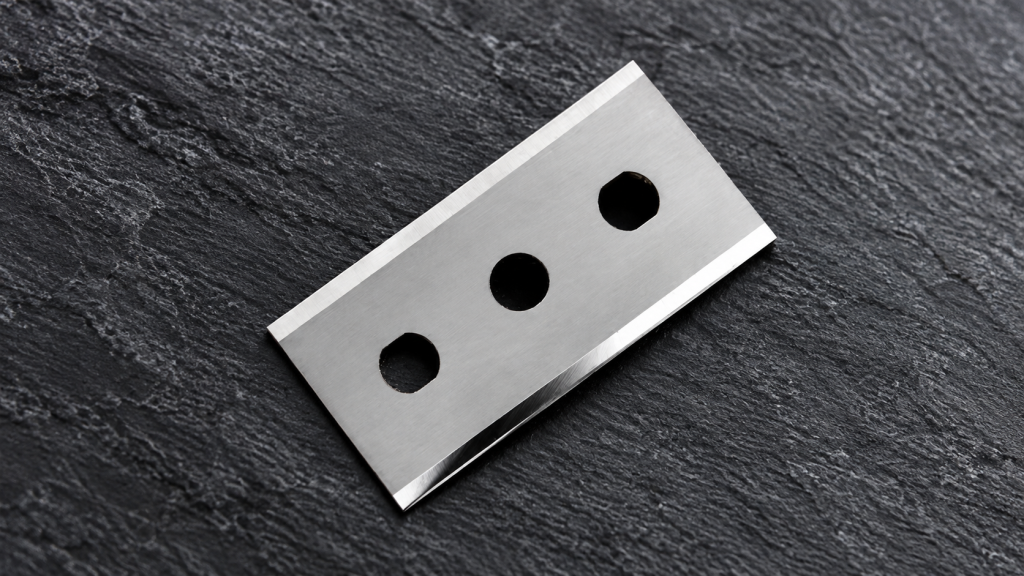
Pulling a blade from storage and seeing something off on the surface doesn’t automatically mean it’s scrap. Here’s how to triage it.
- Light surface discoloration without pitting: usually safe. Wipe it clean and inspect the edge under magnification before mounting.
- Visible pitting or rust spots on the cutting edge: do not mount this blade. Send it for resharpening or regrinding evaluation first.
- Chipped or nicked edge sections: isolate the blade immediately. Don’t run it hoping the chip won’t matter, it will show up as a repeating defect in the slit pattern, every single rotation.
- Keep a simple log of blades pulled from storage with issues. Over time this tells you whether the problem is a gap in your storage practice or something specific to a particular batch.
This troubleshooting habit connects directly to blade life overall. For a broader look at sharpening intervals and wear patterns beyond just storage, see how to extend industrial blade service life.
Handling Blades Safely During Mounting and Changeovers
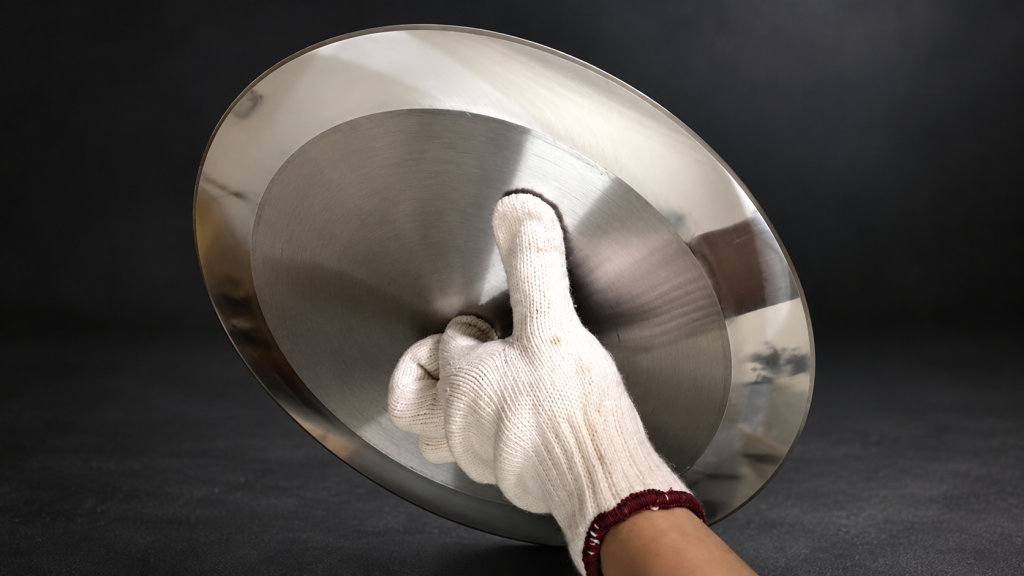
Storage protocol doesn’t matter much if the blade gets damaged thirty seconds before it’s mounted. This is the part most guides skip entirely.
Always lift and carry carbide blades by the body, never by the edge, even with gloves on. Grip strength against a carbide edge can introduce micro-stress that shows up later as premature chipping.
Use the blade’s original sleeve or a dedicated tray when moving it from storage to the knife holder. Carrying loose blades across the shop floor, even for a short distance, is how most avoidable edge damage actually happens.
Once mounted, pneumatic or mechanical knife holders do a good job protecting the blade during operation. Pneumatic knife holders are a common mechanism for housing slitter blades across paper, film, rubber, and packaging lines, and they’re designed to keep the blade seated and stable during the cut. But the gap between storage and mounting, the handoff, is where the holder provides zero protection and where damage most often originates.
Train changeover staff to inspect the edge visually before mounting, not just after a bad cut shows up downstream. A quick visual check at changeover is far cheaper than a scrapped roll.
A Practical Storage and Handling Checklist for Maintenance Teams
- Incoming blades: inspect on arrival, sleeve individually, label with spec and order reference, place in humidity-controlled storage.
- In storage: check desiccant periodically, avoid loose stacking, keep away from vibration sources and corrosive air.
- Before mounting: visual and edge inspection under magnification, clean off any anti-rust coating following supplier instructions.
- During use: track run count or wear signs to decide between resharpening and replacement.
- End of life: segregate worn or chipped blades from working stock immediately to prevent accidental remounting.
Print this list and tape it inside the storage cabinet. Consistency across everyone handling blades is what makes it actually work.
Getting Storage Right Protects Your Cut Quality, Not Just the Blade
Storage discipline is cheap insurance against a much higher cost: downtime, scrap, and inconsistent cuts traced back to a blade that was damaged before it ever ran. The protocol itself isn’t hard, sleeves, humidity control, no loose stacking, careful handling at changeover. What takes discipline is doing it every time, not just when someone remembers.
This matters more as order volume grows. One damaged blade mixed into a batch can skew an entire production run, and repeat-order consistency depends on every blade in inventory being in the same condition it was in when it arrived.
If you’re sourcing custom tungsten carbide or HSS blades and want to discuss handling and storage specific to your substrate, line speed, and machine type, get in touch with yishimachinery. Browse the full range of blade products or reach out through contact us to discuss your specific slitting application.
Frequently asked questions
Can tungsten carbide slitter blades rust?
Yes, tungsten carbide blades can oxidize or pit if left exposed to humid or salty air without protection. Corrosion resistance varies depending on the metal binder used in the carbide composite and whether a protective coating is applied, so unprotected edges shouldn’t be assumed immune to corrosion.
Is tungsten carbide more fragile than HSS for slitter blades?
In terms of impact resistance, yes. Carbide’s extreme hardness comes with lower tolerance for shock, so it chips rather than dents on contact. HSS tolerates knocks better but dulls faster in use, which is why storage handling needs differ between the two materials.
How do I know if a stored carbide blade is still usable?
Inspect the edge under magnification for oxidation spots, pitting, or nicks before mounting. Light surface discoloration without pitting is usually fine to clean and use; visible pitting or any chipped section means the blade should go for resharpening evaluation instead of being mounted directly.