

How Blade Tolerance and Edge Finish Affect Cutting Accuracy in Industrial Production

Blade tolerance and edge finish determine whether a cut comes out clean or ragged — a blade held to ±0.01mm tolerance with a properly honed edge will slice consistently for thousands of cycles, while a loosely toleranced blade with a rough grind will drift, drag, and produce burrs almost immediately. In industrial production, these two specs aren't cosmetic details; they're the difference between a smooth run and an unplanned line stop. Get them wrong and you'll be chasing quality issues you never actually diagnosed correctly.
What Blade Tolerance Actually Means (And Why ±0.05mm Isn't 'Close Enough')
Most buyers think of tolerance as a formality on a spec sheet. It's not. Tolerance is the physical variation allowed in thickness, flatness, and bore diameter across a production batch — and even small deviations compound fast once a blade is spinning at line speed.
A round blade held to ±0.02mm will run true, stay balanced, and maintain consistent contact pressure against the anvil or counter-blade. Loosen that to ±0.05mm or worse, and you introduce micro-wobble. At 300 RPM, that wobble becomes vibration, and vibration becomes an uneven cut — sometimes visible, often not until the material downstream starts jamming or tearing.
Where Tolerance Gets Sloppy
Cheaper blade suppliers often hold tight tolerance on the outer diameter but ignore bore concentricity or flatness. That's the part that actually causes the wobble. If a supplier can't tell you their flatness tolerance separately from OD tolerance, that's a red flag.
Edge Finish: The Overlooked Variable That Determines Cut Quality
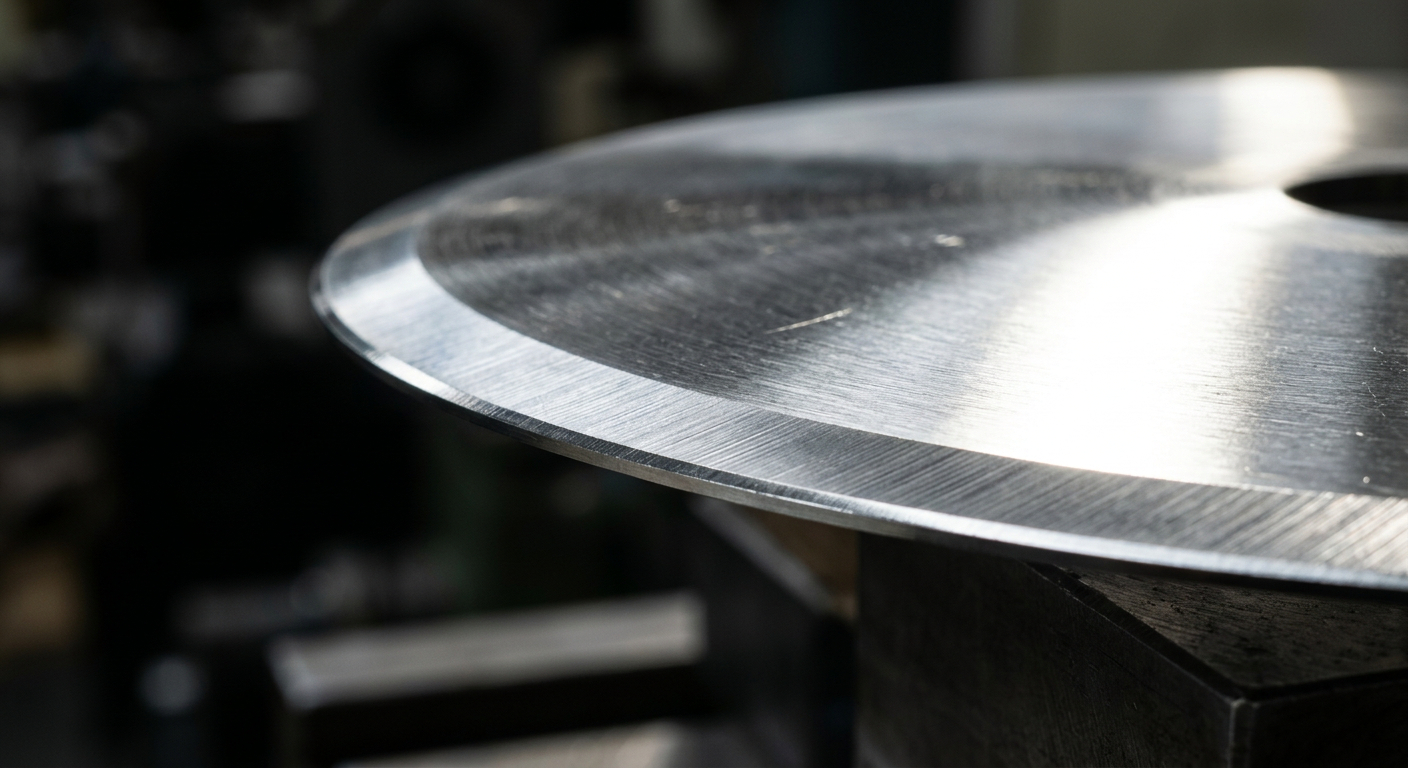
Two blades can share identical tolerance specs and still cut completely differently — because edge finish, not thickness alone, is what actually contacts the material. Edge finish describes the surface roughness (measured in Ra, microns) along the cutting bevel, and it directly affects friction, heat buildup, and how cleanly a material separates.
A rougher edge (Ra 0.6–0.8 μm) generates more friction, which means more heat, which means faster edge dulling. That's fine for some low-precision shredding work. But for packaging blade applications cutting thin films or laminates, a rough edge will snag fibers and leave a ragged tear line instead of a clean slit.
Why Finer Isn't Always Better
Here's the part people get wrong: mirror-finish edges aren't automatically superior. On abrasive materials like paper or nonwoven fabric, an ultra-fine edge can actually wear faster because it has less structural “tooth” to resist micro-chipping. Matching finish to material is more important than chasing the lowest Ra number possible.
A Real-World Example: Film Slitting Gone Wrong
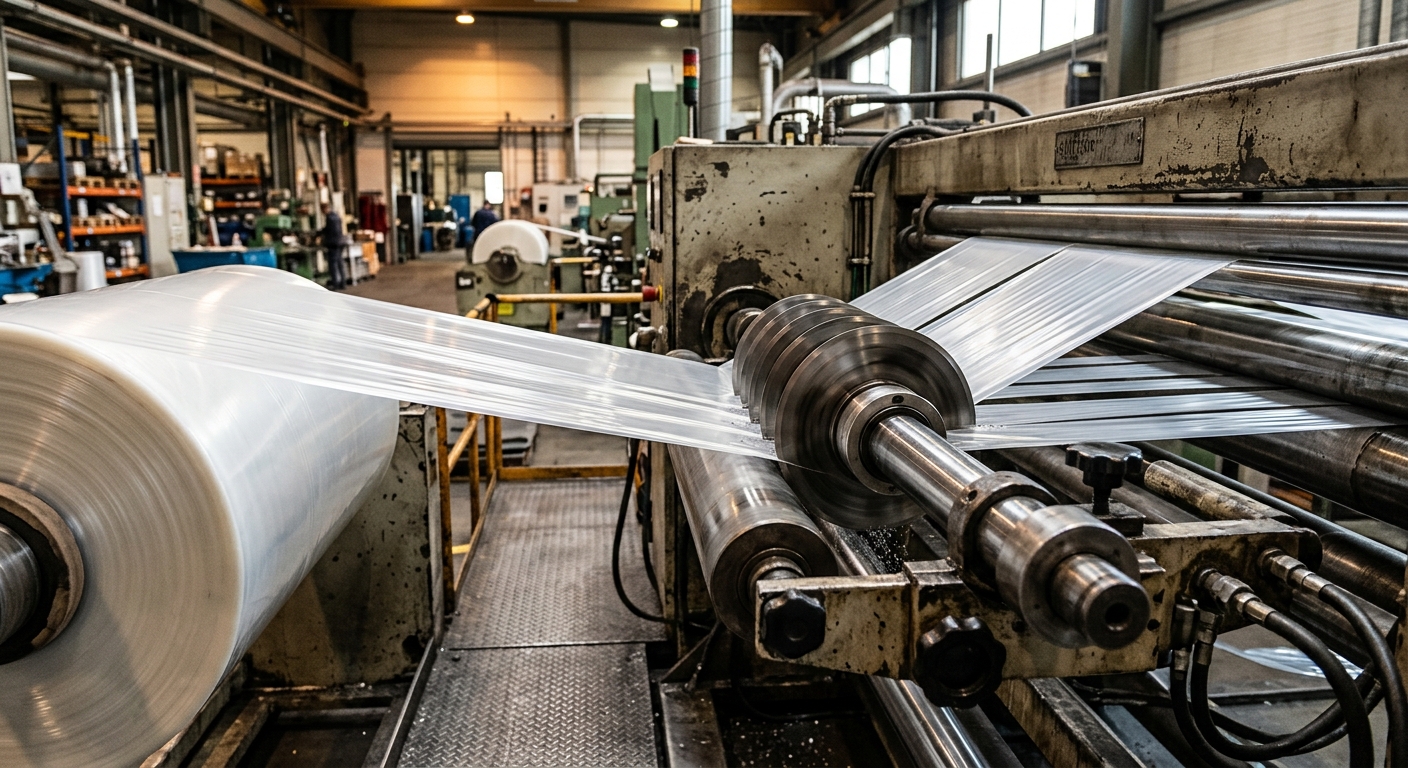
A packaging converter we worked with was getting inconsistent slit widths on a BOPP film line — edges would fray on one side and cut clean on the other. The root cause wasn't the machine. It was a batch of circular slitting blades where flatness tolerance had drifted to ±0.04mm across the batch, causing uneven pressure distribution against the anvil roll.
Once the blades were remade to ±0.015mm flatness with a fine-honed 0.15 μm edge, the fraying disappeared entirely — no machine adjustments needed. This is a good reminder that when a cutting problem shows up intermittently across a run, the blade batch consistency is often the actual culprit, not the equipment. For more on selecting the right approach for film substrates, see our guide on choosing the right material for circular slitting blades.
How Tolerance and Finish Interact With Blade Material
Tolerance and edge finish don't exist in isolation — they behave differently depending on what the blade is made from. Tool steel holds a fine edge well but is more prone to micro-deformation under heat, which can push it outside tolerance during long runs. Tungsten carbide holds tolerance and edge geometry far longer but chips instead of deforming if the finish grind introduces micro-cracks.
This is why the manufacturing process matters as much as the material spec. A carbide blade ground too aggressively to hit a tight tolerance quickly can develop subsurface stress that shows up as chipping weeks later — not immediately, which makes it hard to trace back. If you're deciding between materials in the first place, our breakdown of steel vs carbide vs ceramic blades covers how each holds up under different tolerance and finish demands.
Measuring What Actually Matters: The QC Checks Behind Every Batch
Not every quality claim is backed by real measurement. Here's what should actually be checked before a blade batch ships:
- Flatness — measured across the full diameter, not just at a few sample points.
- Bore concentricity — critical for round blades running at high RPM.
- Edge angle consistency — a 30° bevel that drifts to 33° in spots changes cutting behavior mid-run.
- Surface roughness (Ra) — measured with a profilometer, not eyeballed.
- Hardness uniformity — a blade can meet HRC spec on average while having soft spots that wear unevenly.
Manufacturers with real engineering capability — Yishi Machinery, for instance, backed by 1,000+ invention patents — treat these as standard checks, not optional add-ons. If a supplier can't produce measurement data on request, that tells you something about how they define “quality.”
Application-Specific Tolerance: One Spec Doesn't Fit All
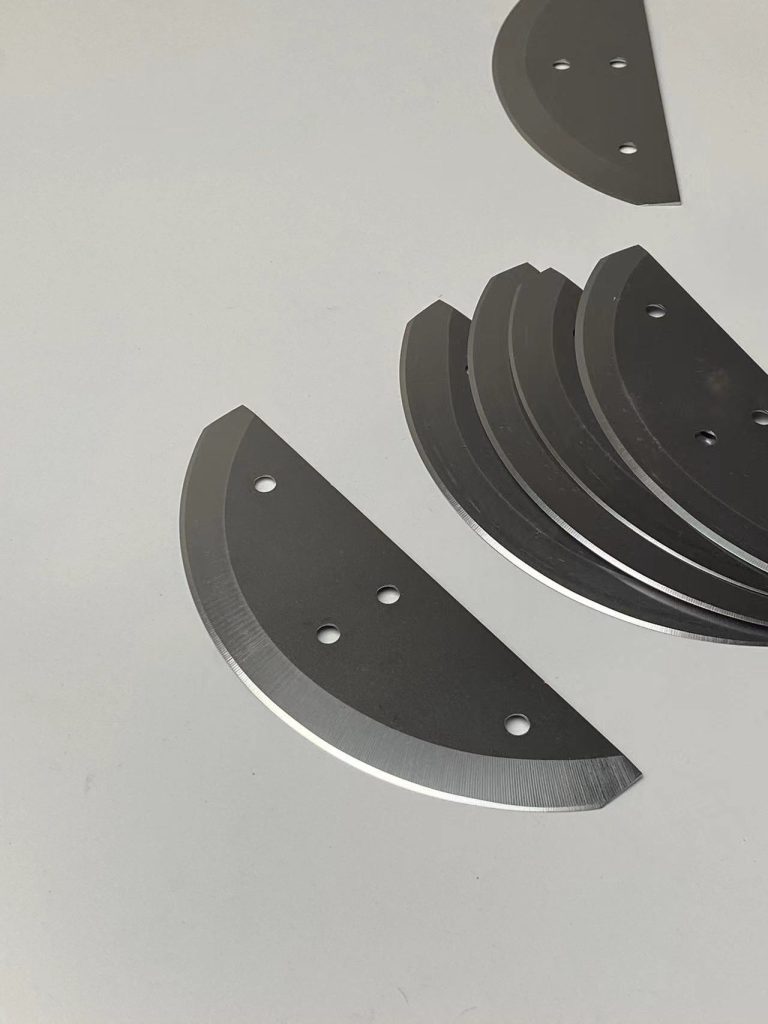
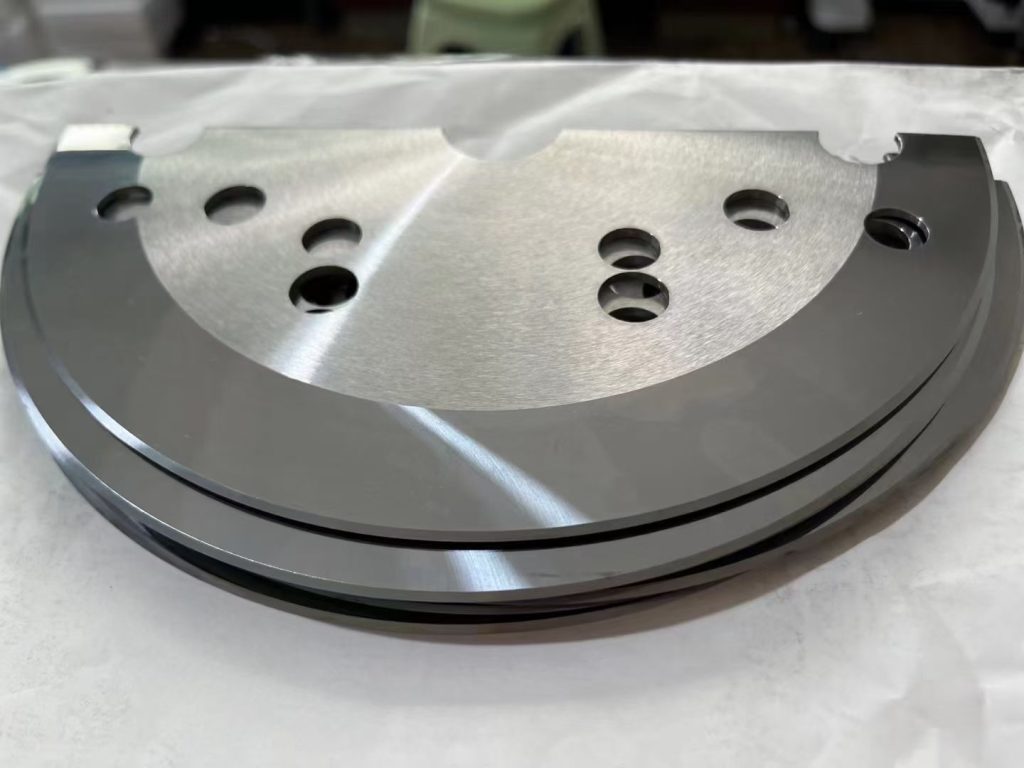
A shredder blade chewing through plastic bales doesn't need the same tolerance as a food processing blade slicing protein. Trying to apply one universal tolerance standard across applications wastes money in some places and risks failure in others.
Recycling and Crushing
For crusher blades and shredder knives, tolerance of ±0.05–0.1mm is usually acceptable since the material being cut is irregular anyway. Edge finish matters less than impact toughness here.
Food Processing
For food blades, tighter tolerance (±0.01–0.02mm) combined with a fine, hygienic edge finish prevents tearing and reduces bacterial harborage points in micro-scratches. This is also where corrosion-resistant coatings and finish quality intersect directly with food safety compliance.
Packaging and Film
Packaging and slitting blades sit in the middle but lean toward tighter tolerance because visual defects (frayed edges, uneven slits) are immediately obvious to the end customer.
When Loose Tolerance Actually Makes Sense
Here's an opinion that might surprise you: tighter tolerance isn't always better business. If you're running a low-speed, low-precision shredding operation on scrap material, paying a premium for ±0.01mm tolerance is money wasted — the process itself doesn't demand it, and the blade will wear down anyway within a normal service interval.
The smarter move is matching tolerance to the actual failure mode you're trying to prevent. Ask yourself: does looser tolerance cause visible defects, machine strain, or safety issues in my process? If not, don't overpay for precision you can't use. This is exactly the kind of conversation a good blade supplier should have with you before quoting — not after.
The Bottom Line: Spec It Right the First Time
Blade tolerance and edge finish aren't afterthoughts — they're the two specs most responsible for cutting accuracy, wear life, and downtime frequency. Get them matched to your actual application, and quality problems that seem mysterious usually turn out to be very explainable.
If you're troubleshooting inconsistent cuts on a current line, it's also worth reviewing how sharpening intervals and storage affect edge geometry over time — our guide on extending industrial blade service life covers that in detail.
Yishi Machinery specs tolerance and edge finish to the application, not to a generic catalog number — because a blade that's technically “in spec” but wrong for your process still costs you downtime. If you're dealing with inconsistent cuts, drifting tolerances, or just want a second opinion on your current blade spec, reach out to our engineering team and we'll walk through it with you.


