

How to Choose the Right Industrial Blade Material: Steel vs Carbide vs Ceramic

For most general-purpose cutting and shredding applications, high-carbon steel delivers the best balance of cost and toughness — but when abrasion resistance and service life are the priority, tungsten carbide or ceramic blades will significantly outperform it. The right blade material depends on three factors: the material being cut, the cutting speed and impact load, and your acceptable cost-per-cut over the blade’s service life. Getting this decision wrong means either overpaying for a blade your process doesn’t need, or burning through cheap steel blades every few weeks on a line that demands carbide.
| Parameter | High-Carbon Steel | Tungsten Carbide | Ceramic |
|---|---|---|---|
| Initial Cost | Low | High | Medium–High |
| Edge Hardness | 55–65 HRC | Up to 90 HRA | Exceeds 90 HRA |
| Wear Resistance | Moderate | Excellent | Outstanding |
| Toughness / Impact Resistance | High | Moderate | Low — brittle |
| Resharpening Ease | Easy | Requires CBN or diamond wheel | Not typically resharpened |
| Corrosion Resistance | Low (needs coating) | Moderate | Excellent |
| Best Application | General cutting, shredding | Abrasive materials, film slitting | Fibers, non-contact wear surfaces |
| Service Life vs. Steel | Baseline | 3–10× longer | 5–15× longer (in right conditions) |
High-Carbon Steel: The Workhorse for High-Impact Applications
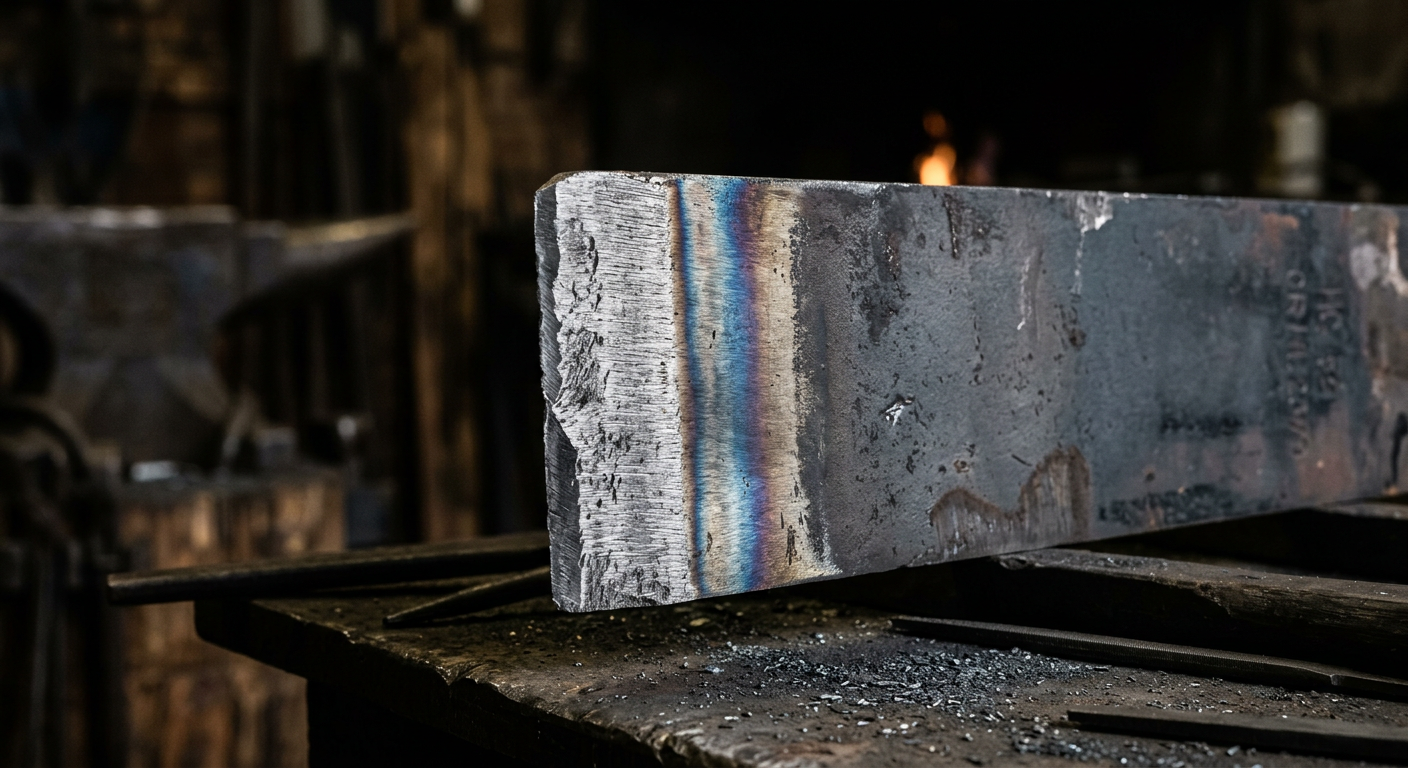
High-carbon steel blades — typically in grades like D2, SKD11, or 6CrW2Si — are the default choice for applications that involve heavy impact, shock loading, or intermittent cutting. With hardness typically ranging from 55 to 65 HRC, these blades can be ground to precise geometries, resharpened multiple times with standard equipment, and replaced at low cost when worn.
The tradeoff is wear resistance. In high-abrasion environments — cutting glass-filled plastics, recycled mixed materials, or abrasive packaging substrates — high-carbon steel edges dull faster, requiring more frequent resharpening or replacement.
High-carbon steel is the standard material for shredder blades and crusher blades, where impact toughness matters more than edge retention. For instance, a municipal solid waste recycling facility running a dual-shaft shredder needs blades that can absorb shock from metal contaminants without chipping — high-carbon steel handles this where carbide would fracture.
When to Choose High-Carbon Steel
- High-impact or shock-loaded cutting environments
- Applications requiring frequent resharpening on-site
- Budget-sensitive operations with moderate throughput
- General-purpose slitting, chopping, and granulating
Tungsten Carbide: Maximum Wear Life for Abrasive and High-Speed Cutting
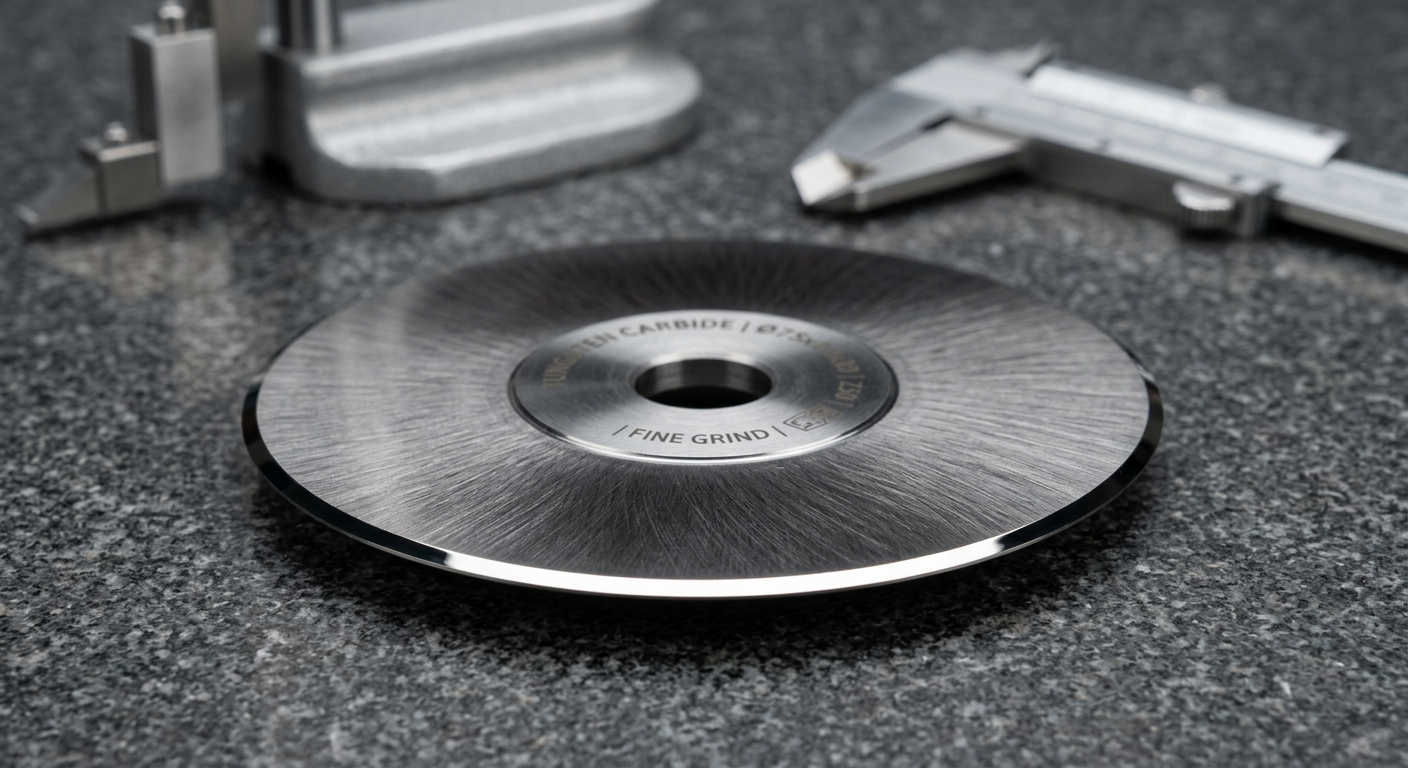
Tungsten carbide (WC-Co) blades offer hardness approaching 90 HRA — far beyond what steel can achieve — making them the preferred choice wherever abrasive materials, high cutting speeds, or extended service intervals are required. The cost premium is real: carbide blades typically cost 3–5× more than equivalent steel blades upfront. But in the right application, they last 3–10× longer, which drives the cost-per-cut down substantially.
Carbide is the dominant material for film slitting blades and rotary slitter knives used in plastic film, foil, and nonwoven converting. A flexible packaging converter running BOPP film at 400 m/min, for example, might replace steel slitting blades every 3–4 days. Switching to tungsten carbide blades extended the same operation’s blade change interval to 3–4 weeks — eliminating multiple production stoppages per month.
When to Choose Tungsten Carbide
- High-speed slitting of film, foil, paper, or nonwoven
- Cutting abrasive materials like glass-filled polymers or recycled plastics
- Operations where downtime for blade changes is costly
- Long-run production lines with consistent material inputs
Carbide blades require diamond or CBN grinding wheels for resharpening — factor this into your total cost of ownership if in-house resharpening is part of your maintenance model.
Ceramic Blades: Extreme Hardness for Specialized Non-Impact Cutting
Ceramic blades — typically zirconia or alumina-based — exceed even carbide in hardness and offer outstanding corrosion and chemical resistance. Their wear life in the right conditions can be 5–15× that of steel. However, ceramics are brittle: they cannot absorb impact or lateral stress without chipping or fracturing, which makes them unsuitable for shredding, chopping, or any application with variable feed or hard inclusions.
Ceramic blades are best suited to continuous, low-impact slitting of soft, non-abrasive materials — particularly chemical fiber cutting, textile slitting, and some food-grade applications where metal contamination from blade wear is a regulatory concern. They are also non-magnetic and non-reactive, which matters in pharmaceutical and electronics manufacturing.
When to Choose Ceramic
- Continuous slitting of fibers, textiles, or soft films
- Applications requiring zero metallic contamination
- Chemically aggressive environments where steel corrodes
- High-volume runs with consistent, clean material feeds
Ceramic blades are rarely resharpened — they are typically replaced when worn. Evaluate total cost against service life, not just purchase price.
Side-by-Side Comparison: Which Material Fits Your Operation?
The table below summarizes the key performance differences across all three blade materials. Use it as a starting framework — your specific grade selection within each material category will depend on the exact application, machine clearances, and edge geometry required.
| Criteria | High-Carbon Steel | Tungsten Carbide | Ceramic |
|---|---|---|---|
| Initial Cost | Low | High | Medium–High |
| Edge Hardness (HRC) | 55–65 HRC | Up to 90 HRA | Exceeds 90 HRA |
| Wear Resistance | Moderate | Excellent | Outstanding |
| Toughness / Impact Resistance | High | Moderate | Low — brittle |
| Resharpening Ease | Easy | Requires CBN/diamond wheel | Not typically resharpened |
| Corrosion Resistance | Low (needs coating) | Moderate | Excellent |
| Best Application | General cutting, shredding | Abrasive materials, film slitting | Fibers, non-contact wear surfaces |
| Service Life vs. Steel | Baseline | 3–10× longer | 5–15× longer (in right conditions) |
For food processing lines, material selection also intersects with hygiene requirements — food-safe grades and surface finishes are mandatory. Yishi’s food processing blades are available in food-grade steel and carbide variants designed to meet these standards. Similarly, packaging operations should review packaging blade application requirements before specifying a material grade.
Making the Right Call: A Practical Decision Framework
Start with the material being cut, not the blade price. Ask three questions: How abrasive is the feed material? How much impact or shock does the blade absorb per cycle? And what is the true cost of a blade change — including downtime, labor, and scrap?
If impact is high and abrasion is moderate, high-carbon steel in the right grade is usually the most cost-effective answer. If abrasion dominates and the feed is consistent, carbide will pay for itself quickly. If you’re cutting soft, clean materials in a contamination-sensitive environment, ceramic deserves evaluation.
Custom blade geometry matters as much as material. A carbide blade with the wrong edge angle for your application will underperform a well-specified steel blade. Yishi engineers custom industrial blades across all three material categories, with application-matched specifications developed from your machine drawings and material data.
For recycling and plastic processing operations, also consider that plastic recycling blade selection often involves mixed material streams that shift the calculus toward tougher steel grades rather than carbide. Review your feed composition before finalizing a spec.
If you’re unsure which material fits your line, Yishi’s technical team can review your application and recommend the right blade specification — contact Yishi directly with your machine type, material, and current blade performance data.


