



Applications
Plastic recyclingPET bottles, film, pipe, mixed plastics, regrind
When you invest in a crusher cutting set, wear life and reliability matter. YISHI manufactures industrial crusher blades for recycling and size reduction—delivering stable performance and lower total cost.

Crusher blades for high-impact, abrasive loads—steel, heat treatment, and edge geometry matched to your feedstock to reduce chipping, slow wear, and extend blade life.
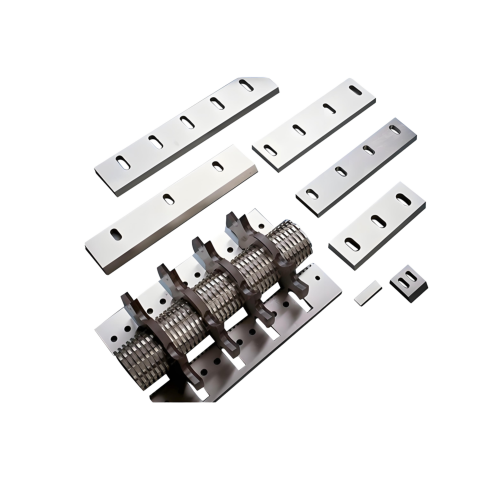
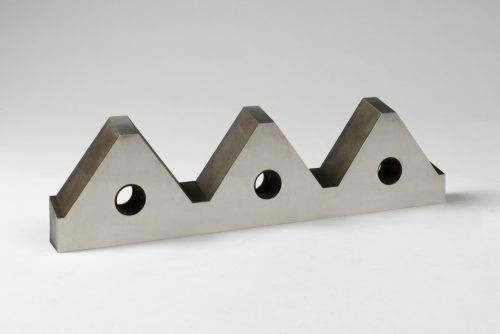
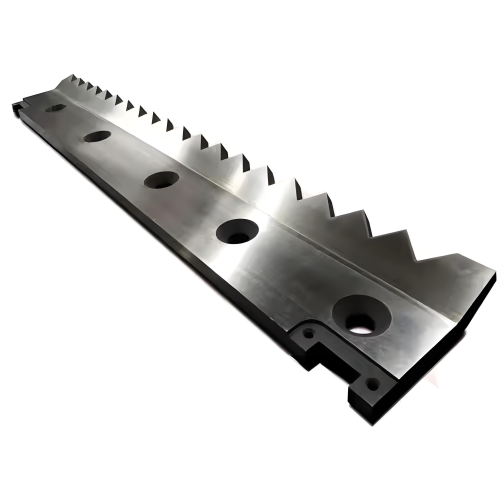
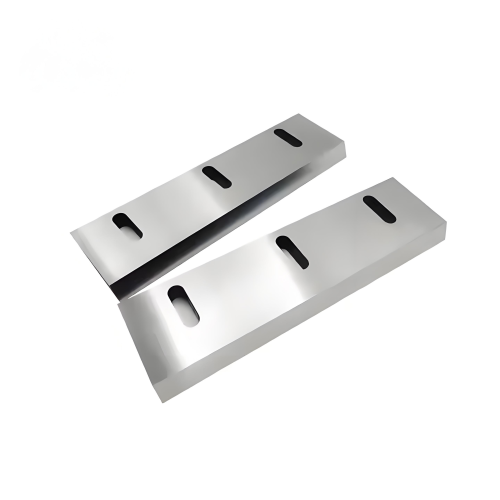
Choosing the right knife type starts with your equipment design and reduction goal. Below are common configurations we support.

Material and heat treatment are the two biggest factors behind edge life, chipping resistance, and stable cutting performance. We commonly supply D2, SKD11, and equivalent tool steels—selected to match your feedstock and duty cycle.


We select tool steels such as SKD11 and D2 with proven abrasion resistance, helping extend knife life and minimize frequent replacements—even under high-friction or contaminated feedstock.

Every cutting edge is CNC-machined and precision-ground to maintain strict profile geometry across batches. This ensures uniform clearance and stable shearing, even after repeated use.
We support rotor and stator knives for single-shaft, twin-shaft, granulators, and crushers—offering custom hole spacing, keyways, slots, and thicknesses to fit your equipment with zero adaptation issues.
Many of our knives are designed with reversible edges or modular inserts, allowing you to rotate or replace only the worn section—reducing downtime and total blade cost per ton processed.
For maintenance-intensive workflows, we can provide knives with simplified mounting geometry and alignment features to enable faster tool changes with minimal operator error or machine downtime.
Match knife design to your feedstock for stable output and predictable wear.


PET bottles, film, pipe, mixed plastics, regrind


Elastomers, industrial scrap preparation


Harder resins requiring higher wear resistance

Stable reduction under fibrous cutting loads

Granulation and pre-processing where consistency is critical
Selecting the optimum cutting set typically comes down to five criteria:

Do you have any questions about our products and how to use them? We have compiled the most frequently asked questions and answered them. If your question is not listed here, please contact us.
A crusher cutting set typically targets controlled size reduction (often with rotor + counter knife pairing) and aims for consistent output. Shredder knives often handle higher shock loads and more aggressive tearing depending on machine design. Your machine type and reduction goal determine the best configuration.
D2 and SKD11 are common choices. D2 tends to offer higher wear resistance for harder or more abrasive plastics, while SKD11 often provides a balanced wear/toughness profile for mixed plastics and stable daily production. Final selection depends on contamination level and duty cycle.
Yes. We support custom dimensions, hole patterns, slots, countersinks, keyways, and other mounting features. Provide a drawing or sample for review.
We can supply reversible edge designs where suitable, and we can advise on regrind strategy and maintenance intervals based on your feedstock and throughput target.
Feedstock type, machine model, knife dimensions (or drawing), quantity, steel preference (if any), and the current cutting issue you want to solve.