



Applications
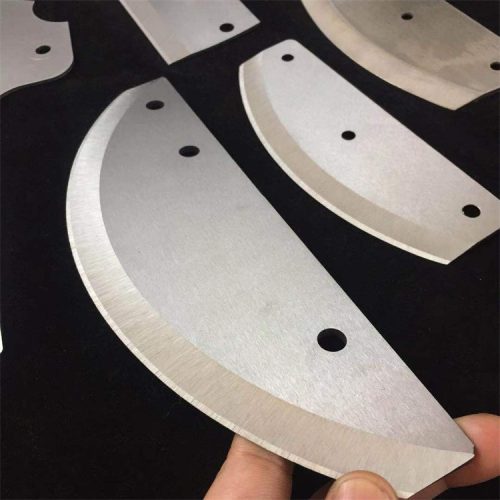
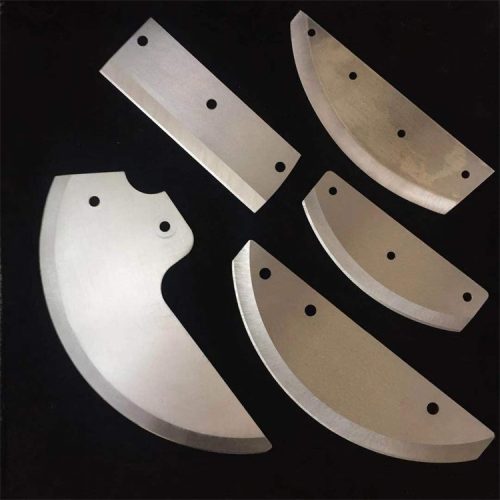
Meat Processing BladesMeat blades handle portioning, trimming, slicing, and splitting. Issues: fat buildup and chipping. Use straight/guillotine or rotary designs with polished, low-friction finishes.
Application-matched blades for meat, poultry, seafood, bakery, produce, and ready-to-eat lines—built for clean cuts, stable edge life, and repeatable performance across orders.
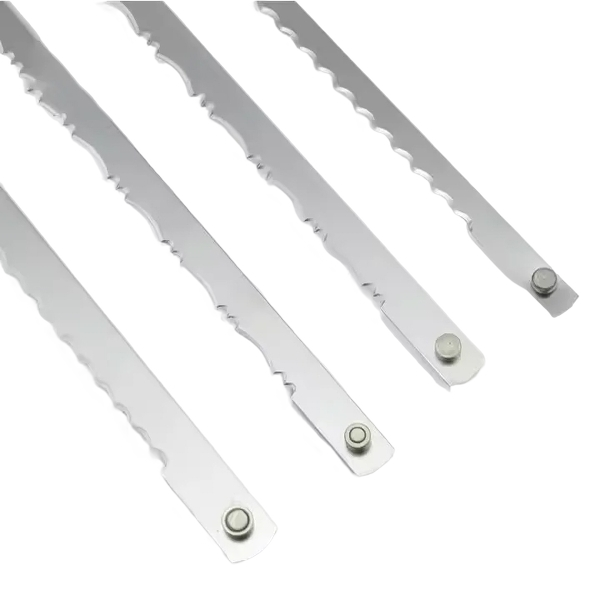
Food processing blades designed for clean, repeatable cuts—materials and edge finishes selected for hygiene, corrosion resistance, and edge stability to support consistent output and easy cleaning in food lines.
Food processing lines require stable edge performance under continuous operation, frequent sanitation, and variable product conditions. We support processors and OEMs in addressing:
Outcome: cleaner cuts, longer service intervals, and more consistent throughput.

Below is a practical selection framework used by production teams and maintenance engineers.


Meat blades handle portioning, trimming, slicing, and splitting. Issues: fat buildup and chipping. Use straight/guillotine or rotary designs with polished, low-friction finishes.


Seafood blades serve filleting and portion cuts in wet, salty lines. Reduce corrosion and tearing with corrosion-focused stainless, clean slicing geometry, and hygiene finishing.


Fruit & veg blades cover slicing, dicing, shredding, and cross cutting. Expect juice and abrasion. Use circular blades for speed, dicing sets for shapes, toothed edges for skins.

Used for cutting and portioning cheese and dairy products. Clean slicing geometry, low-friction finishes, and corrosion-resistant materials help reduce sticking and deformation.

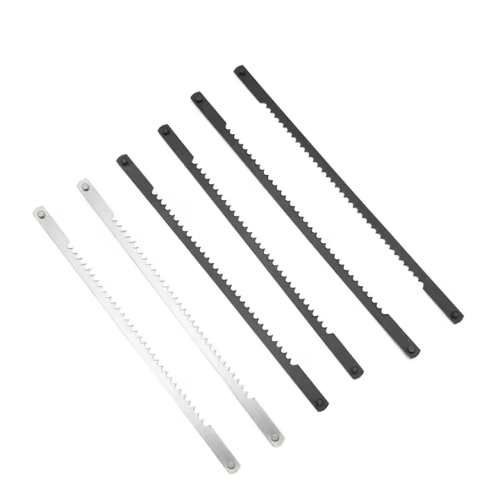
Bakery blades cut and score dough; sticking and residue can cause tearing. Scalloped/serrated edges plus non-stick options reduce drag; controlled finishing improves durability.

Best for portioning, cut-to-length, and high-force cuts requiring stable alignment. Ideal when your holder and stroke geometry must stay consistent.

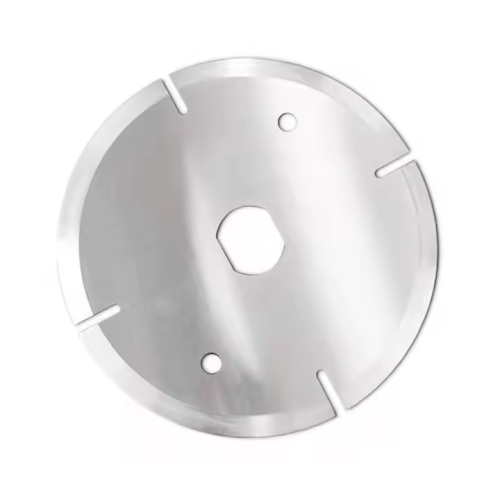
Designed for continuous, high-speed cutting and slitting. Used widely in slicing and rotary applications where run time and edge life matter most.
Used when the product tends to stick, slip, or tear (dough, skins, some high-moisture materials). Helps initiate cut and reduce drag.
Used in vegetable and prepared food lines to form cubes, sticks, and uniform shapes. Dimensional repeatability is critical for consistent results.
For special holders, unique product shapes, and OEM-specific designs. We support drawing-based and sample-based production.
We focus on repeatability—so reorders perform like the first batch.

Whether you need direct replacements or a performance upgrade, we support:
If you're currently changing blades too often, we can evaluate the cost-of-ownership and suggest improvements.

Provide the details below for faster recommendations and accurate pricing:

What production teams value most is stability—not marketing claims.

Do you have any questions about our products and how to use them? We have compiled the most frequently asked questions and answered them. If your question is not listed here, please contact us.
Meat lines often prioritize stable slicing and toughness balance, while bakery lines frequently need sticking control—scalloped/serrated edges and low-friction solutions are common. Share your product and issue, and we’ll recommend the edge geometry.
Sticking is usually a combination of residue chemistry and surface/edge choice. Polishing, edge geometry tuning, and low-friction solutions can significantly reduce drag and tearing.
Yes. We support drawing-based production and sample-based replication, including mounting features and key dimensions.
Blade type, OD/ID/thickness, mounting features, food material condition (fresh/frozen), runtime, and the failure mode you’re trying to fix (wear vs sticking vs chipping).
Yes. Our process emphasizes traceability, controlled heat treatment, repeatable grinding, and dimensional inspection to keep reorder performance consistent.