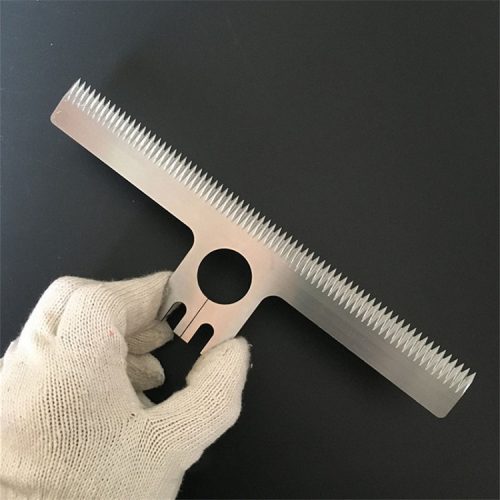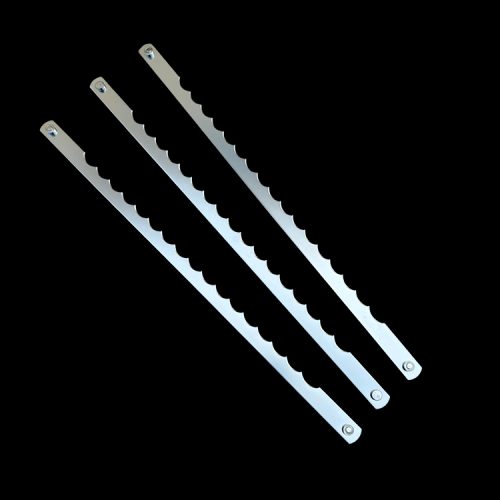

Shredder Blocks: When to Rotate or Replace the Cutting Edges

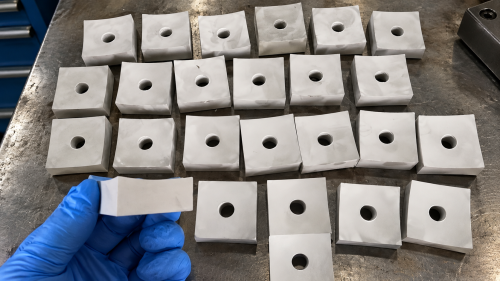
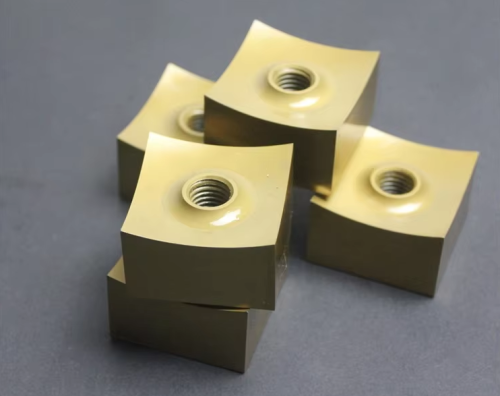
Rotate shredder block cutting edges when wear is still even and the edge can be re-indexed or re-sharpened. Replace the block entirely once the edge geometry is gone, the mounting holes are elongated, or the block has already been resharpened past its usable thickness. Watching motor load, cut quality, and edge profile tells you which stage you’re at before a full jam or breakdown forces the decision for you.
Key takeaways
- Rotate a shredder block when wear is even and mounting holes are intact; replace it once edge geometry is gone, chipping or heat discoloration appears, or it’s been resharpened past minimum thickness.
- Abrasive wear is often fixable through rotation or sharpening, but impact damage (chips, cracks) and heat-softened edges usually require replacement instead.
- Repeated jamming on normal material loads, not just occasional foreign-object jams, is a strong sign the edge is worn rather than the machine being blocked.
- Block material and tooth geometry should match the substrate: paper, plastic, metal, and textile each wear blocks differently and need different specs.
- A fresh block wearing out fast is usually an installation issue (torque, clearance, worn counter-edge) rather than a defective part.
What Actually Wears Out on a Shredder Block
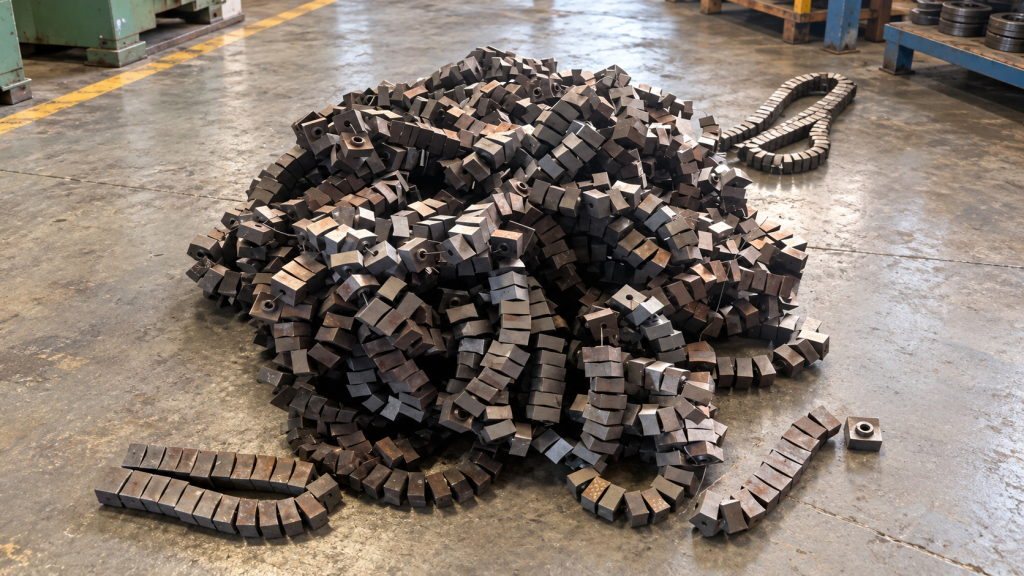
Most maintenance logs just say “block is dull,” which is about as useful as saying a car “needs fixing.” There are three distinct wear mechanisms at play, and they call for three different responses.
Abrasive wear is the slow grind. Fine particulate from paper dust, plastic regrind, or textile fiber acts like sandpaper on the cutting edge, gradually rounding what was once a sharp, defined profile. This is the kind of wear that rotation or re-sharpening can usually fix, because the block body is still sound, it’s just the edge geometry that’s gone soft.
Impact wear is the sudden damage. A stray metal fastener, a hard plastic chunk, or any foreign object in the feed stream can chip the edge or crack a carbide insert outright. Unlike abrasive wear, this doesn’t improve with rotation. A chipped edge stays chipped.
Heat-driven wear is the sneaky one. Continuous runs generate friction heat at the cutting edge, and over months of operation that heat can soften the heat-treated layer that gave the block its hardness at installation. A block that tested hard enough on day one can be measurably softer a year later, even without visible damage.
Why does the mechanism matter? Because abrasive wear is often recoverable through rotation or sharpening, while impact and heat damage usually isn’t. Treating all three as the same problem is how plants end up over-sharpening a block that should have been replaced, or replacing one that just needed flipping.
Signs the Block Needs Attention Before It Fails Completely
None of the generic parts listings tell you what to actually look for before failure. Here’s the checklist worth running on a regular inspection cycle:
- Uneven or ragged cut edges on output material instead of a clean shear line, a clear sign the edge geometry has rounded off.
- Material tearing or stringing rather than being sliced cleanly through, especially noticeable on plastic film and textile fiber.
- Increased motor load or amperage draw as the dull edge pushes material instead of cutting it. If your control system logs amperage trends, this is often the earliest warning you’ll get.
- Frequent jamming or material wrapping around the shaft, which gets misread as a feed problem when it’s really a blunted edge that can no longer shear through cleanly.
- Visible rounding, chipping, or discoloration on physical inspection. Discoloration near the edge usually points to heat damage, not just surface wear.
Catch two or three of these together and you’re already past the point of “wait and see.”
How to Fix a Blocked Shredder
First question: is this a one-off foreign object jam, or does it happen repeatedly with normal material loads? A single jam caused by a stray bolt or metal clip is a feed contamination issue. Repeated jamming on material the machine was designed to handle, though, points straight at a worn edge, not a true blockage.
Before inspecting anything, follow lockout/tagout procedure and clear the shaft safely, rotating it manually rather than forcing the drive. Once it’s clear, inspect the block edge for rounding, chipping, or visible gaps where material could be slipping through instead of being sheared.
If the block looks physically intact and jamming keeps recurring, the problem is almost always edge geometry rather than an obstruction. That’s the cue to move to a rotation or replacement decision instead of repeating the same debris-clearing cycle every shift. Clearing the jam without addressing the edge just buys you a few more hours before it happens again.
Rotate or Replace: How to Make the Call
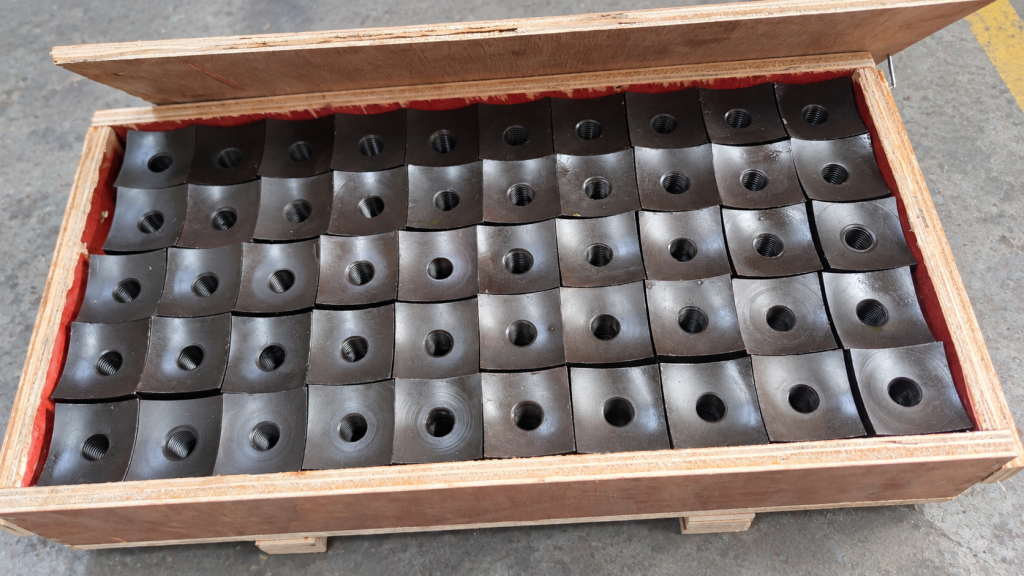
This is the decision that actually matters, and it doesn’t have to be a guessing game. Use the criteria below.
A block that’s been rotated once can usually be rotated again, but only if wear stays even across the faces. If jamming, tearing, or ragged cuts return quickly after a rotation, that’s a signal the block is past the point rotation can fix.
It’s also worth remembering that running a worn block too long doesn’t just hurt cut quality. It accelerates wear on the counter-edge or anvil it meets, turning a single-part problem into a pair replacement. That’s the hidden cost of delaying the decision.
Matching Block Material and Geometry to What You’re Shredding
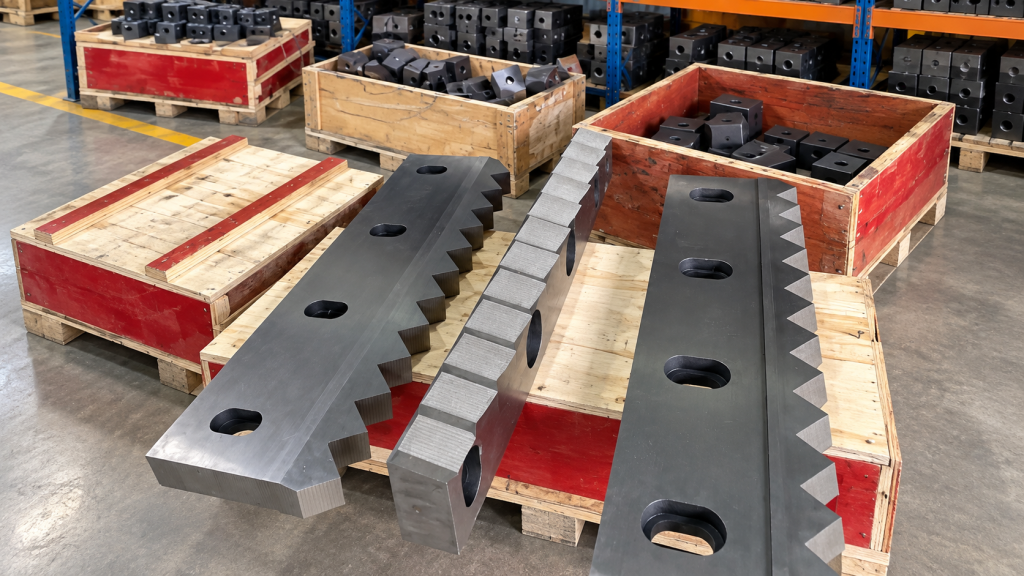
Here’s the biggest gap in most parts catalogs: they sell one block design regardless of what’s going through it, and that’s a mistake. Substrate drives everything about block specification.
Paper and cardboard
These tolerate softer tool steels reasonably well, but a fine-tooth geometry gives cleaner, lower-dust cuts and less fiber tearing.
Plastic and film
Friction heat is the enemy here. Plastic melts and gums onto a dulling edge faster than it would a sharp one, so edges resistant to heat buildup hold their performance longer in these applications. This overlaps closely with needs covered under plastic recycling and shredding blade applications.
Metal and e-waste
Embedded fasteners and mixed hard materials demand higher hardness and impact toughness. A block specified for paper will chip almost immediately in this duty, which is why blades built for coil slitting and sheet shearing use very different steel grades.
Textile and nonwoven
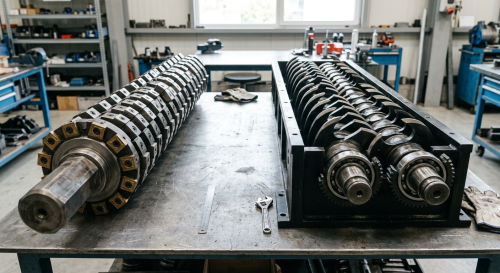
Fiber wants to wrap and jam rather than shear cleanly, so these applications favor a tooth profile that grips and shears fiber, a different geometry than what works for granular plastic regrind or paper stock. The same logic applies to web handling equipment covered in blades for printing, paper, and nonwoven web handling.
A generic, one-size-fits-all block often underperforms a block specified for the actual substrate, material thickness, and line speed, even when the dimensions match perfectly on paper.
Installation and Alignment: Avoiding Premature Re-Wear
A freshly installed block wearing out fast is almost always an installation problem, not a part quality problem. Follow these steps:
- Torque fasteners to spec. Under-torqued blocks vibrate and accelerate their own wear, while over-torqued fasteners can crack the block body outright.
- Check shaft and counter-knife clearance before running at full load. Too tight causes impact wear on every rotation; too loose lets material tear instead of shear.
- Run a short break-in cycle at reduced load after installation to confirm alignment before committing to full production speed.
- Inspect the mating edge (anvil or counter-block) at the same time. Installing a new block against a worn mate undoes most of the benefit of the replacement.
Skipping the break-in step is a common shortcut, but it’s often why a “new” block starts showing the same symptoms within weeks. For general upkeep practices beyond installation, see this guide on extending industrial blade service life.
Life Expectancy and Repair Questions Worth Answering Honestly
What is the life expectancy of a shredder block? There’s no fixed number. It depends on the material being cut, how abrasive it is, the duty cycle, and the block’s hardness. A block shredding clean cardboard in a light-duty operation will last far longer than an identical block running continuous mixed plastic with embedded contaminants. Abrasive or high-impact materials shorten service life regardless of how good the block is.
Can shredder blocks be repaired? Sometimes. Edges can be re-ground or re-sharpened if enough material remains and the base hasn’t lost its heat treatment through excessive heat exposure. But a block that’s already been reground past its design thickness shouldn’t be pushed further, it needs replacing instead of another sharpening pass that compromises structural integrity.
Can I use WD-40 to lubricate my shredder? It’s fine for mechanism-level maintenance like hinges and feed rollers, but it won’t fix or mask a worn cutting edge. Lubricating a dull block just delays the diagnosis. It doesn’t solve the underlying wear problem, and relying on it can mean you miss the window to rotate before the edge is gone entirely.
When a Custom Block Beats a Generic Replacement
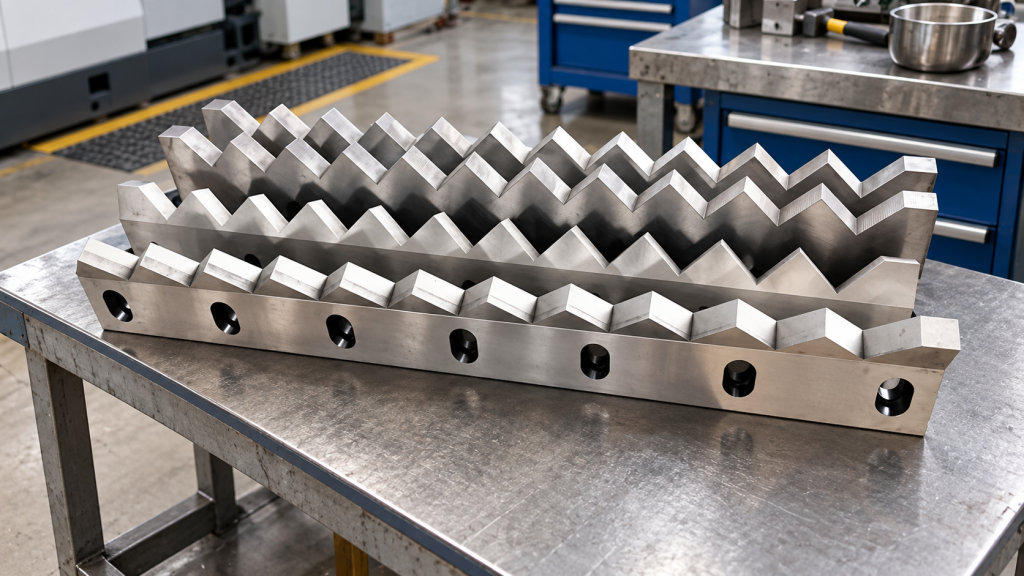
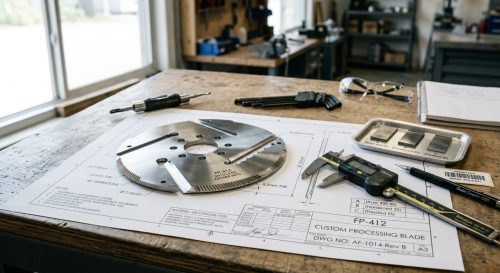
If a generic aftermarket block keeps needing early rotation or replacement, the mismatch is usually geometry or hardness, not installation error. That’s a sourcing problem, not a maintenance problem.
Specifying block design around the actual substrate, material thickness, and line speed addresses the root cause instead of repeating the same failure pattern. It’s a different approach from pulling a SKU off a catalog page and hoping it fits the application well enough.
For buyers unsure about specs, validating a design with a small trial order before committing to volume reduces the risk of ordering the wrong geometry at scale. This matters just as much for shredder blocks as it does for related cutting components, as discussed in shredder blades for single-shaft vs double-shaft machines and crusher blade design for industrial crushing.
For buyers weighing rotate-vs-replace decisions on recurring wear issues, yishimachinery can be reached here.
Frequently asked questions
How to fix a blocked shredder?
First confirm whether it’s a one-off foreign object jam or repeated jamming on normal loads. Use lockout/tagout, clear the shaft manually, and inspect the block edge. If the block looks intact and jamming keeps recurring, the real issue is a worn edge, not an obstruction, and it needs rotation or replacement.
What is the life expectancy of a shredder block?
There’s no fixed lifespan. It depends on the substrate being cut, its abrasiveness, duty cycle, and the block’s hardness. Light-duty paper shredding extends life considerably longer than continuous mixed-plastic or metal processing, regardless of how well-made the block is.
Can shredder blocks be repaired?
Yes, sometimes. Edges can be re-ground or re-sharpened if enough material remains and the heat treatment hasn’t been lost. But once a block has been reground past its design thickness, it should be replaced rather than sharpened again, since further grinding compromises structural integrity.
Can I use WD-40 to lubricate my shredder?
WD-40 is fine for mechanism-level parts like hinges and feed rollers, but it won’t fix a worn cutting edge. Lubricating a dull block only delays noticing the real problem; it doesn’t restore cutting performance or stop the underlying wear.