

Shredder Blades for Single-Shaft vs. Double-Shaft Machines: A Direct Comparison

If you need uniform, screen-controlled output for downstream washing or pelletizing, choose single-shaft shredder blades. If you are tearing through bulky, contaminated, or high-strength waste — tires, e-waste, wood, drums — double-shaft blades win on torque, durability, and cost per ton. The two machines look similar on the floor, but their cutters are built around opposite physics: shearing against a screen versus tearing between intermeshing hooks.
The Core Difference: Shearing vs. Tearing
Single-shaft shredders rely on a rotating drum studded with small, replaceable cutter inserts that shear material against a stationary bed knife. A screen below the rotor controls particle size — material recirculates until it is small enough to fall through.
Double-shaft shredders work differently. Two counter-rotating shafts spin slowly (typically 15–40 RPM) with large hook-shaped knives that grab, pull, and rip material apart. There is no screen. Output size is set by knife width and spacing, not by sieving.
That single mechanical difference drives every other decision: blade steel, edge geometry, wear pattern, power draw, and even how you handle a jam. A single-shaft cutter that hits a stray bolt may chip; a double-shaft knife will often just bend the bolt and keep going.
Blade Geometry and Insert Layout
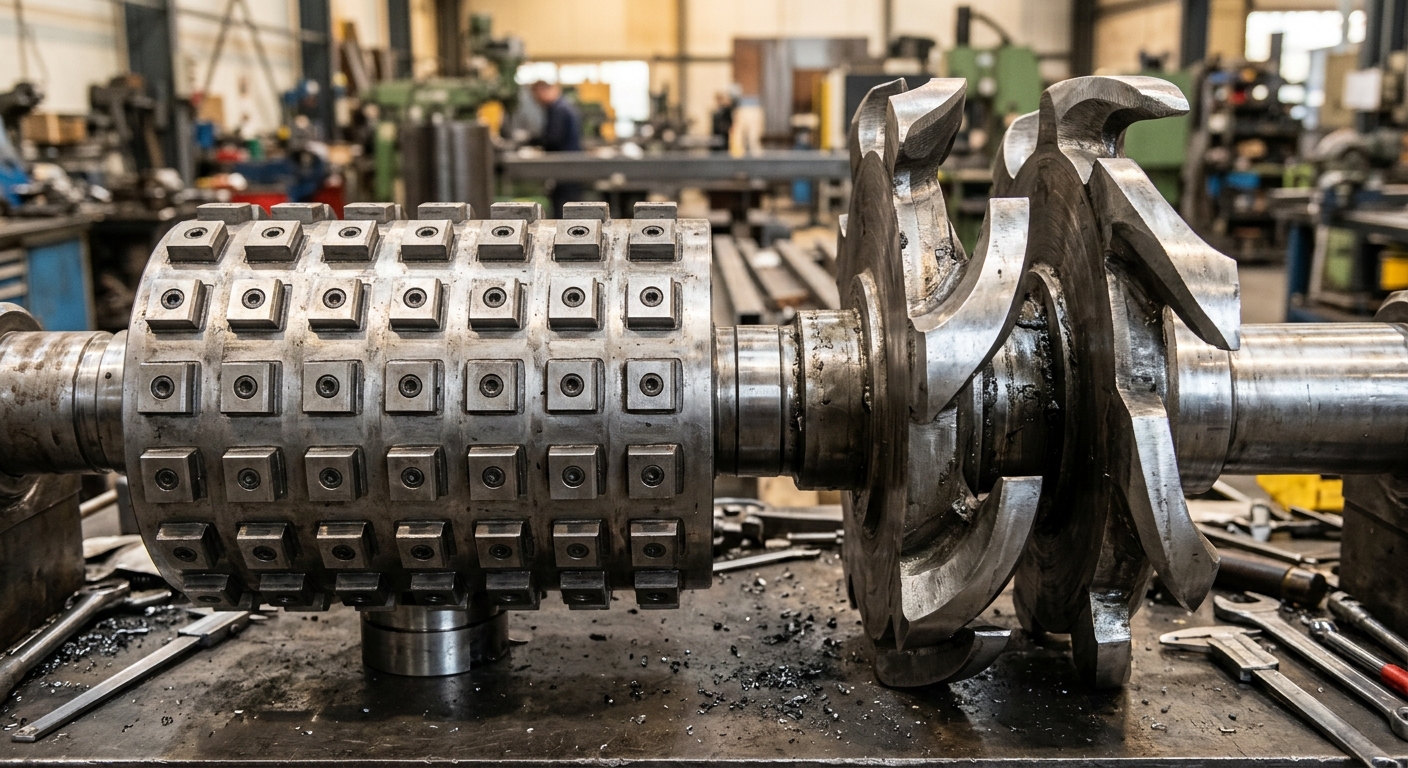
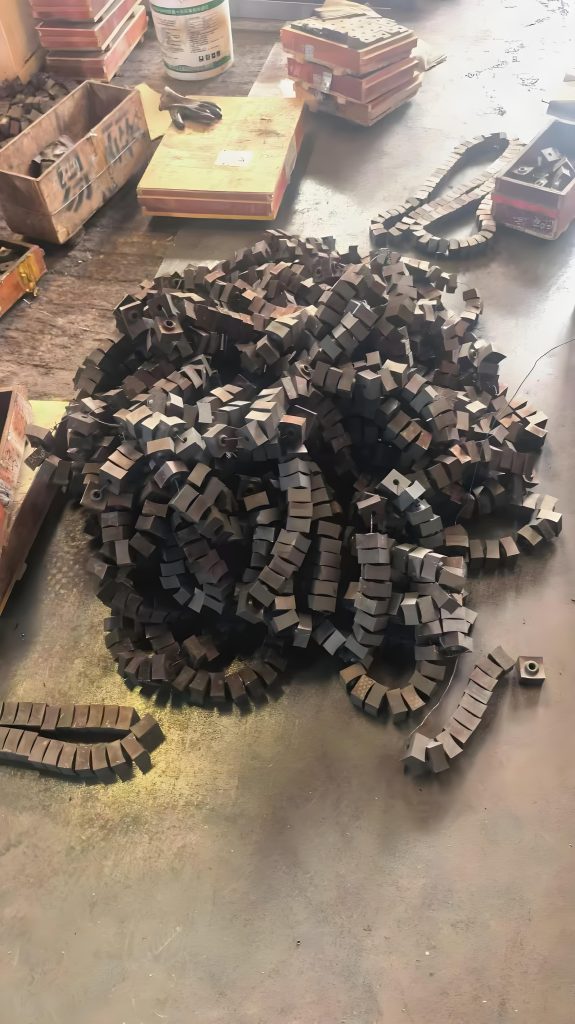
Single-shaft rotors use 30–200+ small inserts, usually 40×40 mm or 50×50 mm square tips with four indexable cutting edges. When one edge dulls, you rotate the insert — four edges per insert means longer service intervals between replacements.
Double-shaft knives are a different animal. Each knife is a one-piece forged disc, 80–250 mm in diameter, with 2–6 hooks per disc. The hooks do the catching; the side faces do the shearing. Knives are stacked along the shaft with spacers, and the hook count determines whether the machine is “aggressive” (fewer, larger hooks) or “fine” (more hooks, smaller bite).
What this means for buyers
- Single-shaft: cheaper per insert, but you replace dozens at a time.
- Double-shaft: higher cost per knife, but a full set may last 2–4× longer in tough waste.
Steel Selection and Heat Treatment
Single-shaft inserts are typically made from D2, SKD-11, or powder metallurgy steels hardened to HRC 58–62. The fine edge needs hardness to hold geometry against high-RPM impact.
Double-shaft knives prioritize toughness over hardness. We commonly forge them from H13, 42CrMo, or 9CrSi at HRC 50–56. A knife that is too hard will crack when it grabs a steel rebar embedded in a wood pallet — and that happens more often than buyers expect.
Choosing the right steel is the single most expensive mistake we see in custom orders. If you are unsure, our guide on industrial blade material selection walks through the trade-offs in detail.
Side-by-Side Comparison Table
Here is how the two blade systems stack up on the criteria buyers actually ask about during specification:
| Criteria | Single-Shaft Blades | Double-Shaft Blades |
|---|---|---|
| Typical output size | 10–50 mm (screen-controlled) | 30–150 mm chunks |
| Best material fit | Plastic film, purgings, fibers, paper | Tires, e-waste, wood pallets, metal drums |
| Cutter geometry | Small square/rectangular inserts | Large hook-shaped knives |
| Torque demand | Moderate, high RPM (80–200) | Very high torque, low RPM (15–40) |
| Tolerance to contaminants | Low | High |
| Blade replacement frequency | Higher | Lower |
| Energy per ton | Higher | Lower |
| Blade capital cost | Lower per unit, many units | Higher per unit, fewer units |
The takeaway: single-shaft wins on output uniformity, double-shaft wins on toughness and energy efficiency.
Real-World Application: Two Recyclers, Two Choices
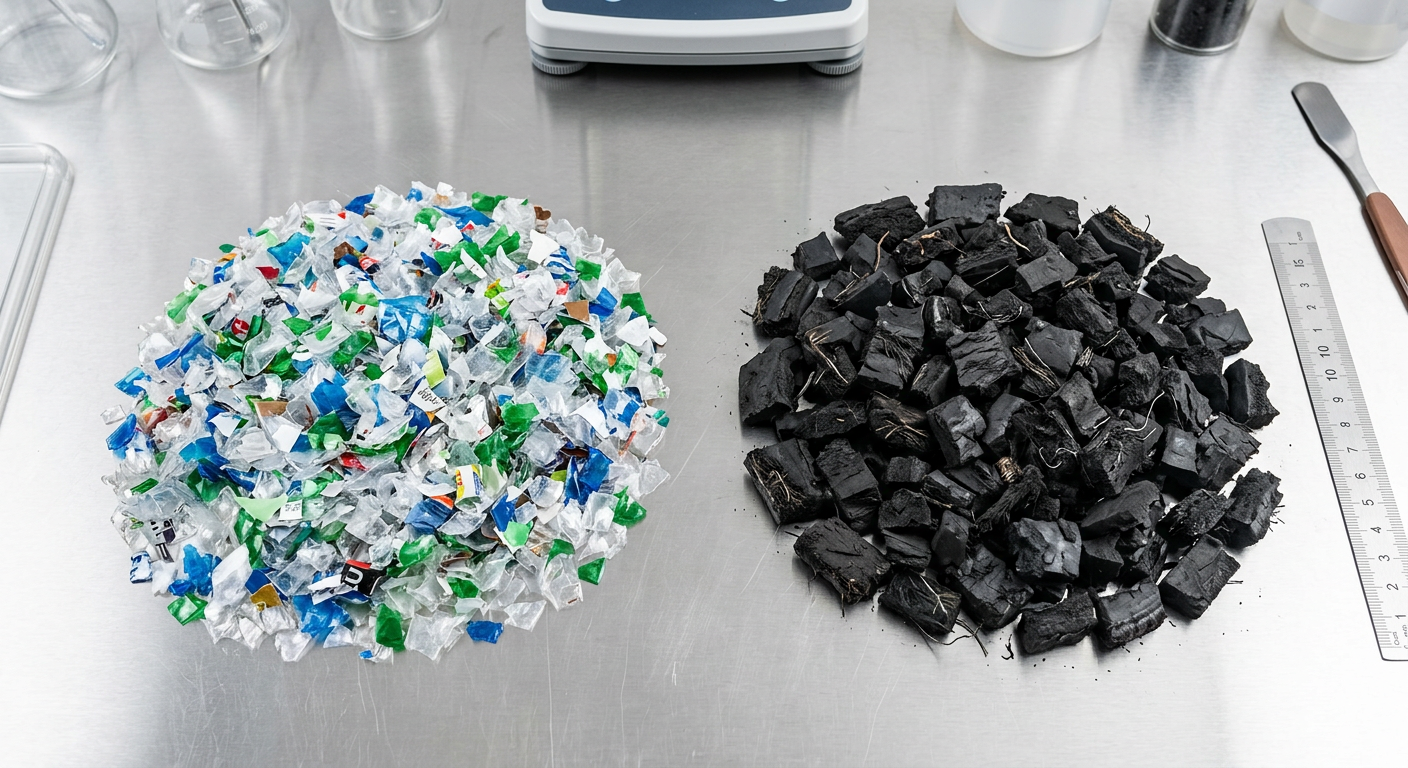
A PET bottle recycler in Vietnam came to us last year wanting to upgrade from a double-shaft to a single-shaft system. Their double-shaft was producing 80–120 mm flakes — too coarse for their hot-wash line, forcing a granulator step. We supplied a single-shaft rotor with 50×50 mm SKD-11 inserts and a 25 mm screen. Result: 25 mm flakes direct to wash, granulator removed, energy cost down 18%.
Compare that to a tire recycler in Saudi Arabia. They tried a single-shaft setup early on and burned through inserts in 80 operating hours — steel belts inside the tires shredded the small cutters. We switched them to a double-shaft with 42CrMo hook knives at HRC 54. The same set has run over 2,000 hours with one rotation cycle. Different waste, opposite answer.
The lesson: do not pick the shredder type by brand preference or floor space. Pick it by what you are cutting.
Wear Patterns and Replacement Strategy
Single-shaft inserts wear primarily on the leading edge and corner radius. Because they are indexable, the maintenance routine is: monitor amp draw, rotate inserts when current climbs 10–15% above baseline, replace when all four edges are used.
Double-shaft knives wear on the hook tip and side face. There is no rotation — when the hook rounds off, you either re-sharpen (possible 2–3 times) or replace. Side wear from material between knives is often the actual failure mode, not hook wear. That is why spacer condition matters as much as knife condition.
A practical tip we share with maintenance teams: keep a wear log per shaft position. Knives near the center wear faster on most double-shaft machines because that is where heavy material concentrates. Rotating knife positions during scheduled maintenance can extend total set life by 20–30%. For more on this, see our guide to extending blade service life.
Cost of Ownership: Beyond Sticker Price
A double-shaft knife may cost 3–5× a single-shaft insert, but that is the wrong comparison. Run the math per ton of throughput:
- Single-shaft, mixed plastic film: ~$0.40–0.80 per ton in blade wear cost.
- Double-shaft, wood pallets: ~$0.20–0.50 per ton in blade wear cost.
- Single-shaft on contaminated waste: can spike to $3+ per ton when inserts chip.
Energy is the bigger line item. Double-shaft machines typically draw 30–50% less power per ton because slow-speed tearing is more efficient than high-speed shearing for dense materials. Over a five-year life cycle on a 1-ton/hour line, that energy gap can exceed the entire blade budget.
That is why we always ask new customers for their material spec sheet before quoting. A blade priced 20% lower can cost 200% more in operation.
When You Actually Need Both
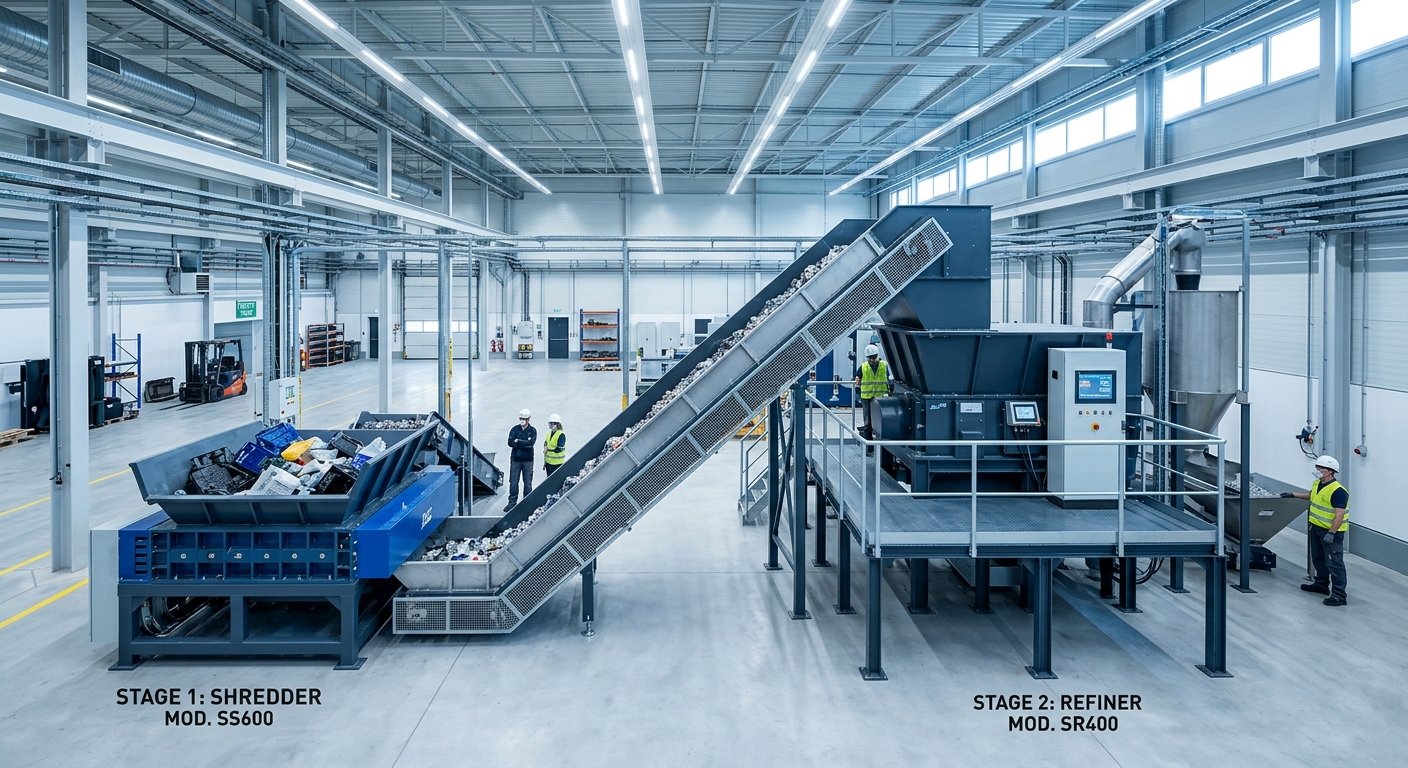
High-value recycling lines often run a double-shaft as a primary shredder followed by a single-shaft as a refiner. This is the standard architecture for:
- WEEE (e-waste) processing — double-shaft for monitors and casings, single-shaft to liberate copper and plastics.
- RDF (refuse-derived fuel) plants — coarse tear first, then sized to 30 mm for boiler feed.
- Hard plastic recycling — double-shaft for crates and drums, single-shaft for clean regrind.
If you are designing a two-stage line, blade specification should be done together, not in isolation. The output size of the primary stage determines the throat geometry and insert size of the secondary stage. Our engineering team handles this routinely for OEM customers building turnkey systems — see our broader range of industrial blades for plastic recycling and shredding.
Specifying Custom Blades: What to Send Us
Generic blade catalogs rarely match real operating conditions. When you request a custom quote, the more of this you provide, the better the blade we build:
- Machine make, model, and shaft drawing (or sample old blade).
- Material being shredded, including worst-case contamination.
- Throughput target (kg/hour or tons/day).
- Desired output size or screen aperture.
- Current blade life and failure mode (chipping? rounding? side wear?).
With that information, we can specify steel grade, hardness, edge geometry, and surface treatment. Trial orders of 1–2 sets are standard for new customers before scaling to volume contracts.
Picking the Right Blade for Your Line
Short version: match the cutter to the waste, not the brochure. Single-shaft blades give you size control and clean regrind for plastics, fiber, and paper. Double-shaft blades give you the brute force needed for tires, wood, metal-contaminated streams, and bulky end-of-life products. When in doubt, send a material sample and let the geometry follow the substrate.
At Yishi Machinery we forge and grind both styles in-house — single-shaft insert sets, double-shaft hook knives, and the bed knives and spacers that go with them. If you are repowering an existing shredder or building a new line, talk to our engineers about a trial set. Send your machine specs and material data through our contact page, or browse our full product range to see what we already build for OEMs worldwide. A related read if you handle harder feedstock: crusher blades for industrial crushing.


