
Non-Standard Film Slitting Blades

Blades for Cutting Chemical Fibers

YISHI chemical fiber cutting blades are precision-ground from D2 and SKD11 steel, vacuum heat treated to HRC 58–62 for clean, stable cutting in synthetic fiber processing lines.

Customized sizes are available, according to your drawing or sample.

  • Fully Custom
  • Expedited Production Processing

Precision-ground chemical fiber cutting blades from YISHI are engineered for high-volume synthetic fiber processing lines. Manufactured from D2 and SKD11 tool steels with vacuum heat treatment to HRC 58–62, these shear blades deliver consistent, clean cuts with minimal burring across polyester, nylon, acrylic, and polypropylene tows. Whether you operate staple fiber cutters, tow converters, or recycling shredders, our blades are available in a wide range of standard dimensions and can be fully customised to match your OEM specifications. With thickness tolerances of ±0.005mm and a choice of mounting slots or holes, YISHI blades help reduce downtime and fibre waste in continuous production.

Take a Closer Look

  • Synthetic Fibre Production

    Chopping continuous tow into staple lengths for textile spinning, nonwoven fabric production, and composite reinforcement.

  • Textile Recycling

    Cutting post-industrial and post-consumer synthetic fibre waste into consistent flake or pellet feedstock for reprocessing.

  • Technical Textiles & Nonwovens

    Precision cutting of carbon, glass, aramid, and other high-performance fibres where razor-sharp, durable edges are critical.

  • Carpet & Upholstery Manufacturing

    Blades for shearing fibre tufts and yarn bundles in carpet finishing and automotive upholstery lines.

  • Pilot Plants & R&D

    Small-batch and custom profiling for research facilities developing new fibre blends and process parameters.

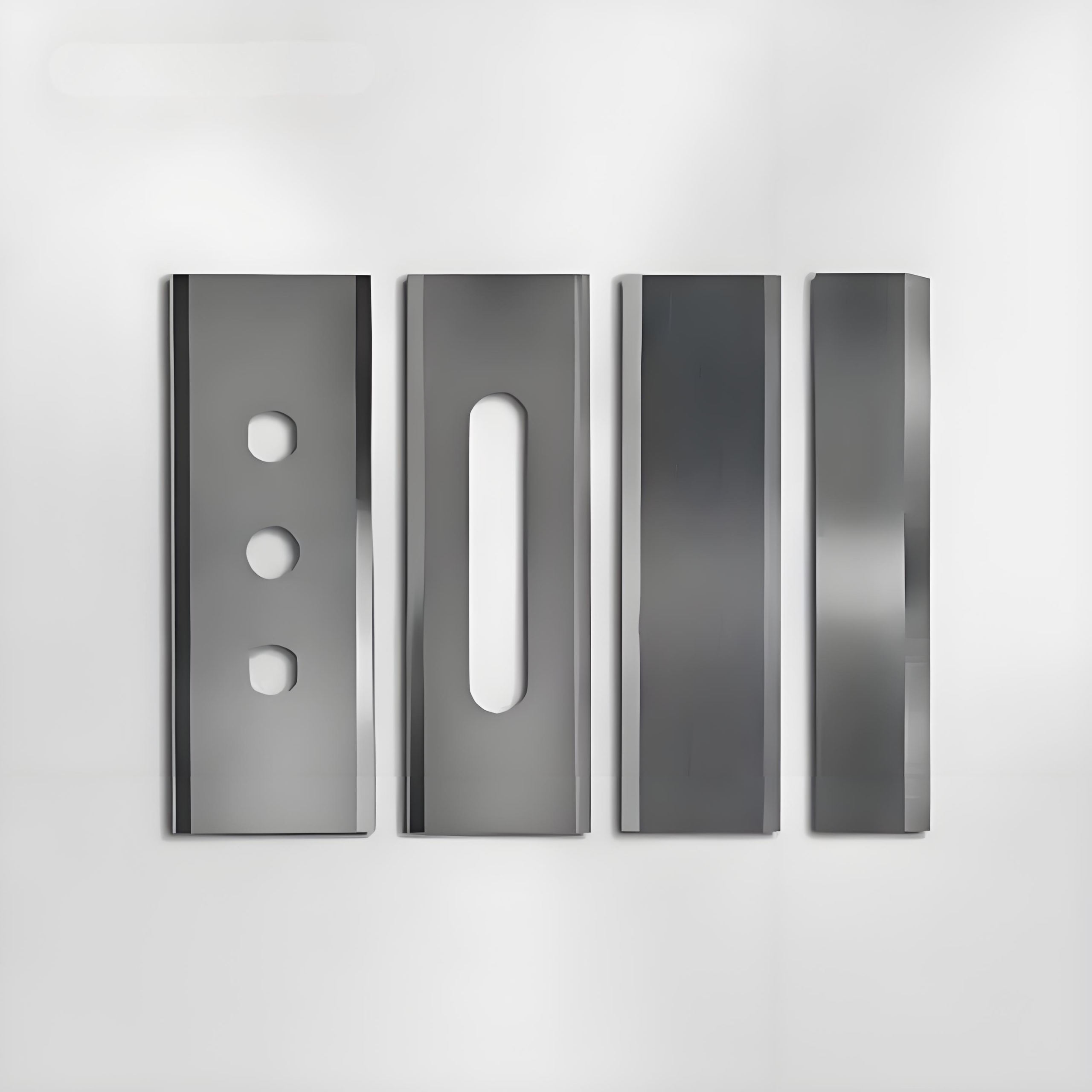
Our Chemical Fiber Blades Tape

  • Long Blades
  • 2 Slotted Blades
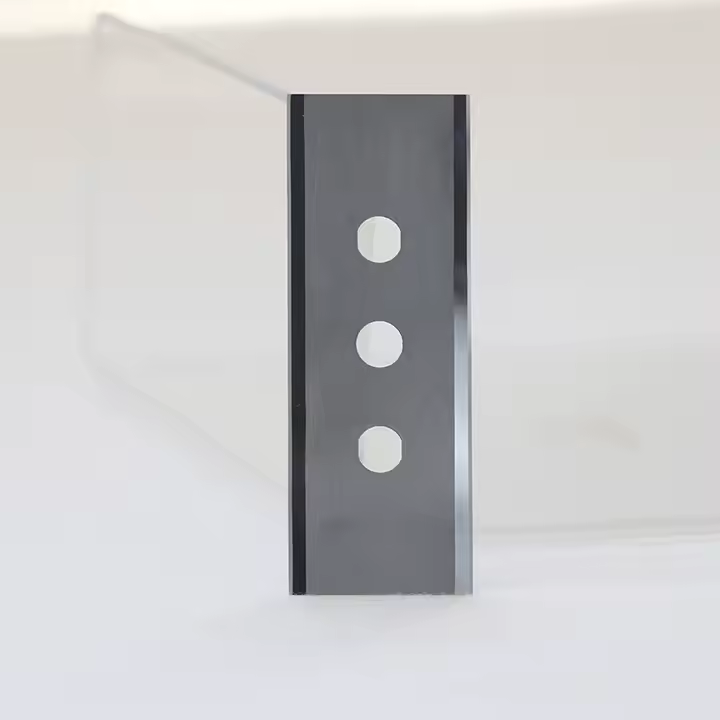
  • 3-Hole Razor Blades
Industrial blades for fiber material cutting

Technical Parameters

Long Blades

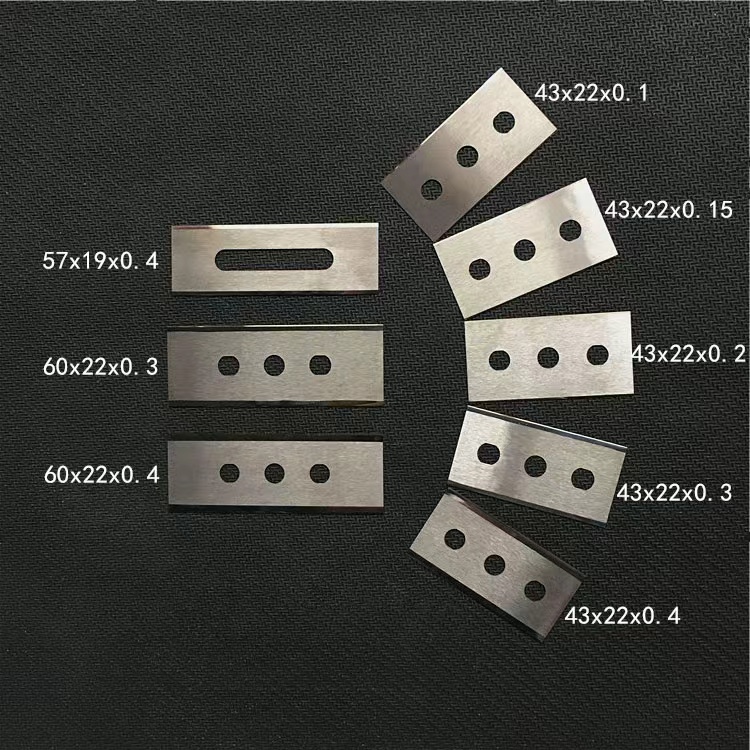
No. Length (mm) Width (mm) Thickness (mm)
1 43 22 0.2
2 43 22 0.3
3 43 22 0.35
4 43 22 0.4
5 57.05 19.05 0.3
6 57.05 19.05 0.4
7 57.15 18.08 0.3
8 60 22 0.2

Slotted Blades

No. Length (mm) Width (mm) Thickness (mm)
9 60 22 0.3
10 60 22 0.4
11 90 10 0.9
12 95 19 0.884
13 115.3 18.54 0.84
14 117.5 15.5 0.9
15 118 19 1.5
16 φ69.9 φ10.35 0.5

3-Hole Razor Blades

The three-hole configuration is the standard mounting format for chemical fiber staple cutter blades. Three precision-ground through-holes locate the blade onto corresponding pins or bolts in the cutter rotor, enabling fast, repeatable blade changes with zero lateral drift.

Our 3-hole razor blades are available in the standard dimensions listed below and can be manufactured to your drawing for OEM compatibility with Neumag, Fleissner, and Barmag fiber cutters.

No. Length (mm) Width (mm) Thickness (mm)
17 135.5 19.05 1.4
18 135 19.05 1.4
19 135 18.5 1.4
20 193 18.9 0.884
21 170 19 0.884
22 140 19 1.4
23 140 19 0.884

Custom 3-hole razor blade dimensions accepted to drawing or OEM part number.

Technical Specifications

Dimensions Length: 30–2000mm, Width: 10–100mm, Thickness: 0.15–5mm (standard range; extendable on request)
Materials D2 (Cr12MoV), SKD11, M2 HSS, T1 HSS, tungsten carbide
Hardness HRC 58–62 (standard tool steel); HRC 63–65 for HSS; up to 92 HRA for carbide
Tolerances Thickness: ±0.005mm, Width/Length: ±0.05mm (ISO 2768-m typical), Parallelism: 0.01mm
Surface Finish Ra 0.2–0.4µm (ground/lapped); Ra 1.6µm for non-critical surfaces
Customisation Buyers can specify dimensions, hole patterns (circular, slotted, counterbored), slot configurations, bevel angles, material grade, and coatings via drawing or OEM part number. Reverse engineering from samples is available.

Why Choose Yishi

YISHI manufactures chemical fiber cutting blades in-house using CNC grinding cells with in-process measurement, ensuring batch-to-batch consistency. We source certified D2 and SKD11 steel from ISO 9001 mills and perform vacuum heat treatment with cryogenic stabilization for optimal microstructure. Our technical team reviews each enquiry against OEM cutter specifications, recommending the correct steel grade and edge geometry for your fibre type and throughput. With no minimum order quantity for custom blades and standard 15-day lead times, we support both urgent replacements and ongoing supply contracts.

Frequently Asked Questions

  • What steel grade is best for cutting polyester fibers?

    For standard polyester fiber cutting, we recommend D2 (Cr12MoV) tool steel hardened to HRC 58–62. It offers an excellent balance of wear resistance and toughness. For high-volume, abrasive fibers such as recycled polyester with contaminants, we may suggest HSS M2 or tungsten carbide inserts for extended blade life.

  • Can you replicate blades from existing samples?

    Yes. Customers can send a used blade or a dimensioned drawing. We reverse-engineer critical features like slot placement, hole patterns, and bevel angles to produce a direct replacement. We also reference OEM manufacturer part numbers when available to confirm interchangeability.

  • What is the typical lead time for custom chemical fiber blades?

    Standard lead time is 15 working days from drawing approval. For repeat orders and stock sizes, we can often dispatch within 7 days. Express service is available for urgent requirements.

  • How do I determine the right bevel angle for my fiber?

    The bevel angle depends on fiber type and cutting speed. Soft, fine fibers typically require a sharper angle around 20–25°, while coarse or technical fibers like aramid need a more robust edge at 35–45°. Our engineers can recommend an angle based on your process parameters.

  • Do you offer re-sharpening services?

    Yes, we provide re-grinding services for our blades to original specifications, including thickness, parallelism, and edge sharpness. This can extend blade life by several cycles, reducing total cost of ownership.

  • What mounting configurations do you support?

    We support a wide range: plain (no holes or slots), through holes (circular), slotted holes (obround), counterbored holes, and end slots. Common patterns include single slot, double slot, and triple hole arrangements as shown in our standard size list. Custom patterns are accepted based on your drawing.

phone icon email icon chat icon