
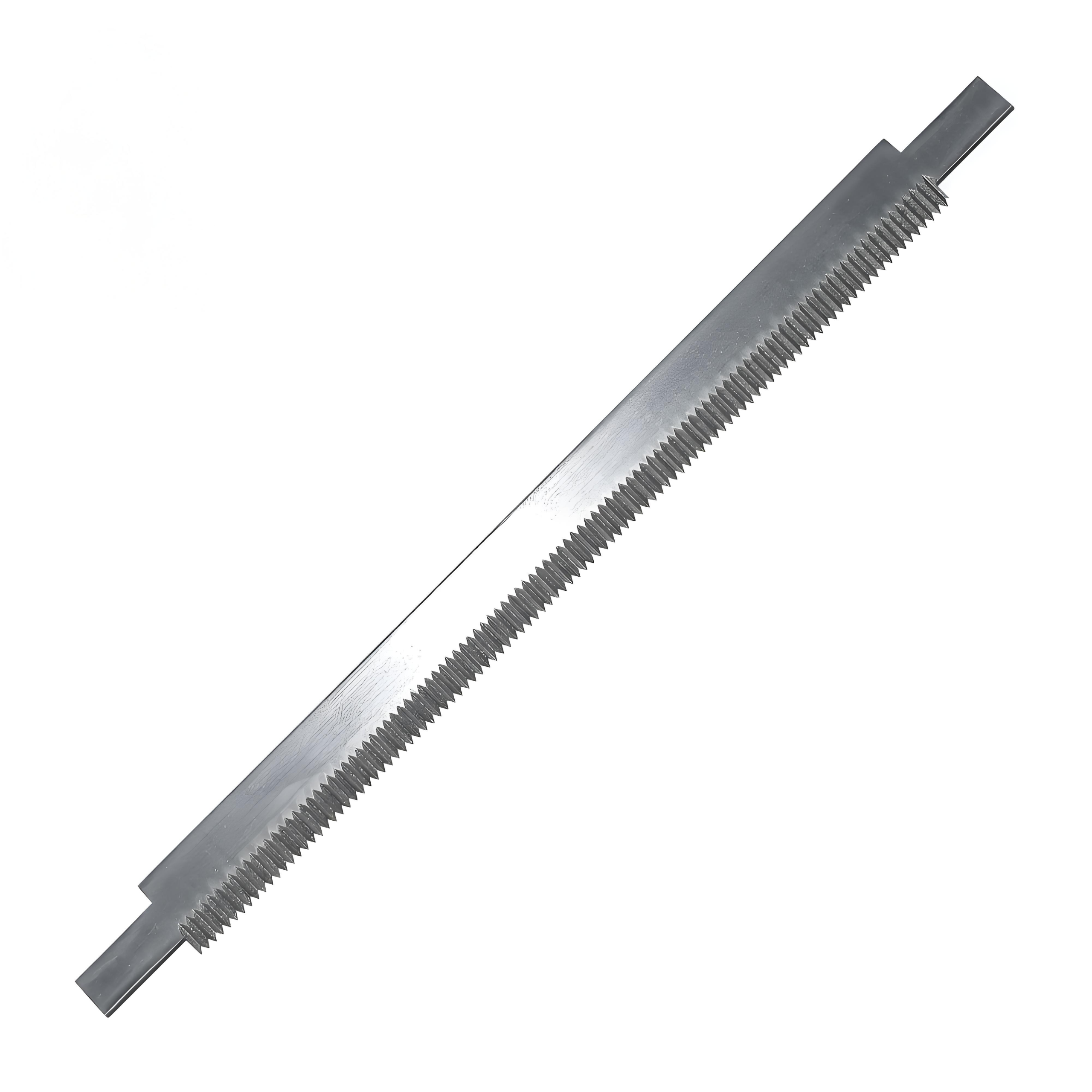
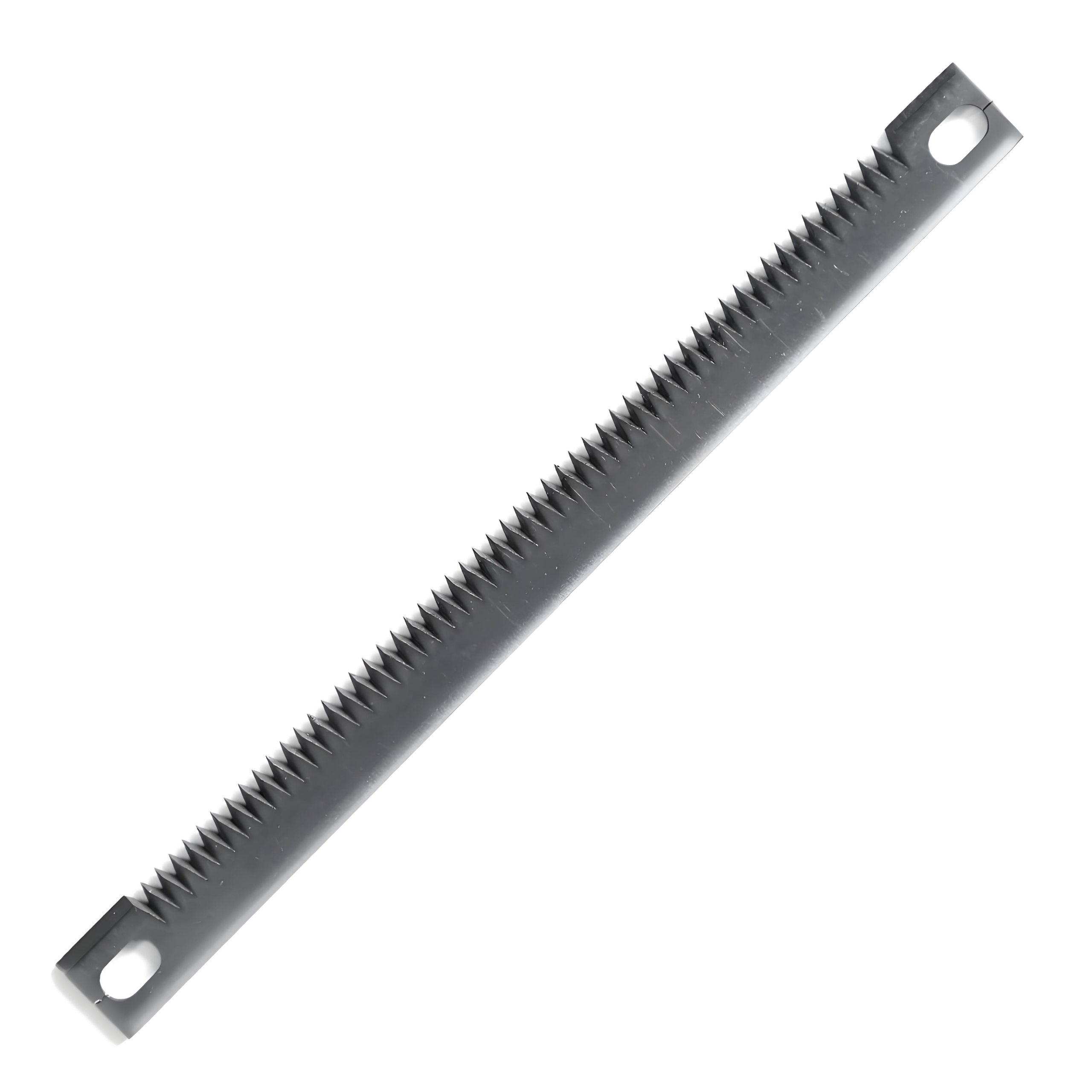
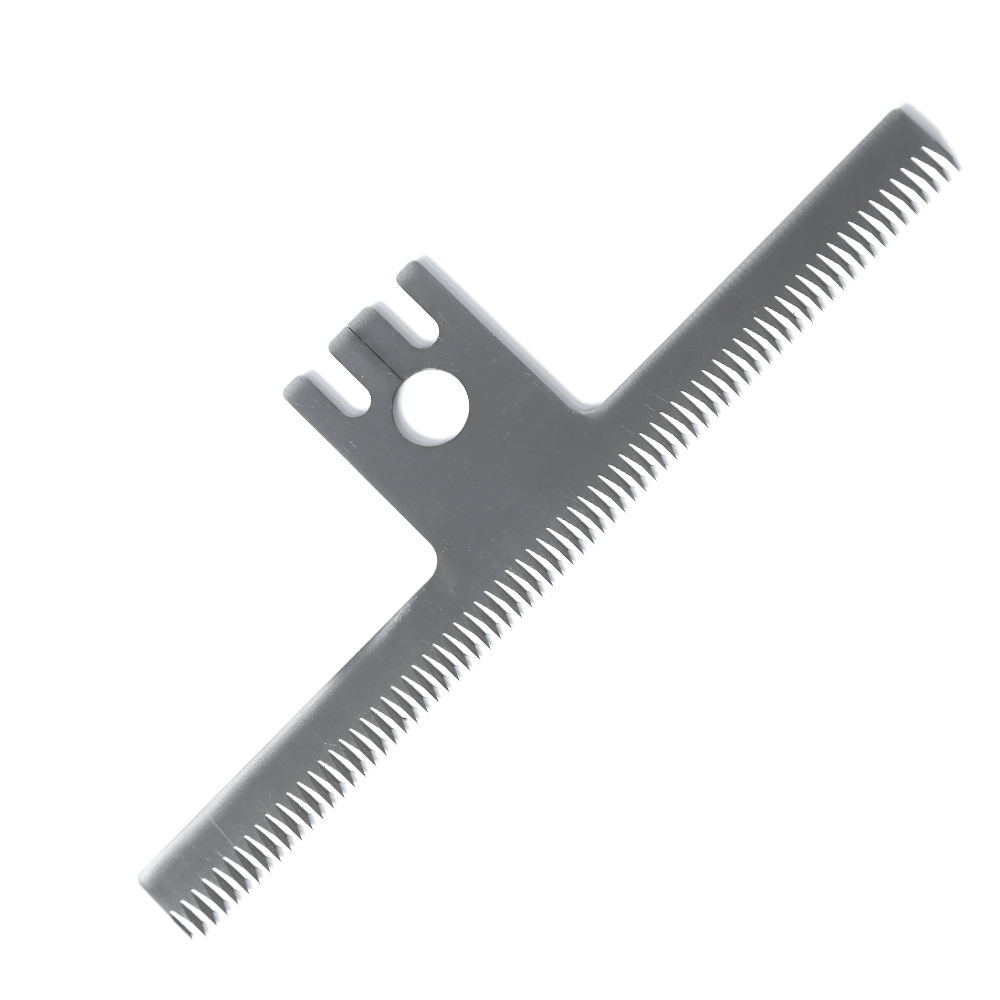
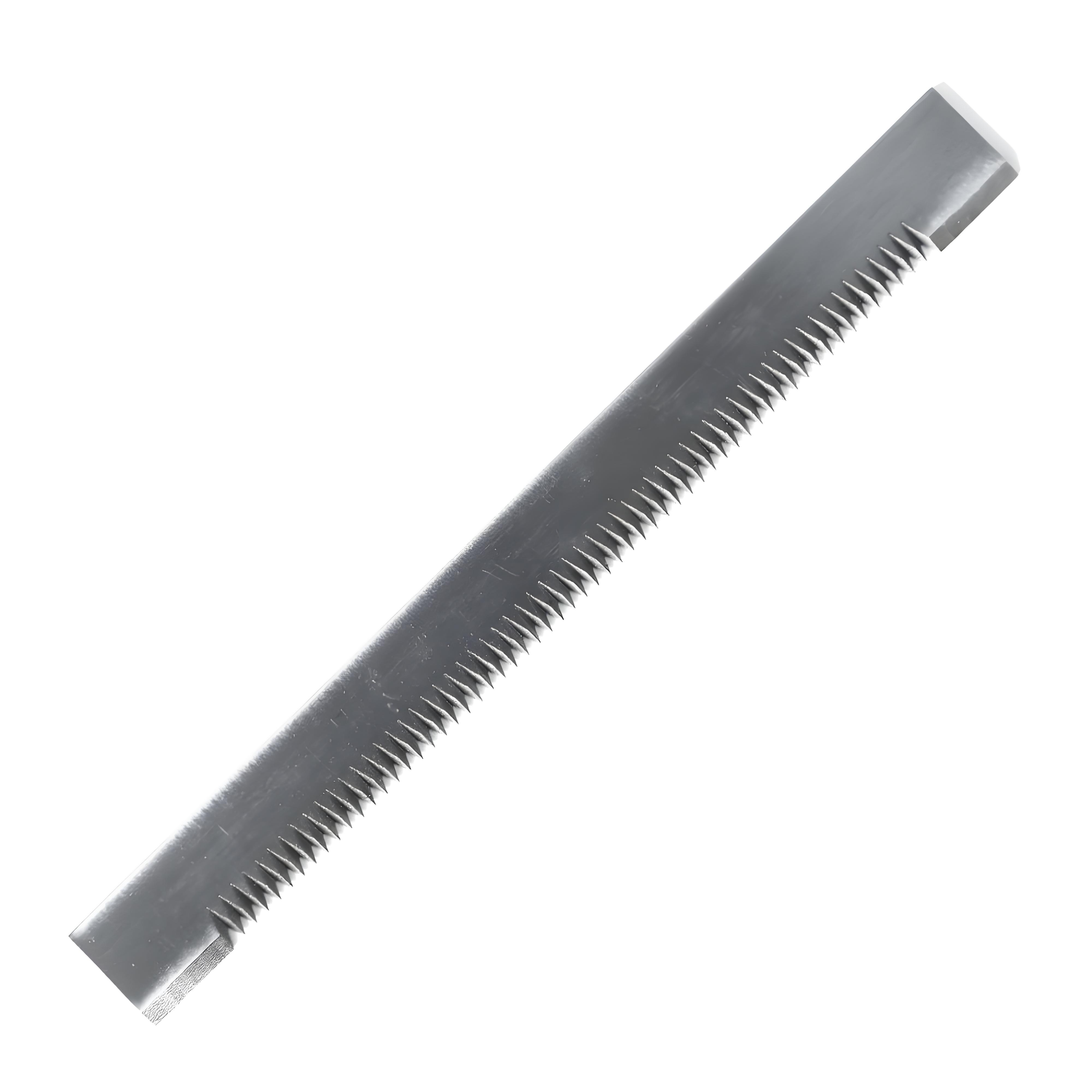
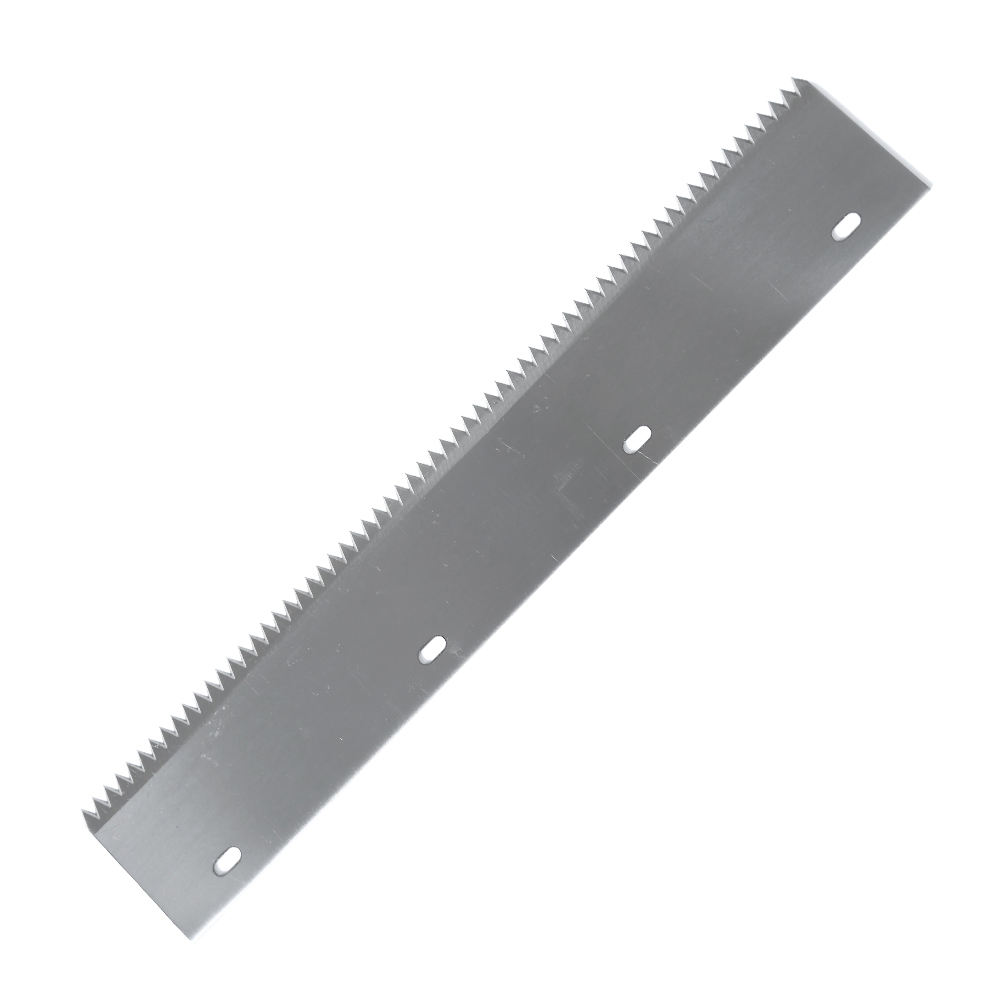
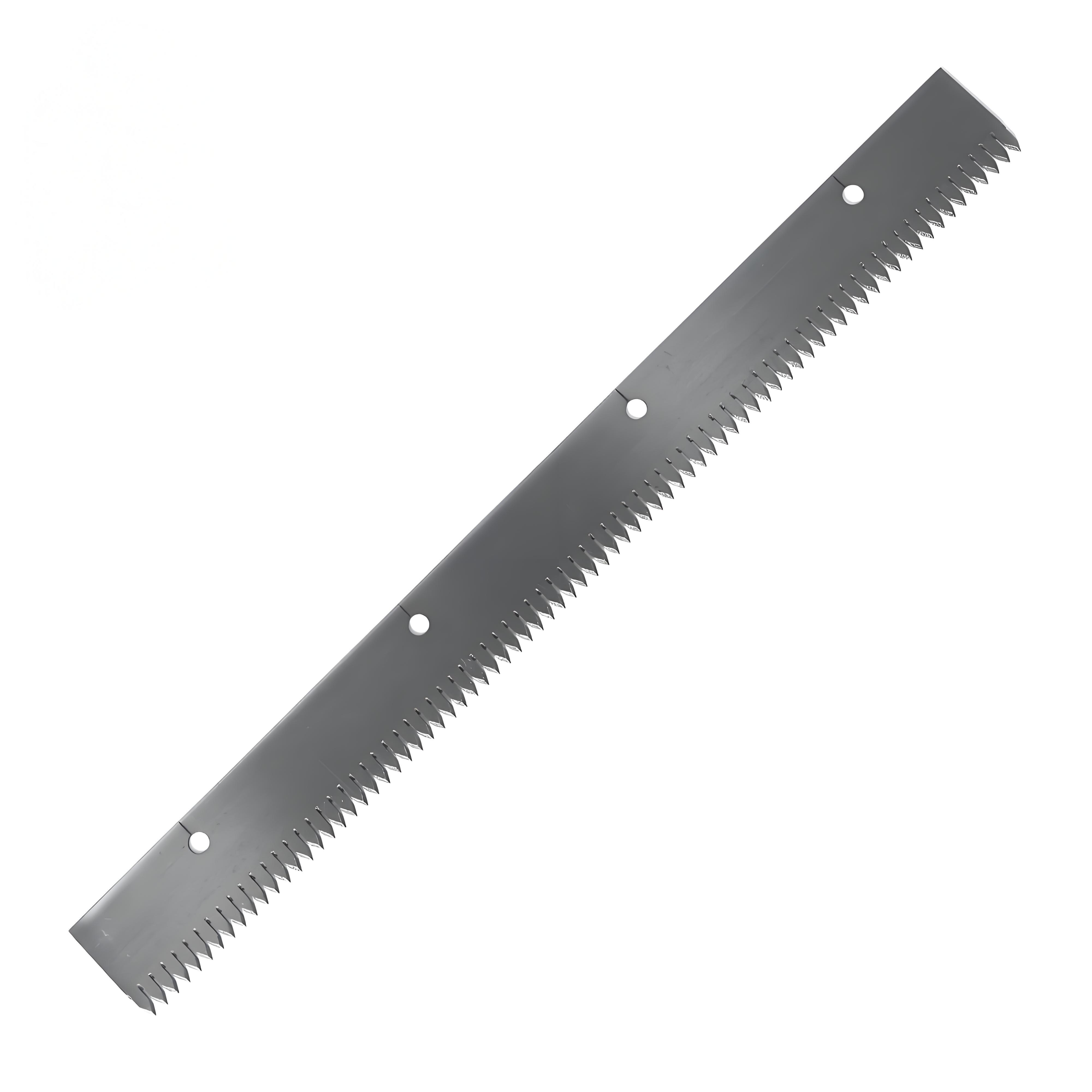
Used in VFFS machines for cutting laminated snack bags, coffee pouches, and frozen food wrappers. The serrated edge prevents film slippage, ensuring clean, repeatable cuts at speeds up to 120 packs per minute.
Customized sizes are available, according to your drawing or sample.
YISHI Machinery manufactures serrated blades for vertical form-fill-seal (VFFS) and other vertical packaging machines. These blades are precision-ground from tool steels such as Cr12MoV (D2 equivalent), M2 high-speed steel, or W6Mo5Cr4V2, achieving a hardness of HRC 58–62 after vacuum heat treatment. The serrated tooth profile ensures clean, non-slip cutting of laminated films, polyethylene, and multi-layer packaging materials, reducing material tearing and downtime. Available in custom diameters, thicknesses, and tooth geometries to match OEM specifications or your supplied drawings.
Available in Cr12MoV (D2), M2 (W6Mo5Cr4V2), W18Cr4V, and 9CrSi to match specific wear and corrosion requirements.
Vacuum heat-treated to HRC 58–62 for optimal edge retention without brittleness, ensuring consistent cutting performance over extended production runs.
Custom tooth profiles—including V-tooth, scalloped, and micro-serration—engineered to grip and shear packaging films without slippage or material distortion.
Blade OD, ID, thickness, and tooth pitch held to ±0.02 mm tolerance, ensuring drop-in compatibility with major VFFS machine brands.
Ground to Ra ≤ 0.4 µm on cutting edges and mounting surfaces to minimize friction and material adhesion.
Through-hardened and double-tempered to reduce blade consumption and changeover frequency in high-speed packaging lines.
| Product name | Vertical Packaging Machine Serrated Blade |
| Product model | Excellent Quality Low Price Vertical Packaging Machine Serrated Knife |
| Product material | Cr12MoV, Alloy,W6Mo5Cr4V2,W18Cr4V ,9CrSi, |
| Processing technology | Independent production |
| Surface treatment | Routine processing |
| Dimensions | OD 100–400 mm, ID 20–80 mm, thickness 1.0–5.0 mm; tooth pitch 2–10 mm depending on film type. Custom sizes available. |
| Materials | Cr12MoV (D2), W6Mo5Cr4V2 (M2), W18Cr4V (T1), 9CrSi, or customer-specified alloy |
| Hardness | HRC 58–62 after vacuum heat treatment with double tempering |
| Tolerances | OD/ID ±0.02 mm, thickness ±0.01 mm, tooth profile ±0.05 mm |
| Surface Finish | Cutting edge Ra ≤ 0.4 µm; mounting surfaces Ra ≤ 0.8 µm |
| Customisation | Buyers can specify OD, ID, thickness, tooth shape, pitch, material grade, and coating (e.g., TiN, CrN). OEM part number or drawing required for exact fit. |
YISHI Machinery operates an in-house production facility with CNC grinding, wire EDM, and vacuum heat treatment capabilities. Every serrated blade is manufactured from certified steel grades with full traceability. Our quality control includes hardness testing, dimensional inspection with CMM, and edge sharpness verification. We support low-volume custom orders and offer expedited delivery for replacement blades. With over a decade of experience supplying packaging converters, we provide technical support to match blade geometry to your specific film and machine parameters.
We offer Cr12MoV (equivalent to D2), M2 (W6Mo5Cr4V2), W18Cr4V, and 9CrSi. The choice depends on the film material, machine speed, and desired blade life. Our engineers can recommend the optimal grade based on your application data.
Yes. Provide your OEM part number, a drawing, or a sample blade, and we will reverse-engineer the exact OD, ID, thickness, and tooth profile. Tolerances are held to ±0.02 mm to ensure direct replacement.
Blades are vacuum heat-treated to HRC 58–62. This range provides a balance between edge retention and toughness, preventing chipping on hard films while maintaining sharpness for millions of cuts.
Yes, we can apply PVD coatings such as TiN (titanium nitride) or CrN (chromium nitride) to reduce friction and increase surface hardness. Coatings are recommended for abrasive or sticky films.
Standard custom orders ship within 15–20 working days after drawing approval. Expedited service is available for urgent replacements. Contact us with your requirements for a precise timeline.
Tooth pitch depends on film thickness, elasticity, and machine speed. Generally, thinner films (20–50 µm) require finer serrations (2–4 mm pitch), while thicker laminates (80–150 µm) benefit from coarser teeth (5–10 mm). We can provide samples for testing.