

Packaging Cutting Solutions for Packaging Machines

Packaging blades and packaging machine knives play a critical role in converting and packaging lines. This guide explains common blade types, cutting operations, and material options—and what information to prepare if you need custom knives for stable cut quality, reduced waste, and reliable uptime.
What Are Packaging Blades?
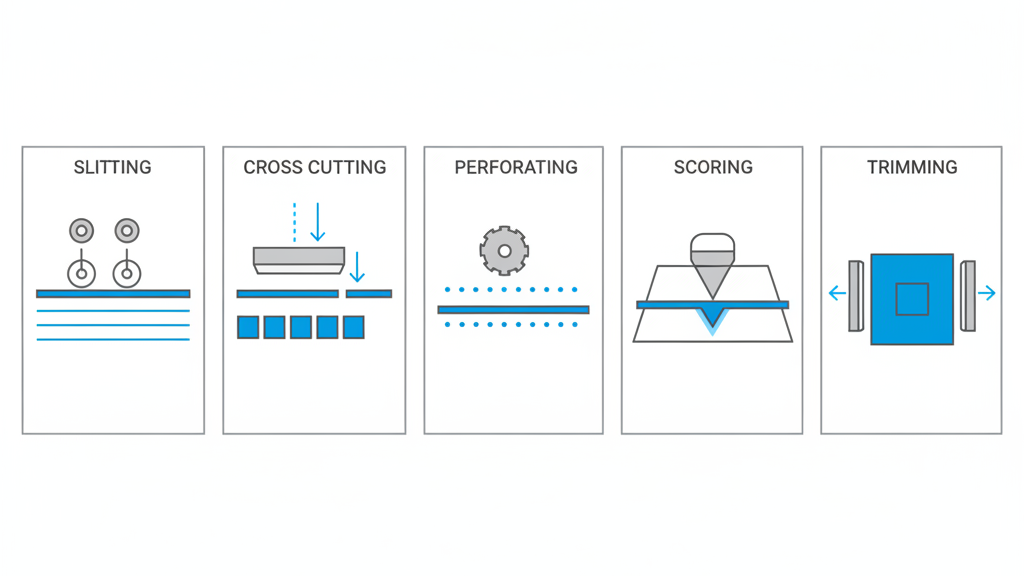
Packaging blades are industrial cutting tools used to slit, cut, perforate, score, or trim packaging materials such as plastic film, foil, paper, laminates, and lightweight boards. They are installed in packaging and converting machines where edge condition and dimensional stability directly affect throughput, scrap rate, and sealing performance.
Why they matter in production
- Cleaner edges with fewer burrs or “stringing”
- Reduced dust, fiber pull, or film tearing
- More stable cut length and alignment over long runs
- Longer service life and fewer changeovers
Packaging Materials Commonly Cut on Packaging Lines
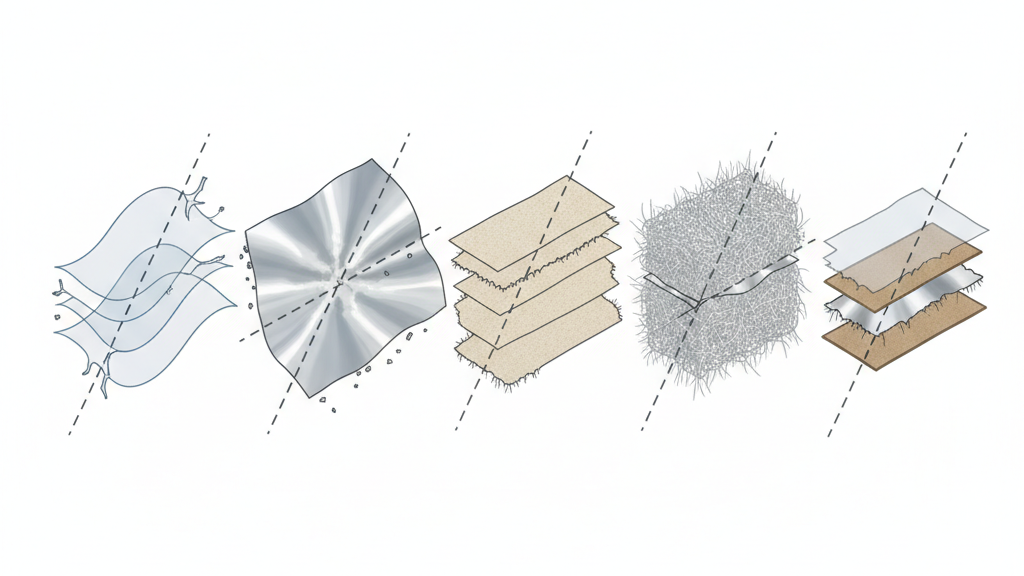
Different materials behave differently under cutting loads. Choosing blade geometry and edge prep based on material behavior is often the quickest path to more stable production results.
- Plastic films: PE, PP, PET, multilayer films
- Foils & laminates: aluminum foil, composite laminates
- Paper & nonwoven: paper webs, labels, nonwoven sheets
- Cardboard & light board: packaging board, sleeves, inserts
- Specialty: adhesive-backed materials, coated webs (case-by-case)
Tip: If you’re unsure, start by documenting material type + thickness range and your cutting method (shear/razor/perforate/score).
Common Packaging Cutting Operations
Below are the most common packaging operations and the blade categories typically selected. Your machine design and cut method determine the best fit.
Slitting & Web Trimming (Film / Foil / Paper)
Used in continuous web lines where tracking and edge consistency matter.
- Common blade types: circular slitters, shear slitters, razor slitters, top & bottom slitters
- What to optimize: cut quality, stable tracking, minimized edge curl
Cross Cutting & Cut-Off
For cut-to-length and intermittent cutting where repeatability impacts downstream sealing and packaging quality.
- Common blade types: guillotine blades, cut-off knives, flying knives
- What to optimize: consistent cut length, reduced fraying/tearing, stability at speed
Perforating & Scoring
For easy-open packs, tear lines, and controlled separation.
- Common blade types: perforating blades, toothed/serrated blades, score slitters
- What to optimize: controlled tear performance, reduced dust, repeatable perforation pattern
VFFS / HFFS and Flow Wrap Cutting
For form-fill-seal and flow wrapping systems where cut edges affect sealing quality and presentation.
- Common blade types: VFFS knives, flow wrap knives, sealing-trim blades (machine-dependent)
- What to optimize: clean cut without pulling film, reduced downtime from edge issues
Tray Sealing & Specialty Packaging Cuts
For tray sealing lines and specialty packaging setups.
- Common blade types: tray sealer knives, custom profiles
- What to optimize: fitment accuracy, wear life, stable repeatability
Packaging Blade Categories
Use this as a simple checklist when documenting what you currently run or what you need to source.
- Circular Slitter Blades – continuous slitting with runout control
- Flat / Straight Knives – guillotine, cross-cut, trimming
- Perforating Blades – toothed patterns for tear lines
- Razor & Score Slitter Blades – thin film and web handling
- Cut-Off Knives – dependable cutting under cyclic loads
- Custom Packaging Blades – non-standard shapes from drawing/sample
Material Options (Tool Steel vs Stainless vs Carbide)
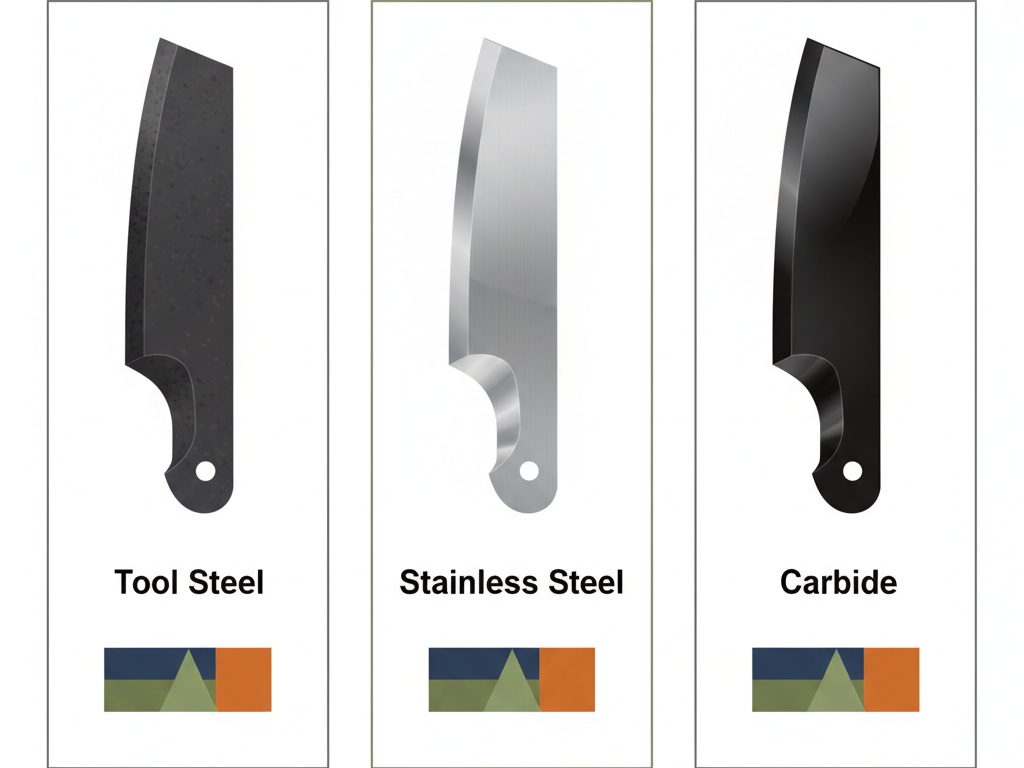
Rather than listing “all materials,” it’s more useful to select by wear mode, environment, and cut-quality targets.
- Tool steels: common choice for balanced toughness and wear resistance
- Stainless steels: used when corrosion resistance or cleaning exposure matters
- Carbide options: selected for maximum wear life and edge stability (application-dependent)
Optional enhancements (when needed)
- Coatings to reduce wear or material build-up (application-dependent)
- Edge preparation to reduce chipping and stabilize cutting
What to Prepare for a Fast, Accurate Quote
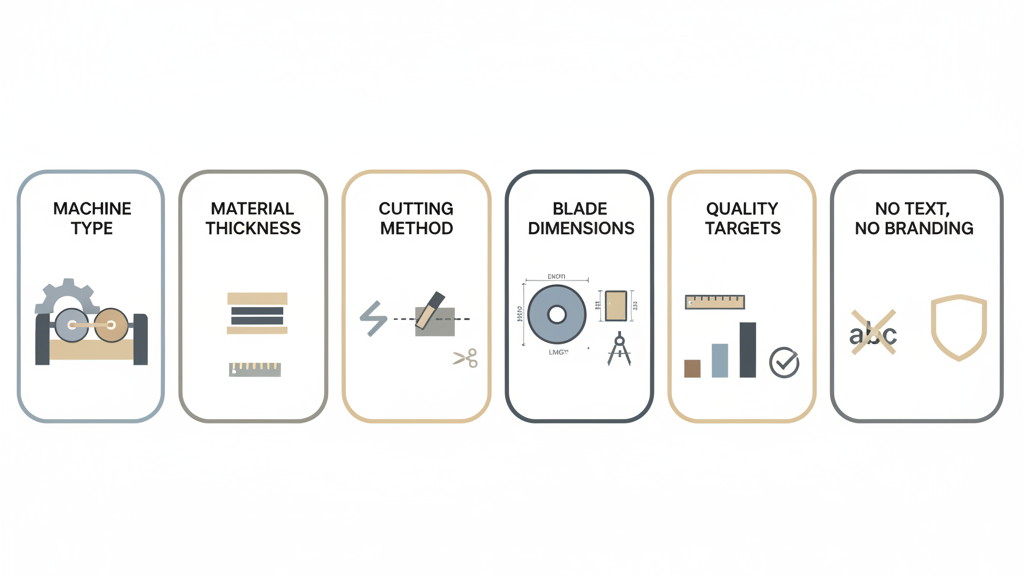
If you’re sourcing custom packaging knives, collecting the right input data usually saves multiple back-and-forth cycles.
Recommended info
- Machine type (VFFS / flow wrap / slitter / rewinder / etc.)
- Material type + thickness range
- Cutting method (shear / razor / crush / perforate / score)
- Blade dimensions or sample (OD/ID/thickness/length)
- Target cut quality (burr control, dust reduction, tear performance)
- Current issues (film tearing, dust, inconsistent length, fast wear)
- Trial vs repeat order expectation
Common Packaging Cutting Problems
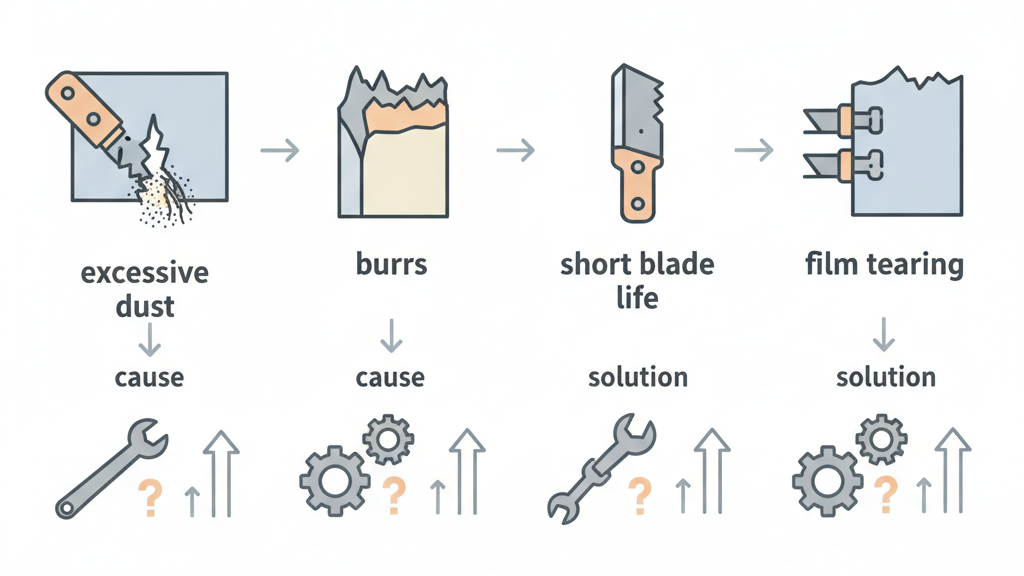
This section can help you diagnose issues before changing blade material or geometry.
Film Tearing or Pulling
Often improved by edge prep, geometry adjustment, and correct blade pairing (top/bottom setup).
Excessive Dust or Fiber Pull (Paper/Nonwoven)
Often improved by tooth profile optimization, edge finish control, and more stable cutting angles.
Burrs or Jagged Edges
Often improved by grinding quality, blade material selection, and alignment between blade and cut method.
Short Blade Life / Frequent Changeovers
Often improved by matching wear mode (material + heat treatment stability) and consistent edge preparation.
Need Help Choosing Packaging Blades?
If you want a recommendation tailored to your line, share your material, thickness, machine type, and cutting method. Engineering guidance is often the fastest way to improve cut quality and reduce downtime.
FAQ
Can packaging blades be made from drawings or samples?
Yes. Most custom packaging knives can be produced from drawings, sketches, or physical samples, and refined based on your cutting conditions.
Which material is best for packaging machine knives?
Tool steels are common for balanced wear and toughness. Stainless options are used when corrosion resistance matters. Carbide options are selected when maximum wear life and edge stability are required.
Do VFFS and flow wrap lines require different knives?
They can. Machine design, film structure, and cut method affect geometry and edge preparation, so it’s best to confirm based on your line details.
What’s the best way to ship packaging knives safely?
Protective packing should prevent edge impact and surface scratching to reduce damage risk during transport.


