

Blades for Food Processing & Extrusion Cutting Applications

Food processing lines require cutting solutions that are not only sharp and reliable, but also easy to control, clean, and maintain. In slicing, chopping, and extrusion-related cutting tasks, blade stability and edge consistency directly affect product appearance, yield, and line uptime.
Yishi Machinery supplies machine knives and cutting blades designed for food processing equipment—supporting cleanliness, operational safety, and reliable cutting performance in continuous production environments.
Typical Food Processing Cutting Tasks We Support
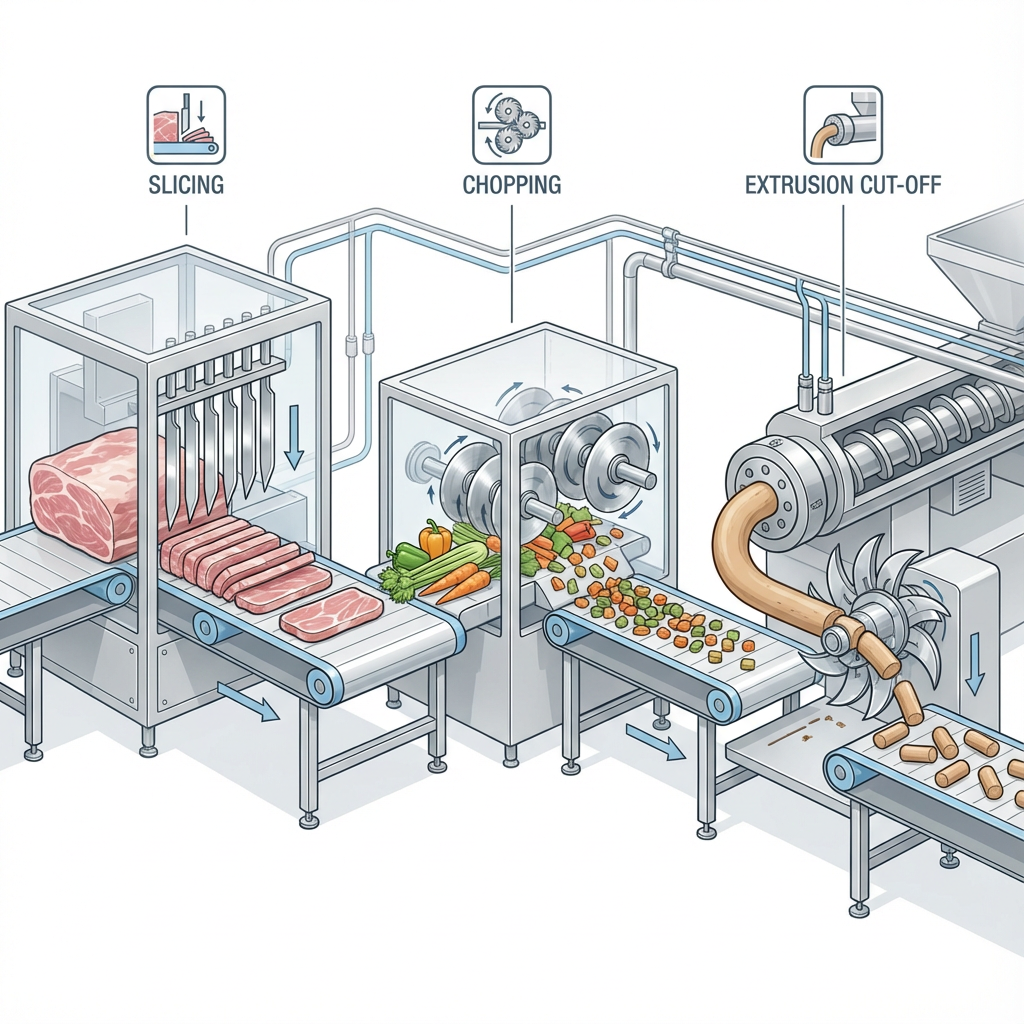
Slicing and portioning operations
Used in meat, poultry, seafood, bakery, and prepared food lines where consistent cut size and clean edges help maintain product presentation and downstream handling efficiency.
Chopping and dicing systems
For applications where uniformity and repeatability matter, blade geometry and edge condition influence cut accuracy and reduce product deformation.
Extrusion and cut-off applications
In snack, pet food, and similar extrusion processes, cut-off knives must maintain stable sharpness under continuous motion and temperature variation.
Trimming and edge finishing
For removing excess material or shaping products, where controlled cutting helps reduce waste and maintain product consistency.
Materials Commonly Processed in Food Lines
Food cutting blades may be used on a wide range of materials with very different textures, moisture levels, and temperatures:
- Fresh or frozen meat, poultry, and seafood
- Dough, bakery products, and confectionery materials
- Extruded food products and formed snacks
- Vegetables, fruits, and processed food components
Because material behavior varies significantly, blade selection should be based on real cutting conditions rather than a one-size-fits-all approach.
Key Challenges in Food Processing Cutting
Hygiene and cleanability
Blade surfaces and edge geometry should support easy cleaning and minimize material build-up during operation.
Edge stability under continuous use
In high-throughput lines, uneven wear can lead to inconsistent cuts. Controlled grinding and stable hardness help maintain repeatable results.
Safety and handling considerations
Predictable blade behavior and consistent dimensions support safer installation, adjustment, and replacement during routine maintenance.
Temperature and moisture effects
Cutting performance can change with temperature shifts or moisture content. Material choice and edge preparation help manage these variations.
If you experience issues such as tearing, deformation, or rapid dulling, sharing your processing conditions helps us recommend a more stable cutting setup.
Blade Types Used in Food Processing & Extrusion Equipment
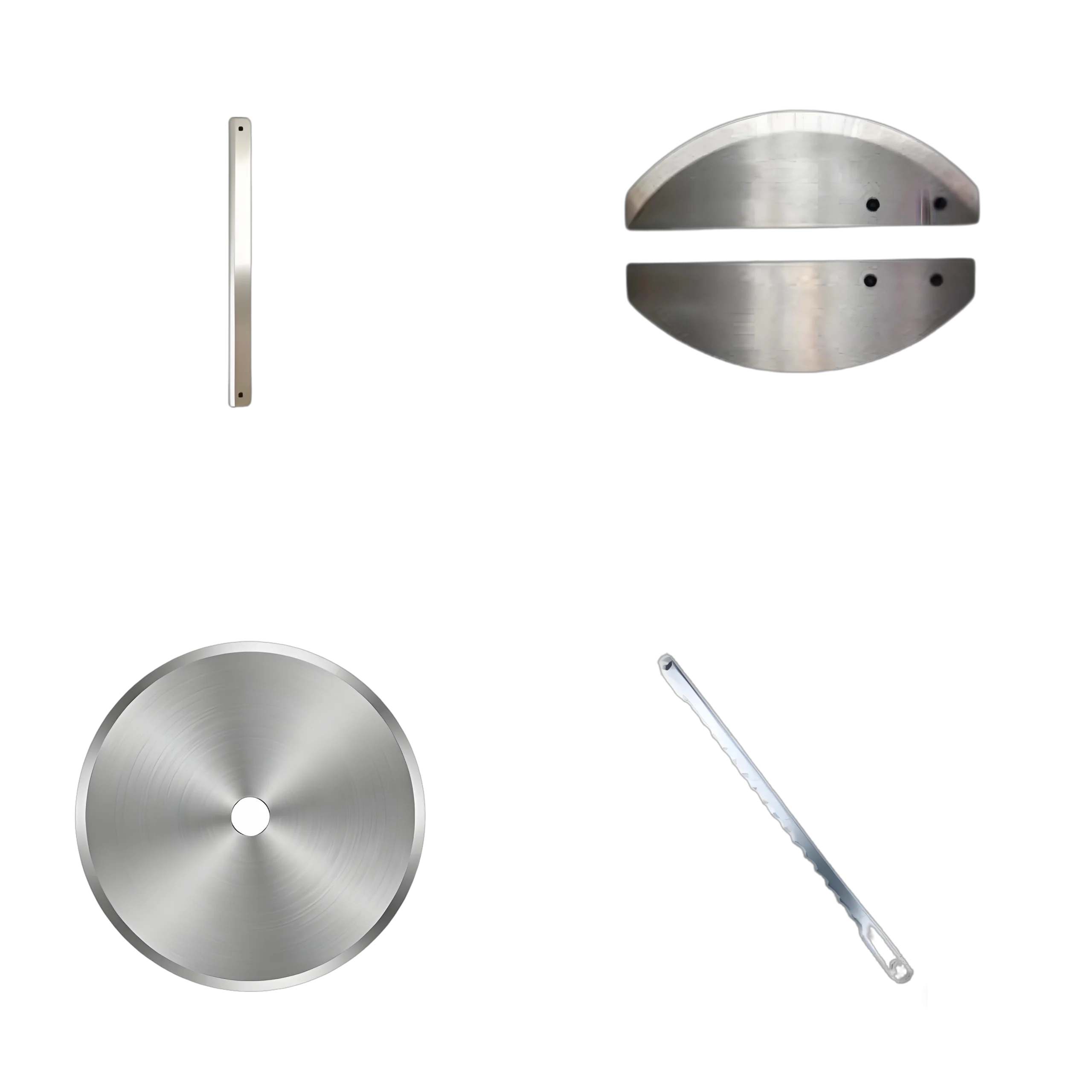
Straight knives and guillotine blades
Commonly used for slicing and portioning tasks where dimensional consistency and edge stability are required.
Circular cutting blades
Used in continuous slicing or rotary cutting systems where smooth motion and controlled edge finish support clean cuts.
Cut-off knives for extrusion lines
Designed for repeated cutting cycles, supporting consistent cut length and reliable operation.
Custom food processing knives
Non-standard profiles or application-specific designs manufactured from drawings or samples to match your equipment requirements.
Material Selection and Edge Preparation
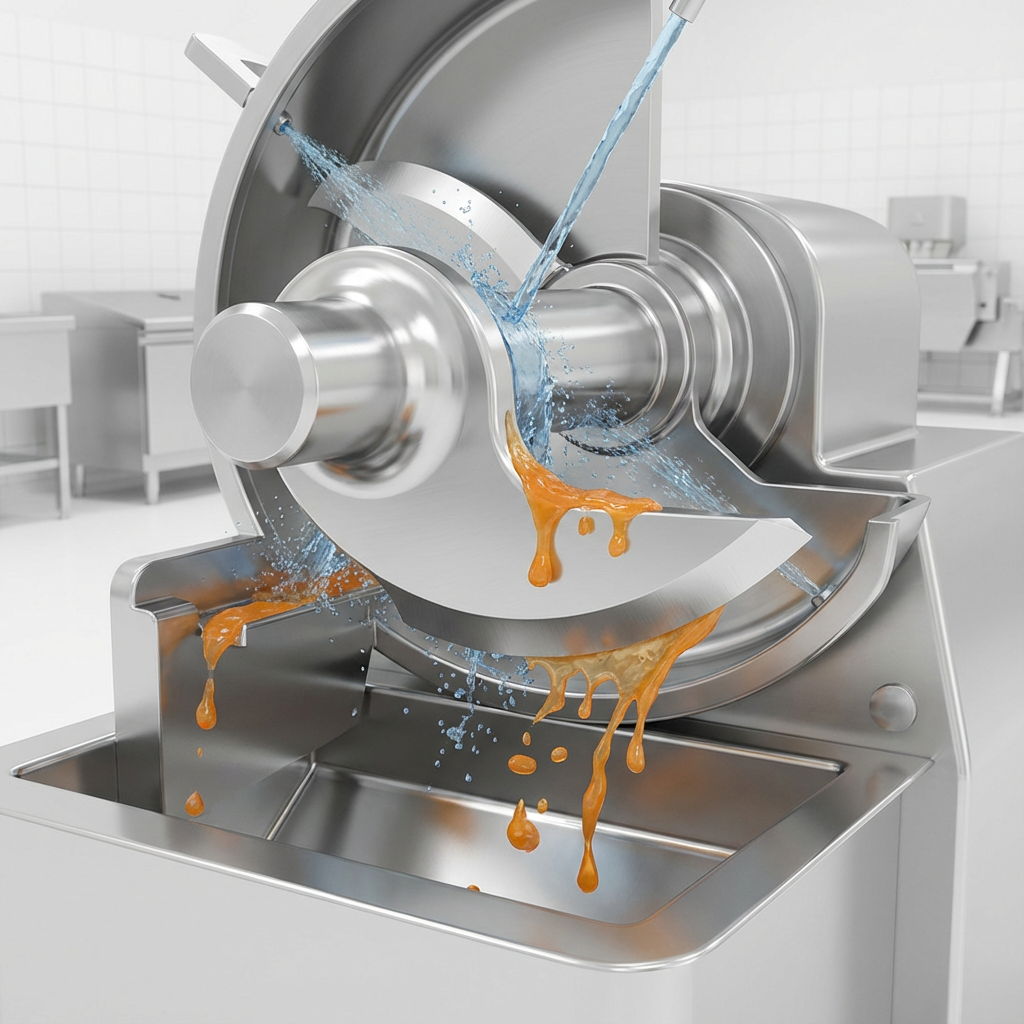
Selecting the right material and edge preparation is critical for balancing cleanliness, durability, and cutting quality.
Tool steel options
Often used where balanced toughness and stable cutting performance are required across varied food materials.
Stainless and corrosion-resistant options
Applied in environments where moisture and frequent cleaning are part of daily operation.
Edge preparation and surface finish
Edge geometry and surface condition influence cut quality, cleanability, and service life. We align edge preparation to your specific cutting method and maintenance practices.
From Requirement to Delivery
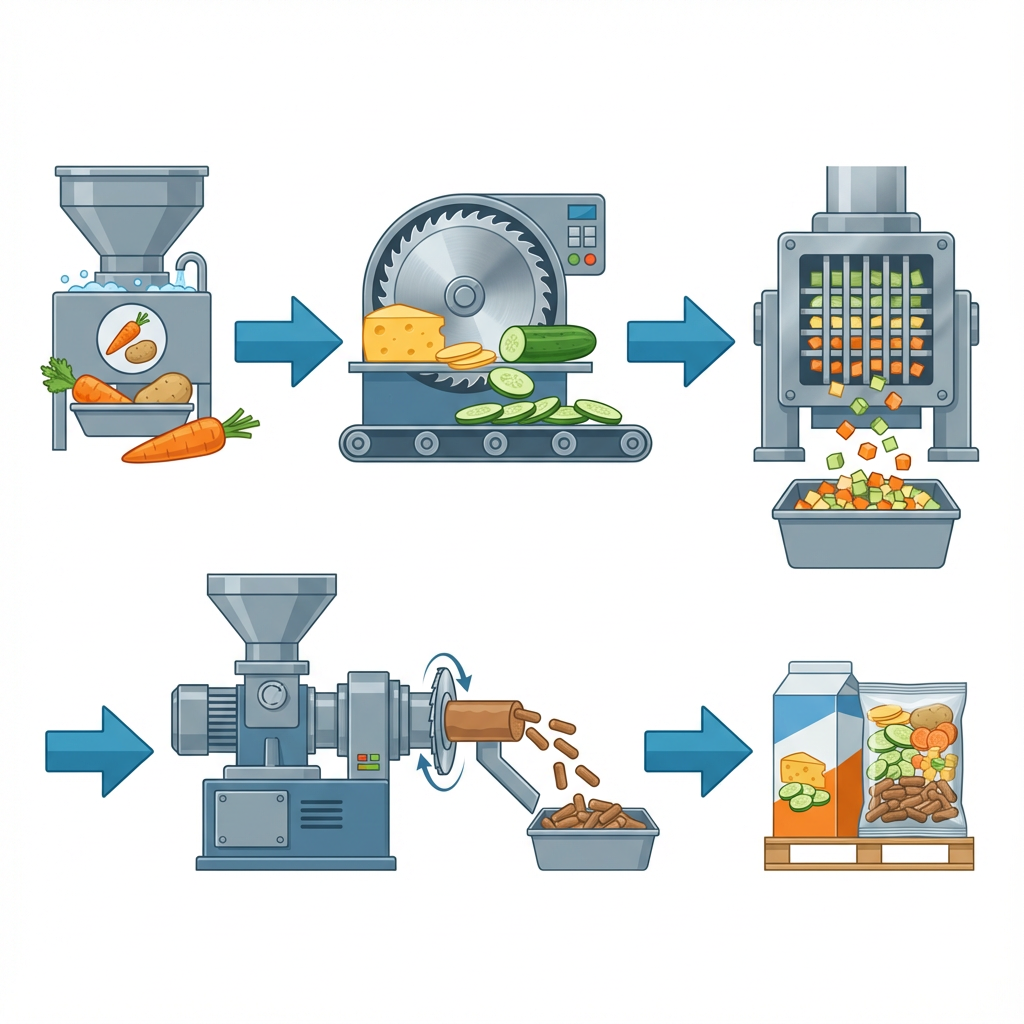
Application review
We confirm cutting method, product type, temperature conditions, and line speed to understand your real operating environment.
Recommendation
Based on wear behavior and cut quality requirements, we propose blade geometry, material, and edge preparation.
Manufacturing and grinding
Precision machining and grinding support repeatable dimensions and consistent cutting performance.
Inspection and packing
Blades are inspected for dimensional consistency and edge condition, then packed for safe transport and storage.
What to Share for a Faster Recommendation
Providing the following information helps us respond more accurately:
- Type of food product and processing stage
- Cutting method (slicing, chopping, extrusion cut-off, trimming)
- Operating conditions (temperature, moisture, continuous or intermittent cutting)
- Current issues (inconsistent cuts, rapid dulling, product deformation)
- Blade drawings, samples, or photos if available
FAQ
Can you manufacture blades based on samples or drawings?
Yes. We support manufacturing from samples or drawings and confirm critical dimensions for fit and performance.
Do you support trial orders for food processing lines?
Yes. Trial orders help validate cutting performance before repeat purchasing.
How do you support cleanliness and hygiene requirements?
Material selection, surface finish, and edge preparation are aligned to support cleaning and stable operation in food processing environments.
Are your blades suitable for continuous production lines?
Our blades are designed to support stable performance in continuous and high-throughput processing environments when matched to the correct application.
Do you ship internationally?
Yes. We provide export-ready packing and standard documentation for global delivery.


