

Blades for Printing, Paper and Nonwoven Web Handling Systems

Web systems are unforgiving: a small issue in tracking, tension, or edge condition can quickly turn into dust, frayed edges, web breaks, or frequent changeovers. Yishi Machinery supplies machine knives and cutting blades for printing, paper, and nonwoven converting lines—built for stable tracking, reduced downtime, and repeatable results under continuous production.
Typical Web Cutting & Converting Tasks We Support
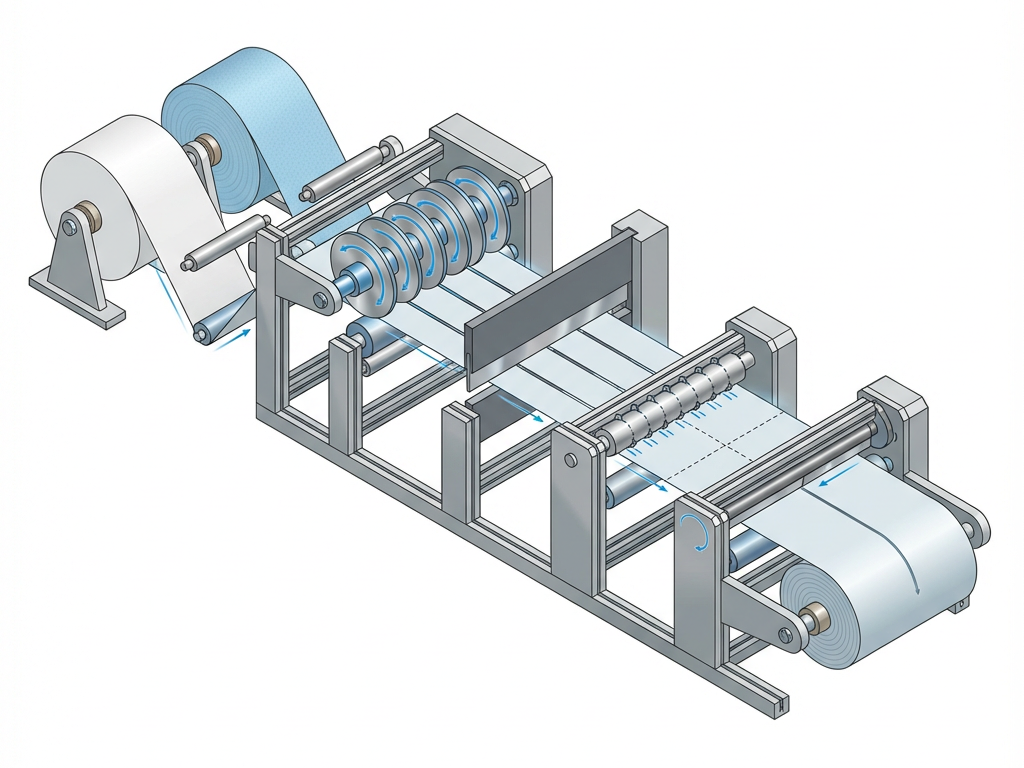
Slitting and rewinding
For roll-to-roll processing where stable runout control and consistent edge finish help reduce burrs, dust, and edge damage during winding.
Shear cutting and cut-off operations
For web cut-to-length tasks where dimensional repeatability and controlled edge finish support clean downstream stacking and packaging.
Score, perforation, and tear-assist
For packaging, labels, paper products, and nonwoven rolls—supporting predictable tear behavior and consistent performance across long runs.
Trimming, edge conditioning, and waste removal
For edge trim systems where blade stability reduces web flutter and helps minimize dust and micro-tearing.
Common Issues in Printing/Nonwoven Cutting
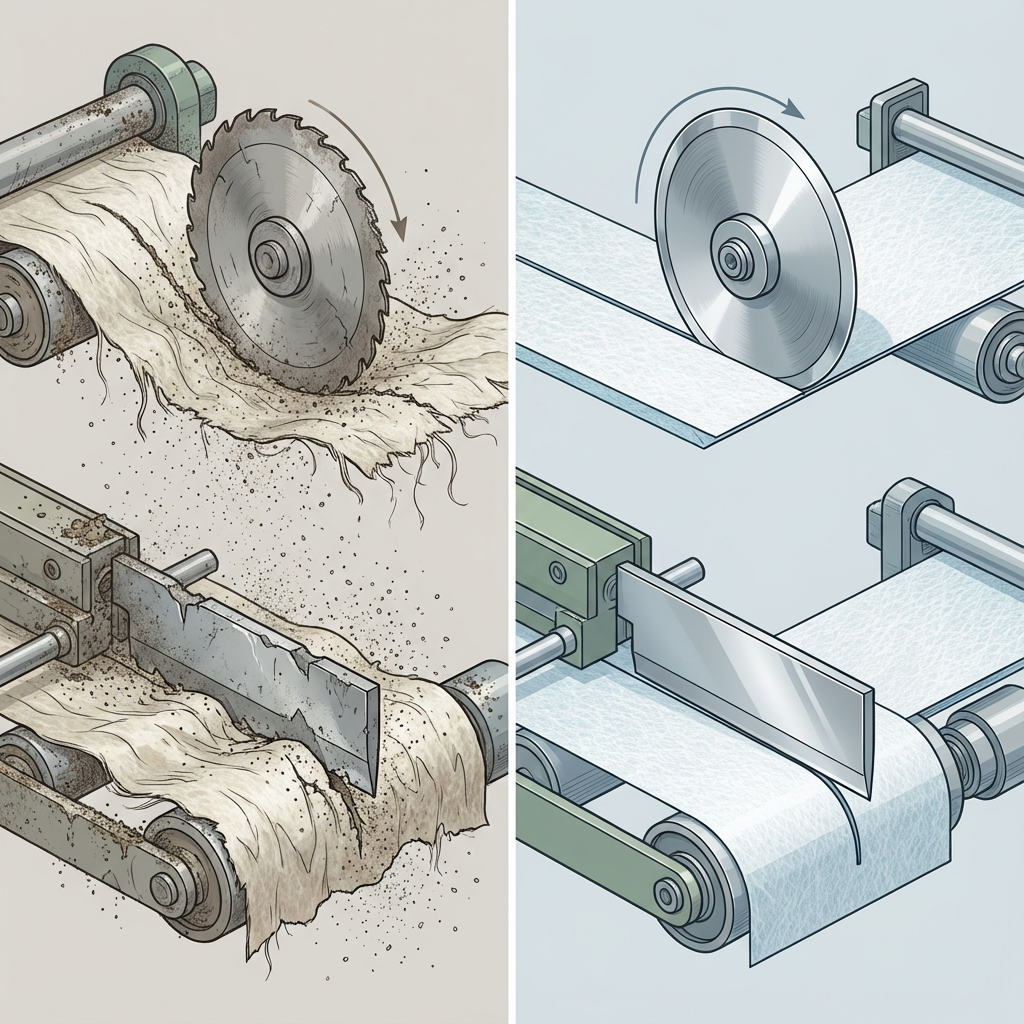
Unstable tracking or wandering cuts
Often caused by mismatched geometry, inconsistent edge condition, or runout/tolerance mismatch. A stable blade profile plus repeatable grinding improves cut path stability.
Dust, fuzz, and frayed edges
Common in paper and nonwoven webs, especially when cutting parameters and edge prep aren’t matched. A controlled edge finish and proper clearance help reduce fiber pull-out.
Frequent web breaks and downtime
Can occur when blades dull too fast or heat builds up in continuous cutting. Material selection and edge preparation are often the fastest path to longer service intervals.
Inconsistent cut quality across a long run
Usually a combination of wear mode + setup. Repeatable dimensions and consistent hardness control support predictable cutting behavior.
If you tell us what you see on the line—dust, tearing, heat, wandering cuts—we’ll recommend a practical blade configuration (geometry, material, and edge preparation) aligned to your real operating conditions.
Blade Types Used in Printing, Paper & Nonwoven Systems
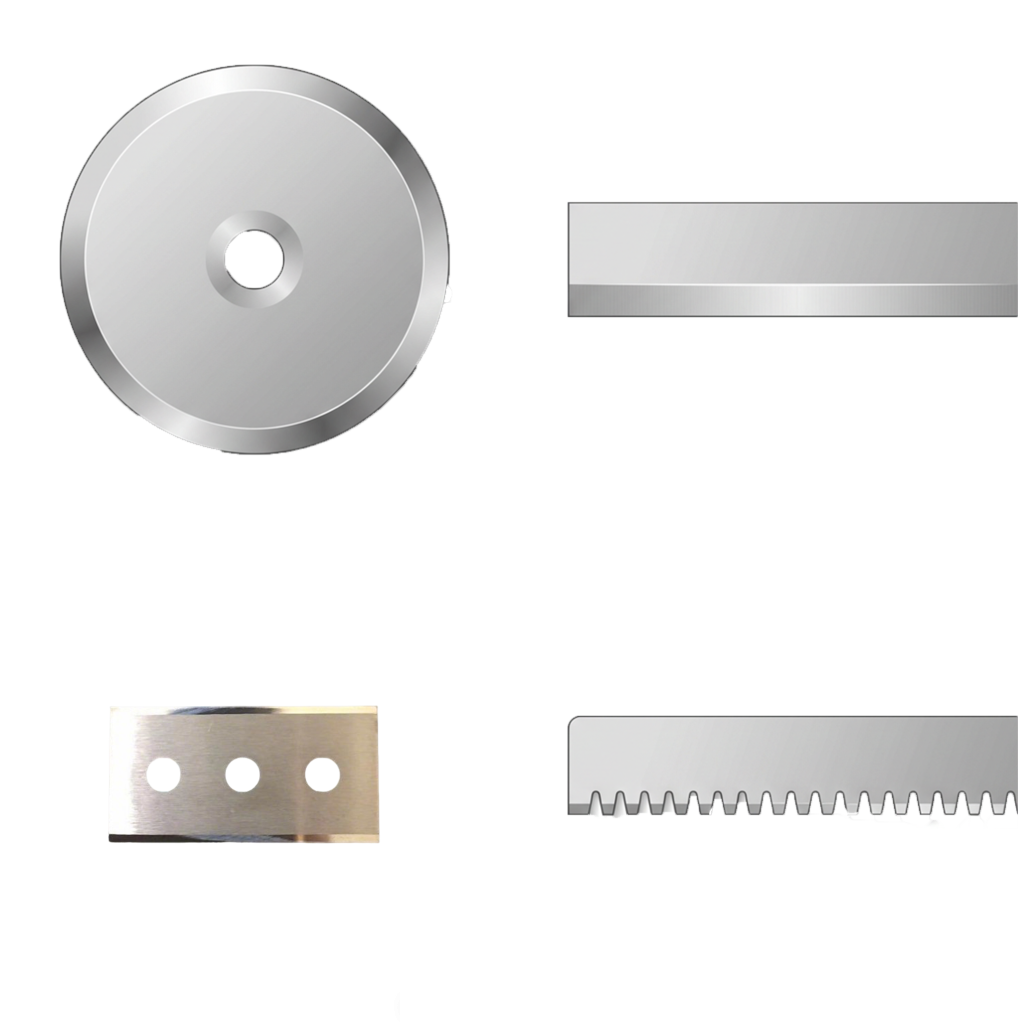
Circular slitter blades (rotary slitting)
Used for continuous web slitting where stable rotation, consistent edge finish, and controlled runout help maintain clean edges.
Straight knives and guillotine blades
For cut-to-length and stack cutting operations where dimensional stability and edge consistency affect throughput and reject rate.
Perforating and scoring blades
For tear lines and functional scoring where predictable results matter more than aggressive sharpness.
Cut-off knives and shear blades
For repeatable web separation tasks where edge finish and stability reduce downstream problems.
Custom profiles for specific machines
Non-standard shapes, hole patterns, and application-specific requirements—manufactured from drawings or samples.
Material Options and Edge Preparation
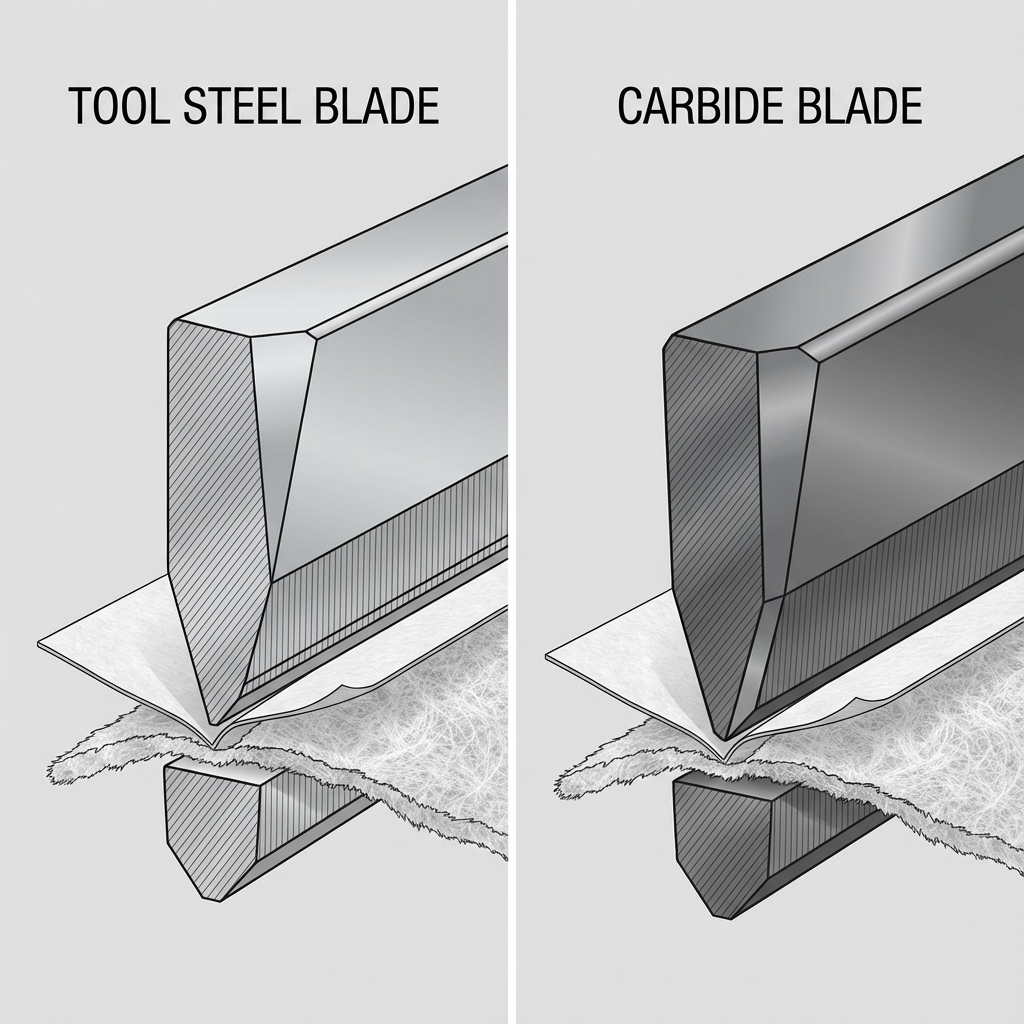
Different web materials fail differently. Selecting the right material and edge prep is often more important than simply choosing “harder” steel.
Tool steel options (balanced toughness and wear)
A practical choice for many paper and nonwoven converting tasks where stability and impact resistance are required.
Carbide options (maximum wear resistance)
Suitable when wear is the main limitation and your setup supports stable, controlled cutting.
Edge preparation and finish control
Edge geometry and finish can influence dust generation, fraying, and cut feel—especially on fibrous webs. We align edge preparation to your cutting mode and cut quality requirements.
Share your web type (paper grade / film / nonwoven), thickness range, and cutting method (slitting, shear, perforation). We’ll recommend a stable setup that prioritizes repeatability.
What to Send for a Fast, Accurate Quote
To reduce back-and-forth, send any of the following:
- Blade drawing or clear photos with key dimensions
- Machine type and cutting method (slitting, shear, cut-off, perforation, scoring)
- Web material and line behavior (dust, fraying, wandering, heat, web breaks)
- Target cut quality requirements (edge finish, dust control, tear performance)
- Quantity and whether you need trial + repeat supply
From Requirement to Delivery
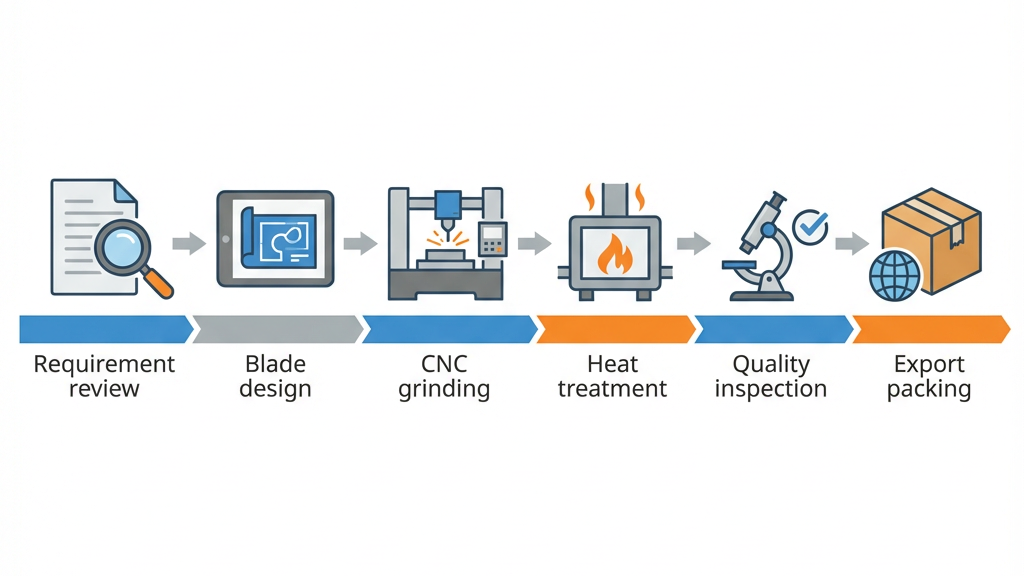
Requirement review
We confirm cutting method, web behavior, and your pain points (dust, fray, wear, downtime).
Recommendation
We propose geometry, material, hardness strategy, and edge prep aligned to the failure mode you’re seeing.
Manufacturing and grinding
Repeatable dimensions and stable edge condition for consistent run performance.
Inspection and packing
Dimensional checks and edge condition verification before export-ready packing designed to protect cutting surfaces.
FAQ
Can you manufacture blades from samples?
Yes. We can manufacture from samples and confirm critical dimensions for fit and stable cutting performance.
Do you support trial orders for new web materials or setups?
Yes. Trial orders help validate cut quality and wear behavior before repeat purchasing.
How do I reduce dust and frayed edges on paper or nonwoven webs?
Dust and fraying are often linked to edge prep, clearance, and wear mode. Share your symptoms and cutting method—we’ll recommend a practical blade geometry and finish strategy.
Which is better for web systems: tool steel or carbide?
If rapid wear is your main issue, carbide may help. If chipping or shock loads are common, balanced tool steel options are often more stable. We recommend based on your failure mode and setup.
Do you ship globally with protective packing?
Yes. We support export-ready packing and standard documentation for international delivery.


