

Industrial Blades for Plastic Recycling & Shredding Operations

Plastic recycling lines demand consistent cutting under fluctuating loads — our plastic crusher blades are engineered to handle hard inclusions, varying feed rates, and high-throughput operations in both granulators and shredders, and pelletizing systems — including plastic pelletizing knives for strand and die-face cutting — focusing on durability, wear resistance, and stable cutting performance in real production conditions.
Where These Blades Are Used in Recycling Lines
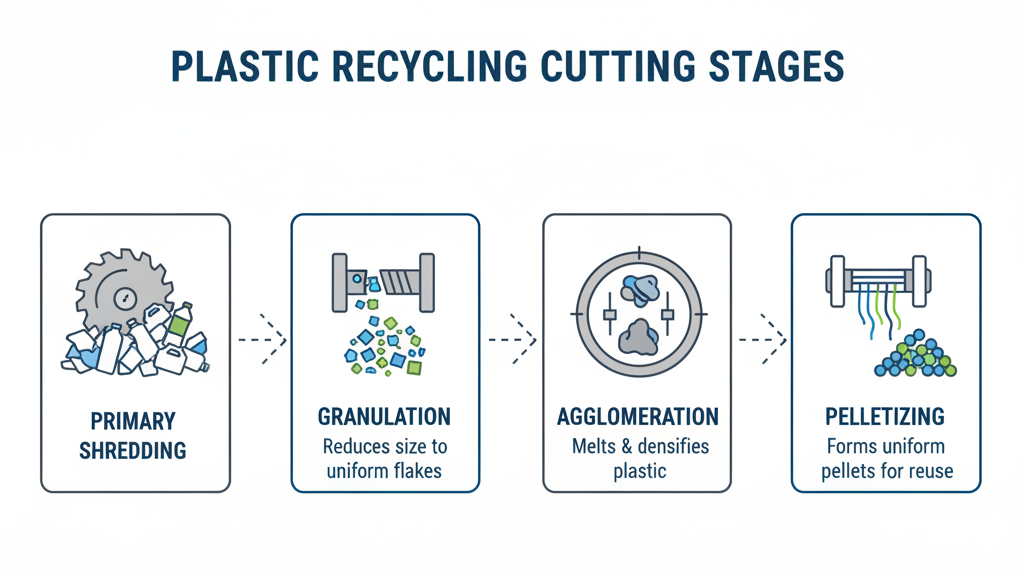
A typical recycling workflow includes multiple cutting stages. Matching blade design to each stage helps maintain throughput and reduce unplanned downtime.
Primary Shredding (Coarse Reduction)
Designed for bulky plastics and mixed feedstock where impact and shock loads are common. Toughness and edge stability matter more than ultra-fine sharpness.
Granulation (Size Reduction & Regrind)
For consistent particle sizing and stable output. Blade-to-bedknife alignment and edge condition directly affect cut cleanliness and heat buildup.
Agglomeration & Densification (When Applicable)
Cutting and compaction tasks can introduce high friction and temperature. Selecting the right material and edge preparation supports longer service life.
Pelletizing / Strand Cutting Support
When blades are used around pelletizing systems, stable sharpness and controlled edge finish help keep pellets consistent and minimize fines.
Common Materials Processed in Plastic Recycling
Recycling knives often need to handle materials with very different stiffness, abrasiveness, and contamination levels:
- Rigid plastics: HDPE, PP, ABS, PS
- Film and flexible materials: LDPE film, stretch film, woven bags
- Engineering plastics (varies by line): PA, PC blends
- Contaminated feed: labels, fillers, mixed recyclables
If you’re unsure about your feedstock conditions, share photos or a sample—our team can recommend a practical blade setup.
What Determines Blade Life in Recycling & Shredding
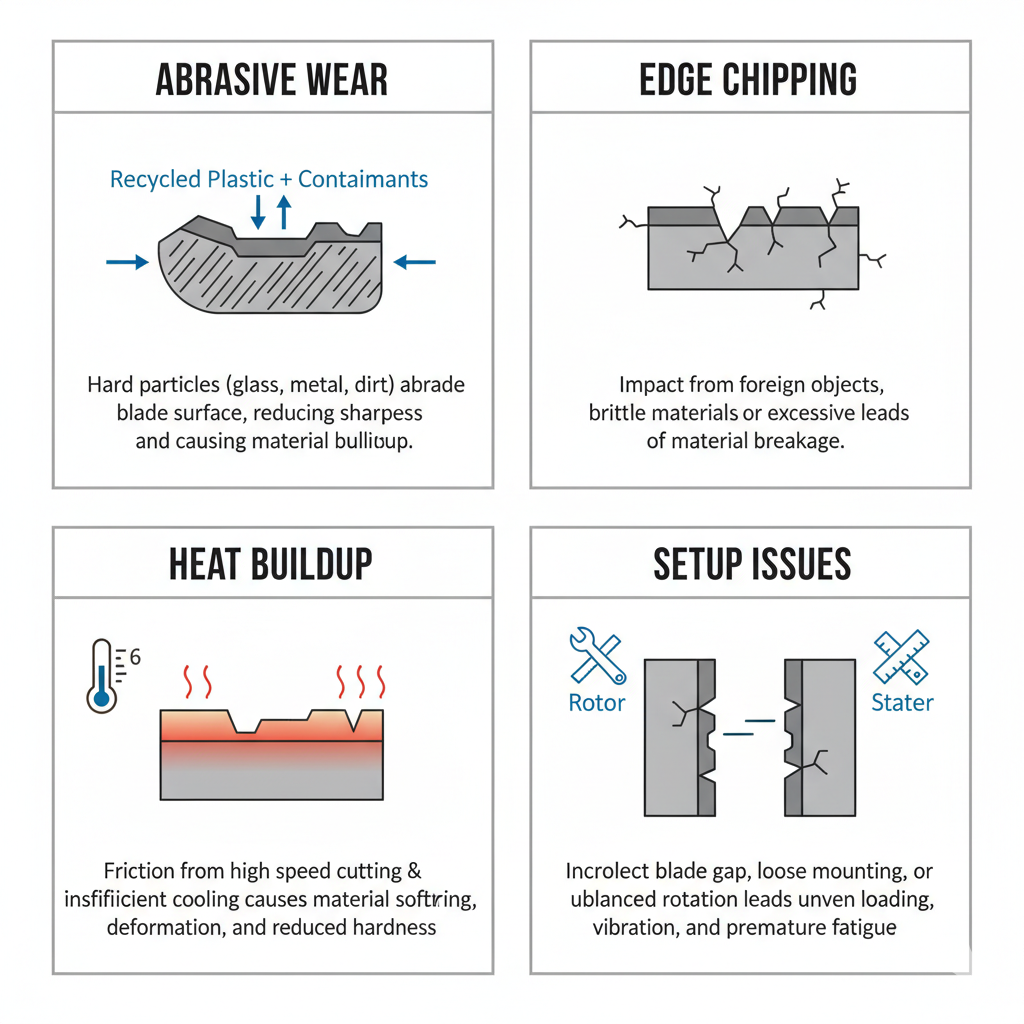
Blade life is not just “harder is better.” In recycling operations, premature failure is usually caused by one of these factors:
Abrasive wear from contamination
Sand, glass, and mineral fillers accelerate edge rounding. Material selection and edge preparation can reduce rapid wear.
Edge chipping from impact and shock loads
Hard inclusions or inconsistent feeding can chip edges. A stable balance between toughness and wear resistance is critical.
Heat build-up and smearing
Film cutting or high-speed granulation can generate heat that worsens cut quality. Proper clearance and edge condition help control it.
Misalignment, clearance, and setup
Even premium blades fail early if clearance is wrong or bedknife contact is inconsistent. Setup guidance and repeatable grinding improve consistency.
Blade Types for Plastic Recycling Equipment
Below are common knife configurations used across recycling and size reduction equipment. We manufacture both standard and custom profiles.
Shredder knives (single-shaft / dual-shaft)
Engineered for heavy-duty reduction where torque and impact loads are high. Knife geometry supports stable bite and controlled tearing.
Granulator rotor knives and bedknives
Used for precise cutting and consistent regrind. Matching rotor knives and bedknives helps maintain cut quality and reduce dust.
Crusher and agglomerator knives
For high-friction environments where wear and heat are common. Edge condition and material choice can improve service intervals.
Custom recycling knives
If your machine uses non-standard hole patterns, profiles, or thicknesses, we support custom manufacturing from drawings or samples.
Recommended Material Options
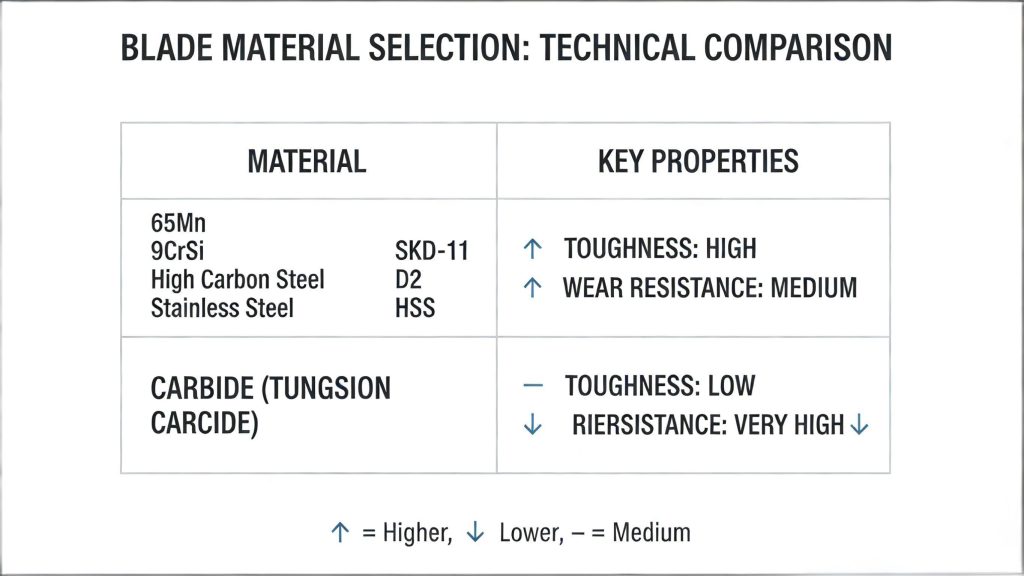
We recommend materials based on your feedstock, cutting stage, and failure mode (rapid wear vs. chipping vs. deformation).
Tool steel options (balanced toughness and wear)
A practical choice for many recycling applications, especially where impact resistance and stable performance are required.
Carbide options (maximum wear resistance)
Best suited for abrasive or high-wear conditions where edge retention is the priority, and equipment setup supports stable cutting.
Heat treatment and hardness control
Consistent heat treatment supports predictable performance. We focus on achieving a stable balance—reducing brittle failures while keeping wear resistance practical for real line conditions.
Share your failure symptoms (fast dulling vs. chipping vs. deformation) and we’ll recommend the best option.
From Requirement to Delivery
Step 1 — Application review
We confirm machine type, cutting stage, feedstock condition, and performance priorities (wear life, cut quality, downtime).
Step 2 — Geometry and material recommendation
Based on wear mode and load conditions, we propose geometry, material, and edge preparation.
Step 3 — Manufacturing and grinding
Precision grinding supports repeatable dimensions and consistent edge finish.
Step 4 — Inspection and packing
We verify key dimensions and edge condition before export-ready packing to protect cutting surfaces.
What to Send for a Fast, Accurate Quote
To reduce back-and-forth, send any of the following:
- Blade drawing (preferred) or a clear photo with dimensions
- Machine model and cutting stage (shredder, granulator, pelletizing support, etc.)
- Material type and condition (clean vs. contaminated feedstock)
- Current issues: fast wear, chipping, overheating, poor cut quality
- Quantity and repeat frequency (trial or production supply)
FAQ
Can you make blades based on samples?
Yes. We can manufacture from samples and confirm critical dimensions for fit and cutting performance.
Do you support trial orders?
Yes. Trial orders help validate fit and performance before repeat purchasing.
How do I choose tool steel vs. carbide?
If rapid wear from abrasion is the main issue, carbide may help. If chipping and shock loads are common, tool steel options with balanced toughness are often more stable. Share your failure mode and we’ll recommend a practical choice.
Do you provide guidance on installation clearance?
We can share practical setup guidance based on your cutting stage and blade configuration to improve consistency.
Do you ship globally?
Yes. We support export-ready packing and standard documentation for international delivery.


